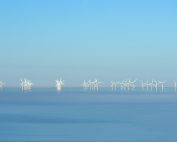
The year 2025 will go down in the history of Polish offshore wind as a breakthrough moment. The BC-Wind project, developed by Ocean Winds, reached financial close at the level of EUR 2 billion, with the participation of the European Investment Bank and a consortium of more than a dozen commercial banks. This is not only the largest transaction of its kind in Poland’s offshore wind sector, but also a clear signal that the Baltic Sea is no longer merely a promise and is becoming a genuine construction site for a new energy system.
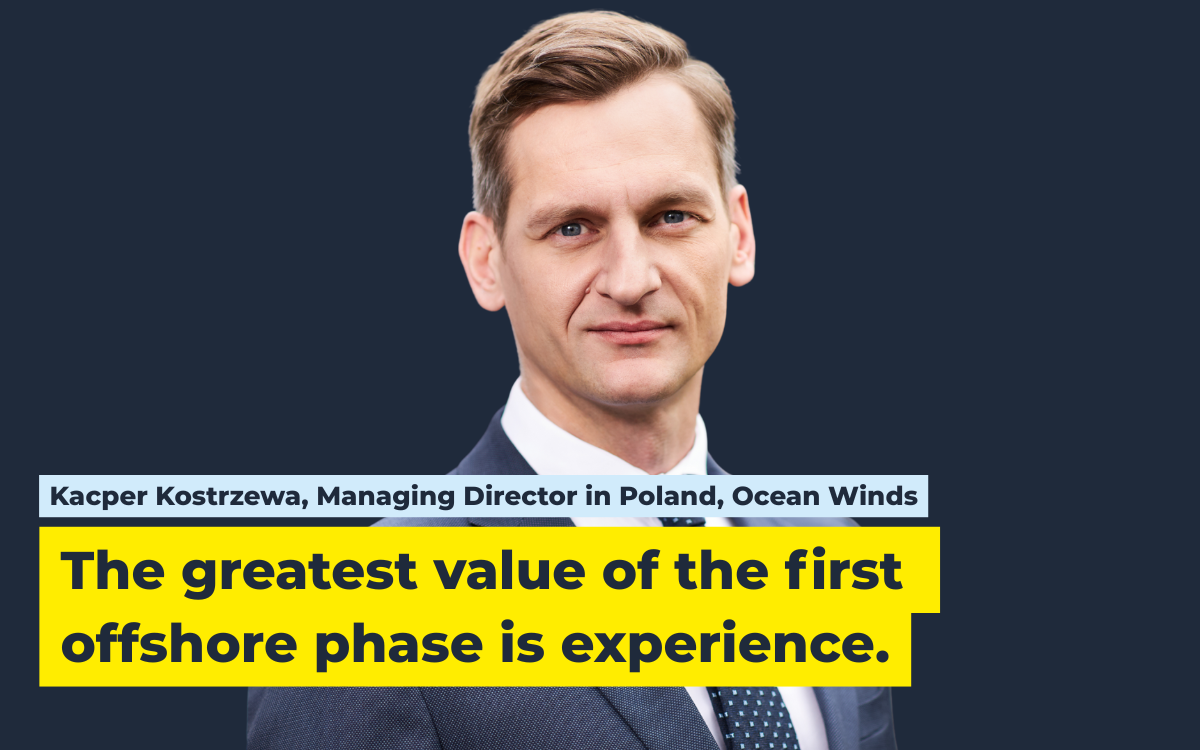
I speak with Kacper Kostrzewa, Managing Director of Ocean Winds in Poland, about the background to the financial close, the transition into the construction phase, the growing importance of local content and the lessons learned from being a first mover. It is a conversation about the trust of financial institutions, the maturation of Poland’s supply chain and how the experience of the first offshore phase may shape the coming decades of sector development.
Krzysztof Bulski, BalticWind.EU: Reaching financial close at EUR 2 billion, with the participation of the EIB and more than a dozen commercial banks, is a major undertaking. Which aspects of the BC-Wind project were key for financial institutions in assessing risk in the Polish offshore market?
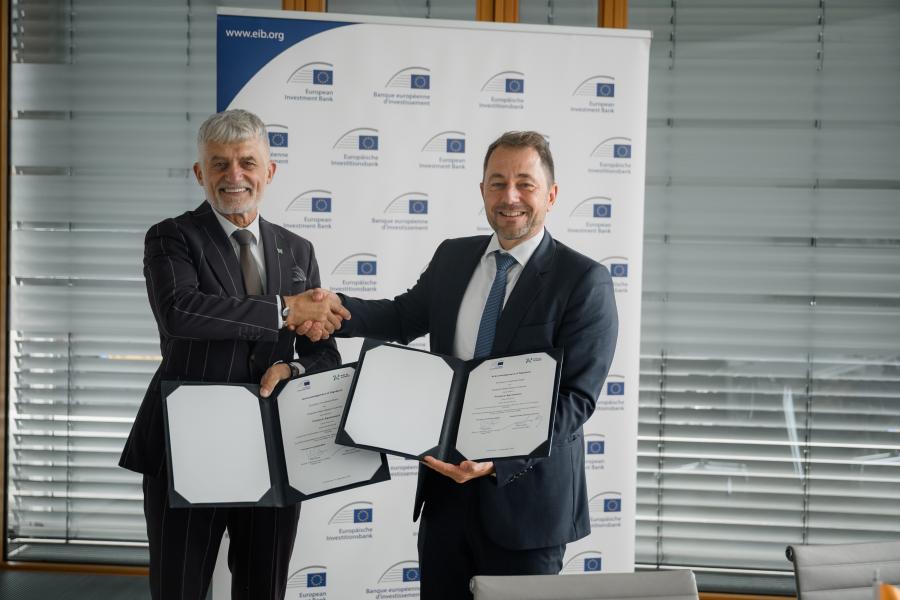
Kacper Kostrzewa, Managing Director in Poland, Ocean Winds: The year 2025 ended with a clear success for us, namely the financial close of the BC-Wind project. The transaction involves the European Investment Bank, which accounts for nearly one third of the total financing, Spain’s ICO, and 13 commercial banks, including three from Poland. Such a structure confirms the long-term stability of the investment.
For financial institutions, the maturity of the BC-Wind project and its solid technical and financial preparation were of paramount importance. With an investment of this scale, banks must be confident that the timetable is realistic and that risks are properly identified and managed. Our credibility as an investor was also highly significant. Ocean Winds is a partner with extensive offshore experience and a long history of cooperation with banks. In the current, more demanding market environment, this had a tangible impact on financing decisions. A strong signal to the market was the participation of the European Investment Bank. The EIB’s rigorous standards in environmental, technological and social areas confirmed the high quality of the project and its alignment with European climate objectives.
Another important factor was the stability of the Polish offshore market. Although the sector is still at an early stage of development, banks appreciated regulatory consistency, clear state support and well-selected business partners, which together translated into a positive risk assessment and a successful financial close.
Following the FID announcement, BC-Wind officially enters the implementation phase. What are the key operational objectives for 2026 and when can we expect the first installation vessels to appear on site?
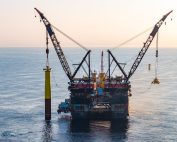
Our key operational objective for this year is to commence onshore construction works, which will start in the first quarter of 2026. This will include the onshore substation and the land-based export cable. In parallel, an operations and maintenance base will be established in Władysławowo. Installation vessels will appear offshore in the following year, enabling the start of the main offshore construction works. Our goal is for the BC-Wind offshore wind farm to begin generating electricity in 2028.
From the outset, Ocean Winds has placed strong emphasis on cooperation with Polish suppliers, including agreements with Tele-Fonika and Crist. From your perspective, how has the potential of the Polish supply chain evolved during preparations for BC-Wind, and how much of this experience do you intend to carry over to future projects?
During preparations for the BC-Wind project, we observed the dynamic development of the Polish offshore wind supply chain. However, this process did not start from scratch. When entering the Polish market, Ocean Winds brought experience from other mature European markets, which allowed us from the outset to realistically plan the involvement of local companies in advanced and demanding contracts.
This enabled us to design the schedule, divide scopes of work and conduct market dialogue in a way that entrusted Polish companies with infrastructure elements meeting the strict safety and quality standards characteristic of this type of investment. For many companies, these were ambitious challenges, yet fully within their technological and organisational capabilities.
From the beginning, we were determined that declarations regarding local content would translate into concrete contracts. Cooperation with companies such as P&Q and CRIST Offshore has shown that Polish enterprises are ready to operate in the standards required by international offshore projects and are taking on increasing responsibility at each stage. From the outset, we have declared local content at the level of 20 to 30 per cent, and we are maintaining this target.
For us, BC-Wind is a natural benchmark for future projects, not as a one-off exercise but as confirmation of a cooperation model based on experience, predictability and long-term relationships. Part of this potential is already visible in foreign markets, for example Tele-Fonika Kable has participated in our projects in the United Kingdom. Thanks to the international scale of Ocean Winds, Polish companies have a genuine opportunity to take part in projects delivered in other markets, further strengthening their position in both the European and global offshore wind supply chain.
BC-Wind is one of the first projects that will actually be built in the Polish Baltic Sea. What lessons from breaking new ground in Phase I offshore are most valuable in the context of planned auctions for further locations in the coming years?
Experience from the first offshore phase shows that the greatest value lies in the ability to develop proven operating models, both on the project and organisational side. Breaking new ground also required intensive cooperation with public administration and local authorities, as well as adapting processes to the realities of a new market. Regulatory predictability and stable timetables are essential if we are to successfully deliver further projects under the auction system.
From the perspective of future locations, the most valuable lesson is that many barriers can be significantly reduced through scale and experience. The competences built through BC-Wind, both on the investor side and within the domestic supply chain, will allow subsequent projects to be delivered more quickly, more efficiently and with lower risk. This transfer of knowledge and practice will be one of the key advantages of the next phases of offshore wind development in Poland.
Thank you for the interview.