WindEurope urges EU to steer ETS revenues into industrial electrification
Ahead of the EU's 17 July ETS review, WindEurope wants the Commission to keep a clear carbon price and channel ETS revenues into industrial electrification.
Alterric says leaked drafts of Germany's EEG 2027 reform and grid-connection package — including a ten-year uncompensated curtailment rule — threaten the financing of new wind projects.
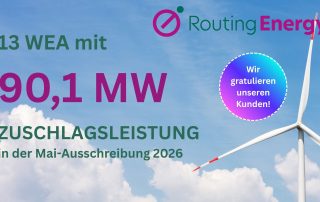
Germany's 1 May onshore wind tender drew bids worth 6,409 MW for 2,495 MW on offer, pushing award prices lower; clients of purchasing group Routing Energy won 90.1 MW.
Qualitas Energy has won 113.2 MW across three onshore wind projects in Germany's latest tender, which drew bids worth more than 2.5 times the available volume.
Germany's renewable energy sector set a new employment record in 2025, but a Bertelsmann Stiftung study warns that a shift in federal energy policy could endanger thousands of jobs.
EU energy ministers met in Luxembourg to agree a general approach on the European grids package, including EU funding to repair undersea energy infrastructure damaged by sabotage — a priority for the Baltic Sea region.
A new Eurelectric report, based on 61 companies and 30 projects, sets out five replicable 'Power Couples' models to scale up industrial electrification by aligning demand, supply, grids and investment.
Eurelectric is calling on the EU to keep the Emissions Trading System as the backbone of its climate policy, setting out three priorities for the review: a predictable carbon price, industrial competitiveness and a just transition.
The Netherlands has opened the tender for the 1 GW IJmuiden Ver Gamma-A offshore wind site, with €4.75bn in subsidy available and applications running from 26 November to 10 December 2026.
WindEurope is calling on EU energy ministers to agree a binding 2040 renewables target, warning that without a post-2030 goal Europe risks losing investment, energy security and industrial leadership.
Sweden's transmission operator Svenska kraftnät says meeting electricity demand to 2050 will require historic investment in generation, grids and flexibility — around 8 TWh of new fossil-free power a year in its most intensive scenarios.
Shipping companies and Transport & Environment want the EU's upcoming Electrification Action Plan to cover shipping, citing barriers to charging infrastructure.
Estonia's Riigikogu has passed the Nuclear Energy and Safety Act, creating the country's first legal framework for nuclear power, including a phased licensing system and a national regulator due to start work in January 2027.
A 25% increase in cross-border grid interconnection could let Europe use an extra 27 TWh of wind and solar by 2040 and avoid 16.3 million tonnes of CO2, an Aurora Energy Research study finds — warning that curtailment could double by 2030 without timely network investment.
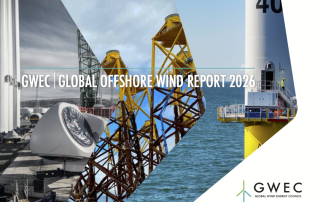
GWEC's 2026 report urges governments to fast-track offshore wind, warning that auctions slowed to 11.4 GW in 2025 even as 25 GW of projects sit ready to build.
Germany's Bundesrat has adopted a resolution backing offshore wind reform, taking up BWO proposals for an indexed two-sided CfD auction design, cross-border cooperation and a route to return non-viable awarded sites.
Baltic environmental NGOs urge the EU to set 2027 fishing limits below ICES advice, warning that cod, herring and salmon stocks are failing to recover even under existing closures.
The EU's latest package lists 34 individuals and 47 entities, targeting Russia's shadow fleet, energy revenues, defence industry and propaganda networks.
The Commission would let member states borrow up to 0.3% of GDP a year for the energy transition; Germany's BEE says it could free up to €27 billion.
Experts at PSEW 2026 said onshore wind is among Poland's cheapest power sources and could cut energy bills, but warned that grid limits, permitting and public opposition still hold it back.
On Global Wind Day, WindEurope urged EU policymakers to protect flexible community participation models, warning that draft EU rules could weaken the local benefits wind farms deliver.
On Global Wind Day, WindEurope spotlights how communities share in wind farm revenues — and warns that draft EU participation rules could undermine the very models that build local support.
EU finance ministers agreed to extend the Carbon Border Adjustment Mechanism to downstream steel and aluminium products, roughly doubling the Commission's proposed scope.
Norway has become a full member of the EU Strategy for the Baltic Sea Region, gaining a formal role in the macro-regional framework's leadership and agenda-setting.
Sweden has ordered grid operator Svenska kraftnät to pause an upgrade of its power cable to Denmark, escalating its standoff with Brussels over the EU Grids Package.
Lithuania's Klaipėda LNG terminal has booked over 20 TWh of long-term capacity to 2044, with Ukraine's Naftogaz and Finland's Gasum joining as first-time customers.
A joint Alterric and E-Bridge study finds Germany's market for reactive power remains fragmented and underused, leaving potential savings on network charges unrealised.
BXF Energia's Tomasz Grzęda says the main bottleneck for onshore wind in Poland is the early permitting phase, where siting and approvals can take years.
Poland's defence ministry has prepared a decision to make onshore wind siting near military areas more transparent and predictable, announced by Władysław Kosiniak-Kamysz at PSEW 2026.
Germany's ZEREZ register now accepts certificates with grid-forming properties for the instantaneous reserve market, effective 1 June 2026.
Germany's Bundesnetzagentur has shielded existing offshore wind projects from planned generator network charges, drawing praise from BWO — which also published a study finding such charges would be ineffective and ultimately costlier for the federal government.
Green Power Sweden has endorsed Swedish government proposals to cap environmental permitting appeals at three instances, while urging coordination with other concurrent regulatory reforms at EU and national level.
A pre-election survey by Green Power Sweden finds a majority of Swedish parliamentary parties support reducing electricity tax from 36 öre/kWh to EU minimum levels, ahead of the September 2026 general election.
PIMEW has submitted a formal position on Bill UD 2549 calling for a PIT exemption for Polish seafarers on offshore wind vessels, citing a 41% tax rate against 0% in Denmark and Belgium.
A new PISM White Paper documents Russia's intensifying hybrid campaign against Baltic Sea states, covering sabotage of energy and cable infrastructure, GNSS disruption, border violations, and recommendations for coordinated regional defence.
Germany's BWO association is calling for a voluntary offshore wind site return mechanism covering up to 16 GW and EUR 50 billion in project value blocked by grid delays.
New UK legislation in force from 21 May 2026 gives offshore wind developers a wider range of environmental compensation options, from seabird colony protection to native oyster restoration.
Wind Energy Ireland's 18-point action plan for 2026 targets a September planning decision, finalised grid agreements for east-coast projects, and state investment in port capacity.
A Trinomics/DTU Wind study commissioned by WindEurope finds that €11.6bn of targeted EU wind funding could yield €33bn annually in economic returns and 180,000 jobs by 2040, while displacing 70 bcm of imported gas.
Elia Group shareholders approved a €2.05 per share dividend and governance amendments at the company's annual general meetings held on 19 May 2026.
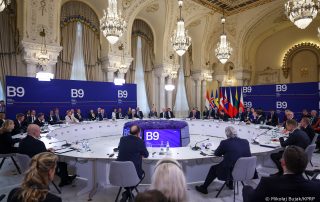
Leaders of the Bucharest Nine and Nordic Allies reaffirmed Baltic Sea maritime protection and commended Baltic Sentry operations in a joint declaration from Bucharest.
The US House Foreign Affairs Europe Subcommittee examined threats to Estonia, Latvia and Lithuania, with Chairman Self warning that NATO’s credibility hinges on credible deterrence along the Baltic frontier.
The Baltic Sea Region Forum in Turku attracted a record 580 participants to debate security, energy infrastructure, and geopolitical resilience across the Baltic and Arctic.
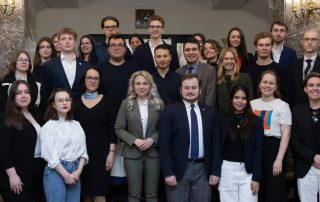
Youth delegates from across the Baltic Sea Region met in Warsaw for the CBSS Youth Ministerial 2026, producing recommendations on energy infrastructure, security and regional cooperation for Foreign Ministers.
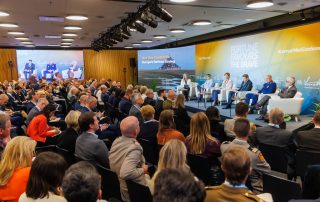
More than 500 experts gathered in Tallinn for the 17th EUSBSR Annual Forum, focusing on resilience across regional security, Baltic Sea environment and economic competitiveness.
Latvia's FM Baiba Braže outlined four priorities for European security at the Lennart Meri Conference in Tallinn, calling for stronger NATO eastern flank defences and tighter sanctions on Russia's shadow fleet.
Norway has joined the EU Strategy for the Baltic Sea Region as its ninth member, expanding cooperation in energy, maritime safety, and sustainability across the region.
Germany, Poland and the three Baltic States are expanding onshore wind capacity at an accelerating pace, driven by post-crisis energy security concerns and policy reforms that have cut permitting times and opened new areas for development.
The European Commission has published a catalogue of national best practices to help member states cut gas and oil use, lower energy costs and build resilience amid the ongoing energy crisis.
Alexandra Garatzogianni argues that Europe's energy and digital systems are converging faster than the governance frameworks designed to manage them.
Arianna Vitali Roscini of the Coalition for Energy Savings argues that a 2040 EU energy efficiency target is essential for energy security and independence.
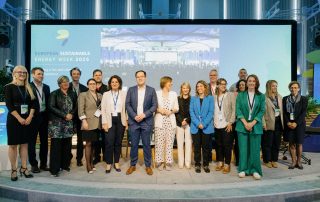
Nine projects and individuals have been named finalists for the EUSEW 2026 Sustainable Energy Awards. Public voting is open until 31 May.
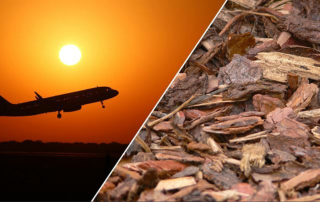
GOTHENBURG, Sweden – A new study from Chalmers University of Technology suggests that current EU regulations for sustainable aviation fuels (SAF) may inadvertently favor production methods that are more expensive and energy-intensive than available alternatives. The research, published in the journal Fuel, analyzes different pathways for producing synthetic methanol—a precursor for fossil-free aviation fuel. The [...]
Europe can significantly reduce its dependence on imported fossil fuels and lower power prices through accelerated electrification and clean energy build-out, according to a new analysis published today by CIP. The required investment is equivalent to the price premium paid for fossil fuel imports today. The closure of the Strait of Hormuz has highlighted that [...]
The Commission has launched a new call for proposals for key cross-border EU energy infrastructure projects with an indicative budget of €600 million. Organised by the Climate, Infrastructure and Environment Executive Agency (CINEA), this is the first call open for projects included on the second list of Projects of Common Interest (PCIs) and Projects of Mutual Interest (PMIs). [...]
Wind energy has grown to become a key feature of Europe’s energy system. Wind farms underpin our energy security, generating 20% of all electricity consumed in Europe. They are critical energy infrastructure. In a changing threat environment, Europe needs to ramp up the physical protection of its wind energy infrastructure. Today WindEurope presents a new policy [...]
Five European Transmission System Operators (TSOs) from Belgium, Denmark, Germany, and the Netherlands signed a Memorandum of Understanding (MoU) at WindEurope's Annual Event in Madrid. Their intention is to enhance the affordability, efficiency, and reliability of the future electricity system by boosting cooperation on offshore cable infrastructure in the North Sea. The signing of this [...]
The third day at the WindEurope Annual Event 2026 is all about offshore wind. Europe needs to move from crisis to confidence – with homegrown and secure renewable electricity. Three months after the North Sea Summit in Hamburg, governments and industry meet in Madrid to turn offshore wind commitments into action. The war in Iran [...]
The investment process in onshore wind energy in Poland is now more difficult than ever before – experts stated during the panel discussion “Onshore wind – efficiency and barriers”, which took place on 22 April as part of the European Economic Congress in Katowice (Europejski Kongres Gospodarczy). The panellists discussed the most significant challenges currently [...]
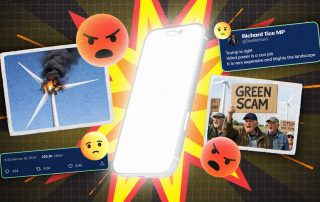
Wind energy dis- and misinformation have evolved into a systemic risk to Europe’s security, competitiveness and ability to act. CASM Technology and WindEurope presented a first-of-its kind report which analyses the scale of wind energy dis- and misinformation across Europe. It illustrates how false narratives circulating on social media lead to real-life wind energy project delays and [...]
The second day at the WindEurope Annual Event 2026 is all about electrification. Europe must move from crisis to confidence – replacing fossil imports with homegrown electricity. Fast. Electrification must become a strategic priority for Europe, not a policy footnote. That’s the only way to protect households and industry from fossil price swings, and to [...]
For the second time in less than five years, Europeans are paying the price of Europe's dependency on imported fossil fuels. AccelerateEU is the Commission's toolbox to bring immediate relief to European households and industries, especially the most vulnerable ones, while putting Europe on a steady pathway to energy independence. Since the escalation of the [...]
The second list of Projects of Common Interest (PCIs) and Projects of Mutual Interest (PMIs) has been published in the Official Journal of the European Union . It outlines 235 selected cross-border energy infrastructure projects that will strengthen energy connectivity across the continent, bringing nearer the completion of the Energy Union. Once in force, in 20 days time, it [...]
Finland has reached a significant milestone in renewable energy: the combined capacity of domestic wind power and utility-scale solar power has exceeded 10 gigawatts (GW). This is three times the total capacity of Finland’s hydropower and corresponds to roughly 6–10 large nuclear reactor units. Fast-to-build and cost-effective wind and solar power are key drivers of [...]
Berlin, April 14, 2026 –Offshore-Wind is an industrial growth driver in GermanyThe industry creates jobs throughout Germany. 31.530 full-time positions (around 49.000 employment relationships) and €14,6 billion in gross value added in 2025. This is shown in a study by wind:research Commissioned by the German Offshore Wind Energy Association (BWO). The industrial inland regions – such as North Rhine-Westphalia, Baden-Württemberg [...]
New IRENA policy advisory shows strategic role of renewables for energy security and resilience; recommends actions for policy makers to address today’s energy crisis Abu Dhabi, United Arab Emirates, 13 April 2026 – The strategic deployment of renewables has provided enhanced resilience in the face of the current energy crisis by a number of countries, according [...]
By Simona Aronica, Communications Manager of Energy Cities, EUSEW partner organisation How can we all enjoy comfortable temperatures in our homes at a fair, affordable price? Locally produced renewable heating and cooling networks fight energy poverty, increase comfort, make our cities sustainable and the Union more energy independent and competitive in challenging times. Sofia, a single mother in a [...]
The “Local Content. For the Benefit of Poland” („Local content. Z korzyścią dla Polski”) project is part of the government’s economic philosophy and the implementation of a priority set by the Ministry of State Assets (MAP). Its main objective is to localise supply chains, particularly in investments carried out by companies with State Treasury shareholdings. [...]
By Luke Haywood, Head of Climate and Energy at the European Environmental Bureau (EEB), a EUSEW partner organisation For a long time, the shift to renewable energy was seen as a virtuous but arduous task – good for the climate but not necessarily good for our wallets. This has changed at breathtaking speed. Costs [...]
Good evening, let me start with the Middle East. The situation in the region is extremely serious. It is causing great instability, suffering, and growing risks far beyond the region itself. This is why we need de-escalation and maximum restraint, the protection of civilians and civilian infrastructure. And I want to say a word about [...]
As offshore wind has become a cornerstone of European energy independence, it has also emerged as a prime target for physical, cyber and hybrid threats. In response, the EU has introduced strengthened resilience and preparedness requirements that are shaping a new regime of sector-specific legislation in Denmark impacting the energy sector, including offshore wind. In [...]
IJGlobal has recognized the financing of the BC-Wind offshore wind project, developed in Poland by Ocean Winds, by awarding it the Market Impact Award. This award is given to transactions that significantly influence the development of greenfield investment financing in the energy and infrastructure sectors. The financing of the BC-Wind project is one of the [...]
The energy ministers of Lithuania, Latvia, and Germany today in Paris signed a joint declaration of intent on cross border renewable electricity capacity and infrastructure. The Lithuanian (Litgrid), Latvian (Augstsprieguma tīkls), and German (50Hertz) electricity transmission system operators agreed to assess the feasibility of the Baltic–German PowerLink hybrid electricity interconnection. "Lithuania, Latvia, and Germany are [...]
On 3 February 2026, the US Congress took an important decision for European and Baltic security by approving USD 200 million funding for the continuation of the Baltic Security Initiative in 2026, aimed at reinforcing the defence capabilities of the Baltic states and deepening defence cooperation with the United States. The Baltic Security Initiative allows the Baltic states to [...]
Regional leaders from across Northern Europe gathered on 28-29 January in Stockholm, Sweden, for a joint meeting and seminar of the CPMR Baltic Sea Commission and the CPMR North Sea Commission Executive Committees. Representing 47 regional authorities[i], the Executive Committees adopted a Political Declaration calling for Reinforced Regional Cooperation in Northern Europe to increase Competitiveness, Resilience, [...]
Submarine data cables, carrying 99% of intercontinental internet traffic, are essential for modern life and the European economy. As the EU faces increasing risks to this critical infrastructure, the European Commission is intensifying efforts to enhance its security and resilience. It was introduced a new Cable Security Toolbox of risk mitigating measures and a list [...]
Across Europe, consumers are optimistic towards the energy transition yet almost everyone wishes for stronger governmental support. Many value a climate-friendly lifestyle but there is a gap between countries. Also, every second consumer would be willing to pay more for fossil-free electricity. All according to the latest results in Vattenfall’s Energy Barometer. On behalf of [...]
Submarine data cables, carrying 99% of intercontinental internet traffic, are essential for modern life and the European economy. As the EU faces increasing risks to this critical infrastructure, the European Commission is intensifying efforts to enhance its security and resilience. Yesterday, it introduced a new Cable Security Toolbox of risk mitigating measures and a list [...]
The European Commission has opened an in-depth investigation to assess, under the Foreign Subsidies Regulation ('FSR'), the activities of Goldwind Science & Technology Co., Ltd. ('Goldwind') in the production and sale of wind turbines and the provision of related services within the EU. The Commission has preliminary concerns that Goldwind may have been granted foreign [...]
Regional leaders from across Northern Europe gathered on 28-29 January in Stockholm, Sweden, for a joint meeting and seminar of the CPMR Baltic Sea Commission and the CPMR North Sea Commission Executive Committees. Representing 47 regional authorities , the Executive Committees adopted a Political Declaration calling for Reinforced Regional Cooperation in Northern Europe to increase [...]
Berlin, January 26, 2026. At the North Sea Summit in Hamburg on January 26, the governments of the North Sea coastal states, together with the offshore wind industry and transmission system operators, agreed on key steps for the further expansion of offshore wind energy in Europe. The German Offshore Wind Energy Association (BWO) expressly welcomes [...]
Offshore Wind Energy Act (WindSeeG) must be adapted quickly for project implementation and greater cost efficiency Expansion delayed – August tender failed A break in expansion must be avoided European cooperation can provide additional momentum Berlin, Bremerhaven, Frankfurt, Hamburg, Rostock, January 27, 2026 - The industry associations of the German offshore wind industry and the [...]
21 January, Davos, Switzerland | New figures from the Global Wind Energy Council (GWEC) show 2025’s record new capacity installed was driven by accelerated growth across Asia. India set a new national record of 6.3 GW installed last year, while Europe has delivered another 22.5 GW of new capacity - 5 GW more than was installed [...]
By Irene Paoletti, EU Project Manager, Energy Efficiency in Industrial Processes (EEIP), a EUSEW partner organisation Industry in the EU is decarbonising, and at the same time becoming more resilient and competitive in order to meet long-term climate and energy EU objectives. Yet the role of industrial symbiosis, often overlooked in industrial and energy policies, [...]
Estonian Government approved the National Development Plan of the Energy Sector until 2035 (ENMAK 2035), drafted by the Ministry of Climate. The plan sets the goals of ensuring energy security, increasing national competitiveness, and facilitating the transition to a clean energy economy. Preparation for the plan began in 2021. The final document provides an overview [...]
Artificial intelligence (AI) contributed to value creation and savings for Equinor and its partners amounting to USD 130 million in 2025. AI is now utilized on offshore platforms and land facilities to solve industrial tasks on a large scale in a safe, efficient, and profitable manner. To achieve Equinor's ambition for the Norwegian continental shelf [...]
WindEurope has announced the appointment of Tinne Van der Straeten as its new Chief Executive Officer, effective 2 February 2026. The leadership change comes at a pivotal moment for Europe’s energy security, industrial competitiveness and climate objectives. Van der Straeten brings extensive political and policy experience to the role, having served as Belgium’s Energy Minister [...]
The Polish Ministry of Energy has announced a key recruitment drive for specialists who will help define professional qualification standards in the power sector. This initiative is of fundamental importance for energy security and the pace of transformation in the Baltic Sea region, where the demand for certified experts is growing at a record pace. [...]
On January 15, 2026, during the second edition of EnergySecurityCongress.pl in Warsaw, discussions and presentations will be held on the security of offshore energy infrastructure. During four dedicated sessions, debates will be held on the legal changes needed to better secure critical infrastructure, cooperation between services and armed forces, countering physical and cyber threats, and [...]
Aurora’s latest report analyses the state of Europe’s power grid and outlines measures to address issues such as grid congestion, connection delays, and restricted cross-border capacity, now increasingly evident in many parts of Europe. (BERLIN) AURORA ENERGY RESEARCH— A new analysis by the global power market analytics firm Aurora Energy Research, finds that insufficient grid investment across [...]
By Mbuwir Brida, EUSEW Young Energy Ambassador Have you tried asking ChatGPT what the world’s most pressing challenge is? It ranks climate change as the first challenge. So how about we use the technology behind ChatGPT to solve that challenge? The most significant way to mitigate climate change is to move from fossil fuels to renewable [...]
On December 30, Polskie Sieci Elektroenergetyczne confirmed the technical readiness of the transmission infrastructure to receive power from offshore wind farms. All the necessary stations and lines have successfully passed voltage tests. “The new Choczewo station, the expanded Żarnowiec station, and the 400 kV line connecting them are ready to transmit energy from wind farms [...]
The Chamber of Industry and Commerce for East Frisia and Papenburg (IHK) has criticized the planned distribution of trade tax revenues from offshore wind energy. New regulation jeopardizes acceptance of the energy transition “Those who support the energy transition should not be penalized for doing so,” said IHK Chief Executive Max-Martin Deinhard. East Frisia has [...]
Berlin: (hib/BAL) A total of 30,225 wind turbines with a capacity of 67,038 megawatts are located onshore in Germany. In addition, there are 1,637 offshore turbines with a capacity of 9,215 watts, as stated by the German government in its response (21/3275) to a minor interpellation (21/2947) by the AfD parliamentary group (as of October [...]
The German government will host the third North Sea Summit (Nordsee-Gipfel) on January 26, 2026, at Hamburg City Hall. At the summit, important decisions will be made on closer cooperation in the expansion of offshore wind energy. Joint expansion is key to strengthening Europe's energy security and competitiveness, restoring investment and planning security for the [...]
The new National Energy and Climate Plan (KPEiK) drafted by the Polish Ministry of Energy arbitrarily reduces the scale of wind energy development without presenting any analyses. According to analyses by the Polish Wind Energy Association, the new version of the KPEiK will lead to a sharp increase in energy prices in the coming years. [...]
The Ministry of Energy has published a draft National Energy and Climate Plan for 2030 (KPEiK) with a perspective until 2040. This is a key document for the transformation of the Polish energy sector and economy. "Modern energy, strong industry, a secure energy mix, and lower energy prices for Polish families and Polish businesses. The [...]
According to information confirmed by BalticWind.EU sources, former Belgian Minister of Energy Tinne Van der Straeten is set to become the new Chief Executive Officer of WindEurope, the association representing Europe’s wind power sector. Van der Straeten served as Belgium’s federal Minister of Energy from October 2020 until January 2025, during a period marked by [...]
Wind energy confirms that it is one of the cheapest forms of energy. The first auction for offshore wind farms in Poland's history was a success, confirming the sector's investment readiness and the price competitiveness of wind energy. The outcome of the auction is a breakthrough moment for the domestic offshore sector – it means [...]
The European Commission has unveiled an EU Grids Package, a set of legislative and policy measures to modernise and expand Europe’s electricity grids. The Package is a crucial step to make energy more affordable and secure for households and industry. It addresses long-standing bottlenecks in grid development. It proposes new rules for grid planning and [...]