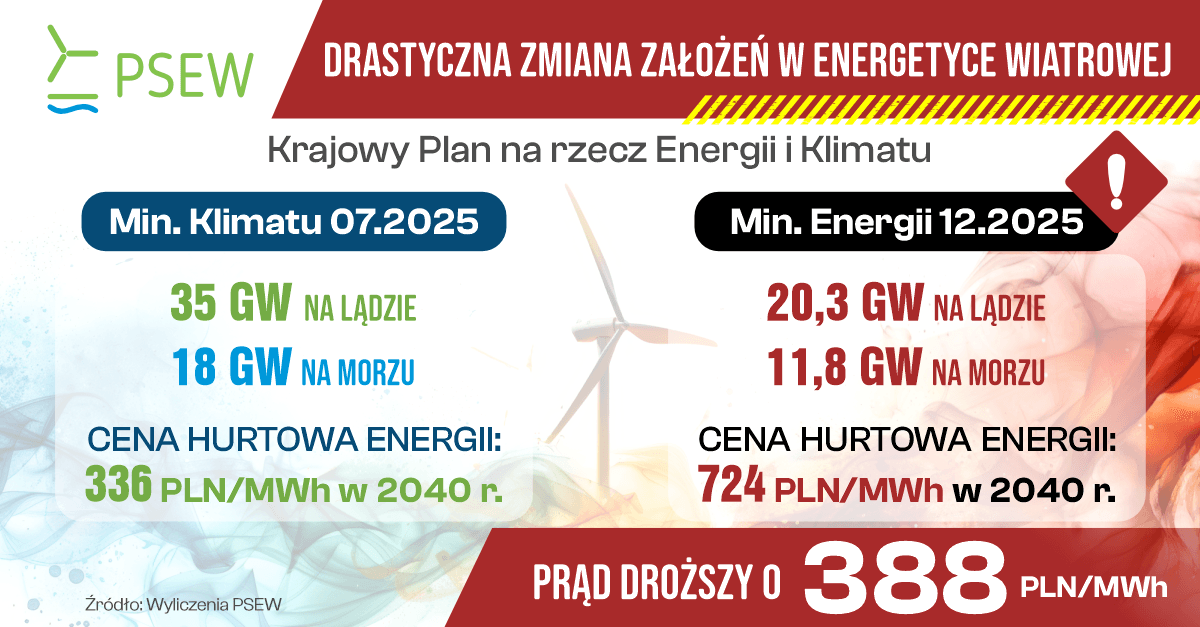
The new National Energy and Climate Plan (KPEiK) drafted by the Polish Ministry of Energy arbitrarily reduces the scale of wind energy development without presenting any analyses. According to analyses by the Polish Wind Energy Association, the new version of the KPEiK will lead to a sharp increase in energy prices in the coming years. Experts have calculated that with a low share of wind energy, the wholesale price of energy in 2040 will double, reaching as much as PLN 724/MWh, while a scenario based on the real use of wind energy potential would stabilize prices at around PLN 336/MWh.
The cheapest energy blocked by the administration
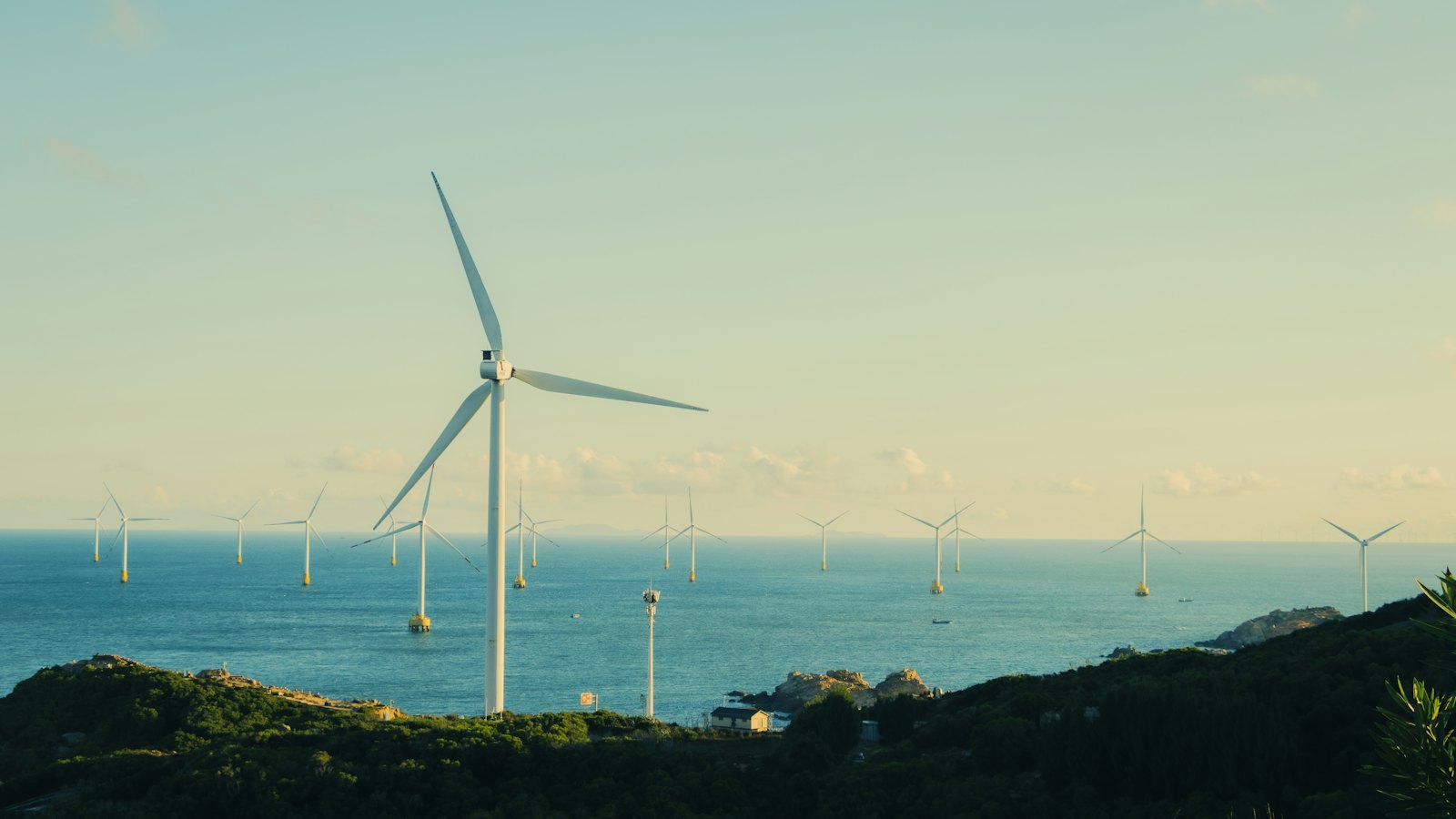
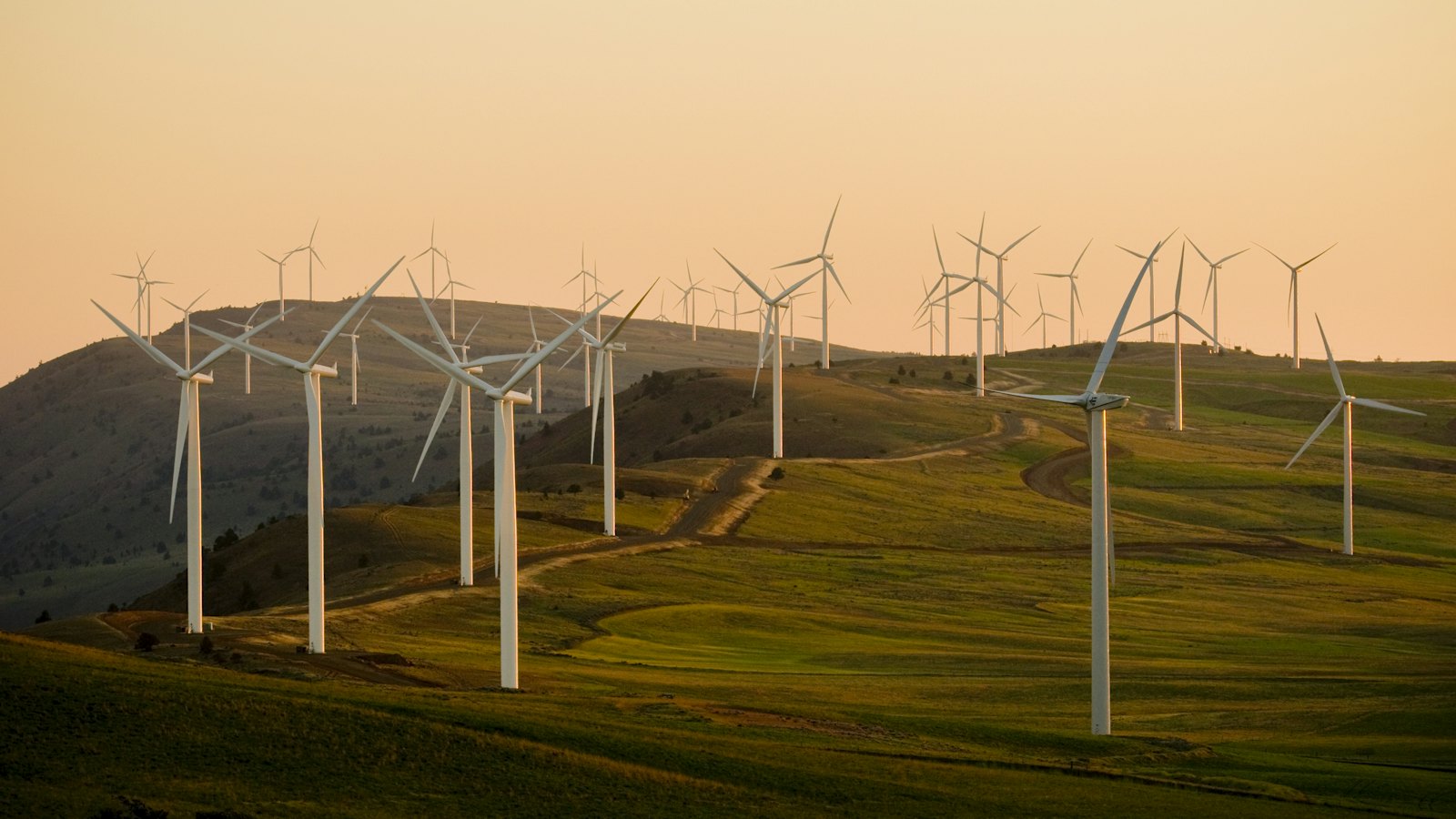
The newly announced version of the KPEiK means a brutal administrative brake on the development of wind energy – the cheapest, fastest growing, and key source of energy for energy security in Poland. This is incomprehensible, especially since six months ago the Ministry of Climate and Environment set ambitious targets for the development of renewable energy sources, which the Ministry of Energy is now overturning without giving any substantive reasons. The Ministry of Energy’s proposals limit onshore wind power to 20.4 GW in the WEM scenario (which is not very ambitious), instead of the 34.5 GW proposed in the previous version of the KPEiK, i.e., by more than 14 GW. In turn, in the field of offshore wind energy, the Ministry of Energy is reducing its development plans to 11.8 GW from the previously indicated 18 GW (a reduction of 6.2 GW), even though the recently concluded offshore auctions showed some of the cheapest prices for new capacity in the system. This means an actual cut in the development of onshore and offshore wind energy by 20 GW, without any data to justify such a decision.
Expensive energy instead of stable prices
This is not a strategy that responds to the market. It is an administrative brake on a technology that the market and the regulator clearly recognize as the cheapest source of new capacity in the system. The consequences of the new KPEiK are frightening—we are facing severe price shocks, the costs of which will be borne by energy consumers, energy-intensive industries, and the entire economy, warns the Polish Wind Energy Association, presenting hard calculations by independent experts:
- with a low share of wind energy, the wholesale price of energy in 2040 will rise to PLN 724/MWh,
- in a scenario based on a higher share of onshore and offshore wind, prices will fall to PLN 282/MWh in 2035 and remain stable at around PLN 336/MWh in 2040.
This is a difference of PLN 388/MWh, or more than twice as expensive energy in the variant that the Polish government intends to present to the European Commission. By 2040, this means cumulative losses amounting to hundreds of billions of zlotys for the entire economy. Restricting wind energy development leads to market instability and severe price shocks, the cost of which will be borne by energy consumers and the entire economy.
The planned increase in onshore wind power from 11 GW to just 20.3 GW over 15 years means building about 0.6 GW per year. This is the pace of countries with low ambitions, not for a large European Union economy that declares its desire to build a modern, competitive energy sector. By comparison, in mature European economies, the annual volume of new onshore wind power is measured in several to a dozen or so gigawatts, and administrative decisions alone allow for the implementation of projects that exceed the pace set out in the Polish KPEiK many times over. In Germany, permits were issued for the construction of 15 GW of onshore capacity in a single year. Accepting such a low pace of development means effectively excluding Poland from the mainstream of the European energy transition and giving up on exploiting the market potential that is already standard in other countries. There are no rational or systemic reasons to limit wind power development when it can provide cheap energy on a larger scale, stabilize the mix, and strengthen the competitiveness of the economy – says Janusz Gajowiecki, President of the Polish Wind Energy Association.
Lack of consistency and threat to security
The transmission system operator declares the readiness of the National Power System (KSE) for 110 GW of renewable energy by 2040, but the new KPEiK does not ensure the basic supply of cheap wind energy, which is the foundation of a stable system balance. The state’s strategic documents are no longer consistent, and the costs of this inconsistency will be borne by energy consumers.
Poland is one of the last Member States to submit the final version of the KPEiK to the European Commission. The European update of these plans was intended to accelerate the energy transition across the EU, increase RES ambitions, lower energy prices, and strengthen energy security after the crisis of 2021–2023. Most member states used this process to raise their renewable energy targets, particularly for wind and photovoltaics, treating cheap RES as the foundation of economic competitiveness and system resilience.
Against this backdrop, the new Polish KPEiK deviates sharply from the EU’s direction, lowering ambitions instead of raising them and limiting the development of the cheapest technologies. As a result, this document not only fails to achieve the EU’s strategic goal of accelerating the transition, but also places Poland among the least ambitious Member States, condemning the economy to more expensive energy and weakening its competitive position in Europe. The Polish energy sector cannot rely on documents that ignore hard market data, auction results, and the potential of the cheapest technologies – emphasizes Janusz Gajowiecki, President of PSEW.
The wind industry is calling on the government to urgently revise the National Energy and Climate Plan and give it a real strategic role. The KPEiK should set an ambitious direction for development and maximize benefits, rather than administratively limiting the potential of technologies that are the foundation of a modern and resilient energy economy.
Source: Polish Wind Energy Association