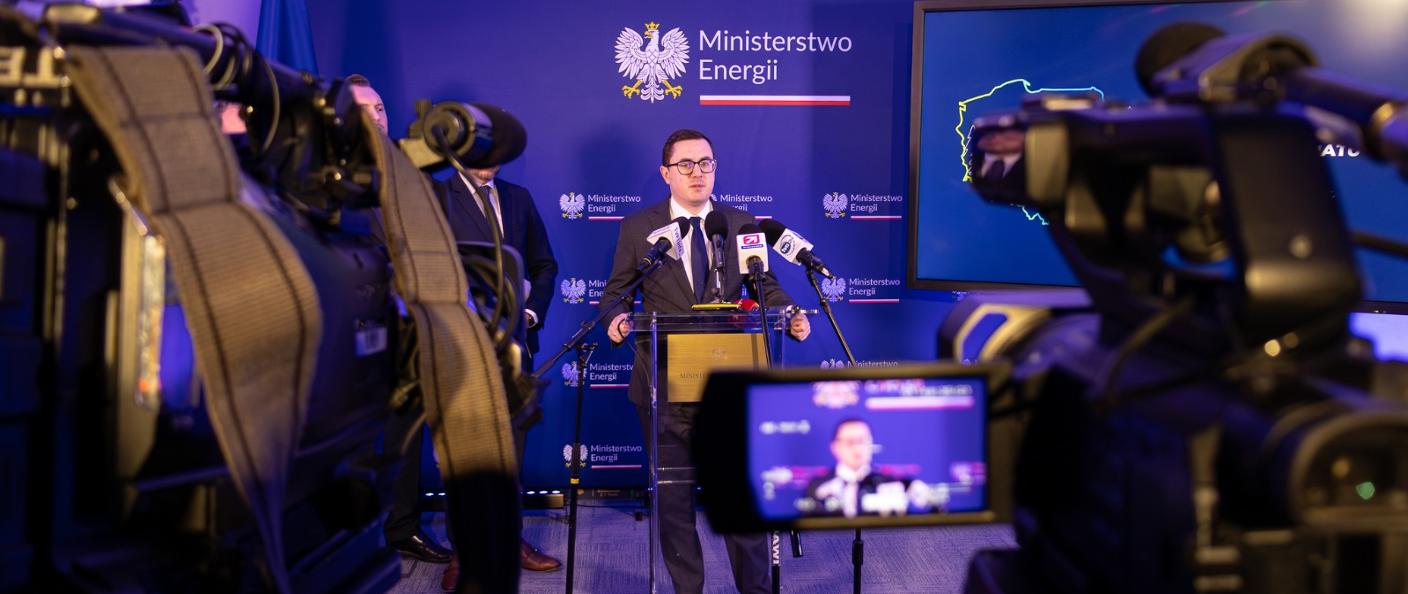
The Ministry of Energy has published a draft National Energy and Climate Plan for 2030 (KPEiK) with a perspective until 2040. This is a key document for the transformation of the Polish energy sector and economy. “Modern energy, strong industry, a secure energy mix, and lower energy prices for Polish families and Polish businesses. The KPEiK is a strategic document that combines the security of the power system, the competitiveness of Polish companies, and benefits for households. The KPEiK is a benchmark for shaping planning processes, regulatory mechanisms, and the spending of EU funds. Its implementation will provide Poland with investment predictability, security, and energy independence for decades to come,” says Miłosz Motyka, Minister of Energy.
The new version of the National Energy and Climate Plan is the result of extensive consultations with experts and in-depth systemic analyses. Compared to earlier assumptions, the document has been made more realistic, both in terms of the pace of transformation and the capabilities of the Polish economy.
We treat the National Energy and Climate Plan as the most important roadmap for the development of the Polish energy sector. It is a document that organizes the direction of Poland’s energy transition and sends a clear signal to the market about the stability of this process. We know where we are going and we know at what pace we want to travel that road. We are focusing on a safe and sustainable energy mix, in which nuclear energy, renewable energy sources, and energy storage will play the most important roles. These are the foundations of the future energy system – adds Miłosz Motyka, Minister of Energy.
WAM and WEM scenarios
The KPEiK update is based on two options for achieving the goals:
- WAM – ACCELERATED TRANSITION SCENARIO (assumes additional measures to accelerate the transition, also enables the implementation of some of the Fit for 55 package commitments)
- WEM – SUSTAINABLE TRANSITION SCENARIO (based on existing legal and investment instruments)
By 2030, greenhouse gas emissions will fall by 43% in the WEM scenario and by 53% in the WAM scenario, and by 2040 by 61% and 75%, respectively. These differences have a direct impact on the scale of investment, the structure of the mix, and the rate of decline in energy costs.
Energy mix: system security and market predictability
One of the most important elements of the KPEiK is a clearly defined energy mix.
The KPEiK assumes a deep electrification of the economy, which will increase electricity demand to approximately 200 TWh in 2030 and 270 TWh in 2040.
By 2030:
- installed capacity in the National Power System (KSE) will increase to over 90 GW, and by 2040 it will double compared to 2025
- the share of renewable energy sources in electricity production will reach 51.6% (WEM) and 53.2% (WAM)
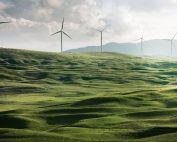
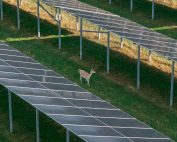
- Onshore and offshore wind power and photovoltaics will play a key role.
The importance of nuclear energy (including large nuclear power plant units and SMR modular reactors) has been reinforced as a stable, zero-emission basis for the system at the end of the 2030s and in the 2040s.
Natural gas will serve as a bridge fuel, with maximum demand of around 24-25 billion m³ around 2030. It will be gradually replaced by renewable and decarbonized gases.
Power adequacy analyses, conducted in cooperation with PSE, confirm that safety standards are met.
Our goal is energy security and protecting citizens from excessive costs. The updated KPEiK is a signal to the market: Poland is entering the operational phase of energy transformation, covering large-scale energy, industry, and millions of households. It is a strategy that combines national security, industrial competitiveness, and benefits for citizens. It is a vector of development for Poland for the coming decades – says Wojciech Wrochna, Secretary of State at the Ministry of Energy and Government Plenipotentiary for Strategic Energy Infrastructure.
Industry and economy: lower costs, higher competitiveness
The energy transition is one of the key drivers of economic growth. For energy consumers, the KPEiK means, above all, lower and more predictable energy costs.
Compared to 2025, unit energy production costs may fall to:
- 8% in 2030
- 18% in 2040
Lower energy prices and a reduced carbon footprint:
- will strengthen the position of Polish companies in EU and global supply chains
- will limit exposure to EU ETS costs
- will facilitate access to cheaper capital
Households: stable bills and an active role for consumers
KPEiK strengthens the role of end users by:
- reducing energy production costs, which translates into more stable bills in the long term
- developing dynamic tariffs, energy storage and demand flexibility
- increasing the importance of prosumerism and self-consumption of energy from renewable sources
At the same time, the transition will reduce energy poverty. By 2040, the percentage of households spending more than 10% of their income on energy will fall by 55% in the WAM scenario and by 30% in the WEM scenario. Meanwhile, the percentage of households whose income after paying energy bills is below the social minimum will decrease by 52% in the WAM scenario and by 31% in the WEM scenario.
Heating: a common interest of industry and residents
Heating, which is crucial for both cities and industrial plants, will be decarbonized through:
- an increase in the share of RES to 32-36% in 2030 and 43-57% in 2040, using diversified energy sources
- electrification
- integration of electricity and heating systems (sector coupling)
- efficient use of waste heat (including from nuclear fuel in the future)
Coal, gas, and just transition
According to forecasts, demand for hard coal will fall to 28.4 million tons in 2030 in the WEM scenario and 19.4 million tons in the WAM scenario compared to 2020, with domestic production remaining the basis for meeting demand.
The transformation of mining regions will be carried out in a socially responsible manner. The KPEiK provides for support for coal regions, job protection, and the development of new industrial competencies.
The energy transition is not an end in itself—it is measured by the benefits it brings to people and the economy. Thanks to the KPEiK, we are creating conditions for reducing energy costs, strengthening the competitiveness of Polish industry, and stabilizing household budgets. At the same time, we are ensuring that the transition is fair, so that no regions, industries, or households are left behind in the process of change – adds Konrad Wojnarowski, Undersecretary of State at the Ministry of Energy.
Investments and scale of change
Total investment expenditure in 2026-2040 will amount to
- approx. PLN 2.7 trillion in the WEM scenario
- approx. PLN 3.5 trillion in the WAM scenario
Higher expenditure in WAM means faster modernization of the system, lower energy prices in the long term, and greater economic resilience.
The plan will be monitored in two-year cycles and will be reviewed and updated in 2028. This will ensure its consistency with the dynamically changing realities of the energy market.
We encourage you to familiarize yourself with KPEiK


Source: gov.pl