On December 1, 2025, Elering submitted an application to the Ministry of Economic Affairs and Communications to initiate a special national plan with the aim of determining the possible construction conditions for the Nordic–Baltic Hydrogen Corridor (NBHC) The planning process will clarify whether and under what conditions it would be feasible to build a hydrogen transmission pipeline on Estonian territory that would connect Finland and Germany and create potential economic and strategic value for Estonia. The estimated planning time is approximately three years. The estimated time for completing the planning is approximately three years.
Elering Chairman of the Board Kalle Kilk: “Elering has long-term experience in the construction and management of gas infrastructure, which gives us a good basis for developing a hydrogen connection and creating strategic value. The question for Estonia is simple: do we want the opportunity to join the hydrogen market and remain part of a unified supply network, or are we content to remain on the sidelines? The latter would mean losing out on several valuable opportunities, from transit revenues to the possibility of bringing new energy-intensive industries to Estonia. That is why we have decided to participate in the hydrogen corridor project, at least in its development phase, to secure Estonia’s place in the future energy landscape.
The construction of the pipeline would create the necessary conditions for connecting Estonia to the Nordic and Central European hydrogen markets and would strengthen our energy security and security of supply. The new infrastructure would open up new investment opportunities in both the energy sector and industry.
The potential hydrogen pipeline would form the basis of Estonia’s domestic hydrogen infrastructure in the future, to which additional connections could be developed. The infrastructure would also create the conditions for growth in research and development, offering universities and research institutions opportunities to test hydrogen technologies, energy storage, and digital control systems.
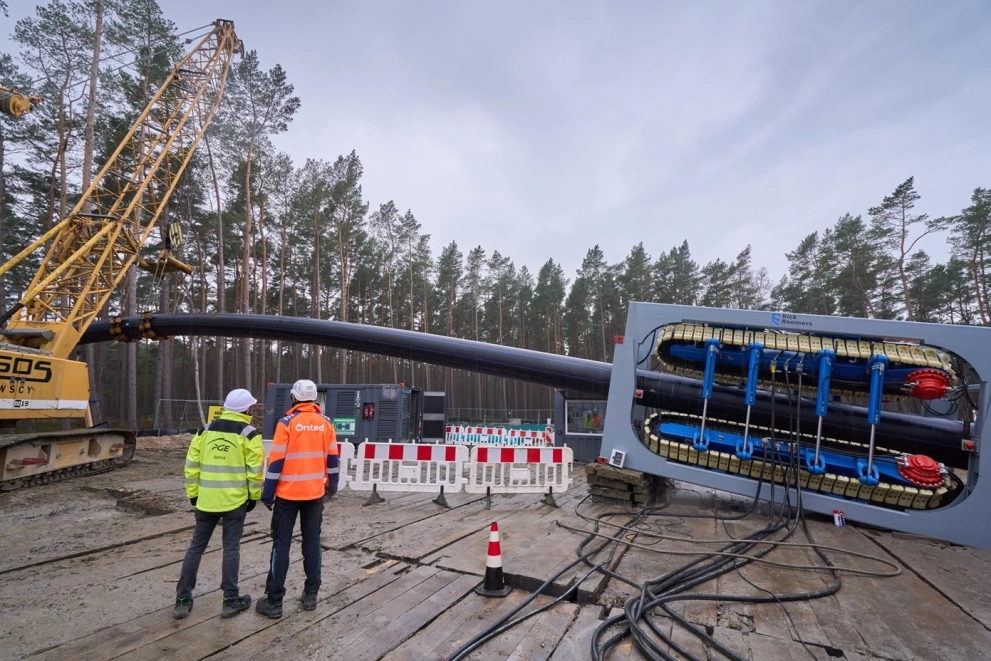
The Nordic-Baltic Hydrogen Corridor is planned as an underground pipeline. The exact route and technical solutions for Estonia will be determined in the course of the national spatial planning process. It is estimated that the length of the hydrogen pipeline to be installed in Estonia would be 250 kilometers, and the pipeline would enable the transport of approximately 90 terawatt-hours of hydrogen per year by 2040. Similar processes are taking place in parallel with other project partners: Finland, Latvia, Lithuania, Poland, and Germany. The current phase of the project is 50% co-financed by the European Union.
The Government of the Republic will decide on the initiation of special national planning within 90 days at the latest. If the decision is positive, a thorough planning process will be carried out under the leadership of the Ministry of Economic Affairs and Communications, which will include an assessment of social, economic, and environmental impacts.
The planning process is open to the public and anyone interested can participate. The Ministry of Economic Affairs and Communications will announce the opportunities for participation when it begins the planning activities.
Source: Elering