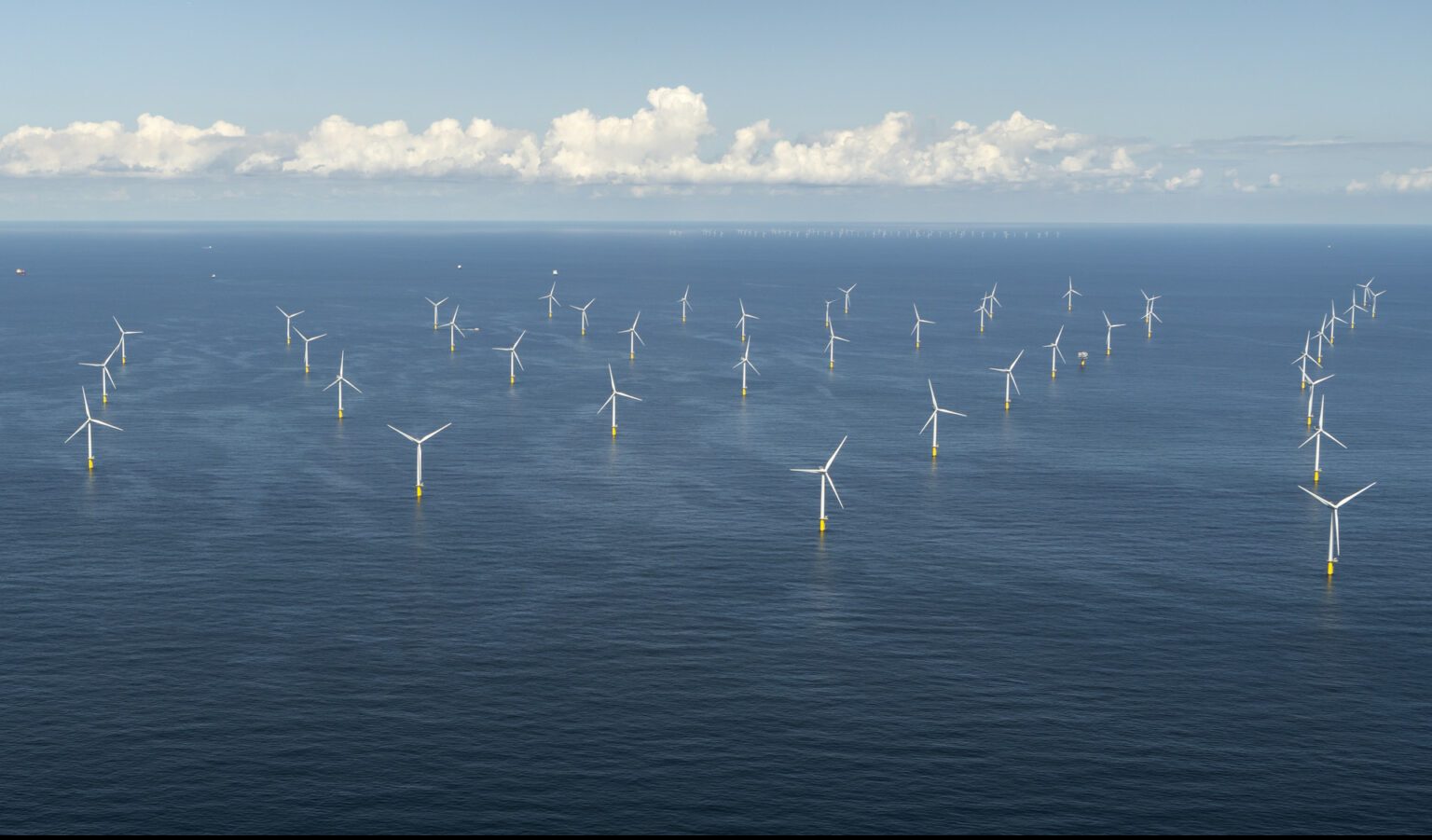
Berlin, January 26, 2026. At the North Sea Summit in Hamburg on January 26, the governments of the North Sea coastal states, together with the offshore wind industry and transmission system operators, agreed on key steps for the further expansion of offshore wind energy in Europe. The German Offshore Wind Energy Association (BWO) expressly welcomes the decisions and calls for stable expansion paths, investment-friendly tendering frameworks, and significantly stronger European cooperation. Together with WindEurope, the BWO has signed the Offshore Wind Industry Declaration, thereby supporting the long-term expansion path of 300 gigawatts of offshore wind capacity in Europe.
North Sea summit sends strong signal for offshore wind
With the Offshore Wind Investment Pact for the North Sea agreed at the summit, governments are committing to tender 15 gigawatts (GW) of offshore wind capacity annually between 2031 and 2040. The tenders are to be conducted within an optimized and risk-reduced framework. At least ten GW per year are to be secured through indexed, bilateral Contracts for Difference (CfDs) in order to ensure market predictability and investment security.
The BWO considers these commitments to be crucial for the expansion of offshore wind energy. From the association’s point of view, reliable volumes and a stable auction framework are prerequisites for triggering investments in projects, supply chains, ports, ships, and skilled workers.
“The North Sea Summit in Hamburg marks a milestone for offshore wind energy in Europe,” says Hans Sohn, Head of Policy and Communications at the BWO. “European countries are moving closer together in the North Sea and intensifying their cooperation – this is a very good sign. It is becoming clear that offshore wind, as a central pillar of energy supply, supports a resilient Europe. Political commitments to clear expansion paths and reliable tenders create the urgently needed planning security and form the basis for investment, falling costs, and a strong European offshore wind industry.”
Offshore Wind Industry Declaration: Industry takes responsibility
At the summit, the BWO, together with WindEurope and numerous other companies along the value chain, signed the Offshore Wind Industry Declaration. In it, the industry commits to an ambitious expansion of offshore wind energy as a central pillar for energy security, competitiveness, and climate protection in Europe.
In return for political commitments, the industry undertakes to reduce the electricity production costs of offshore wind projects by 30 percent in real terms by 2040 compared to the level of investment decisions in 2025. In addition, the industry intends to make significant investments in production capacities, infrastructure, and training, thereby securing added value and jobs in Europe.
In addition, a revision of the current auction design in Germany towards bilateral contracts for difference will lead to lower financing costs and thus lower electricity prices. “We are committed to ensuring that no further auctions take place under the current rules. The auction of areas that nobody wanted in August 2025, planned by the German government for June 2026, should be postponed and take place with a new tender design,“ said Hans Sohn. ”The UK is a role model here, where a large auction based on bilateral contracts for difference has just taken place very successfully.”
Combining industrial policy and the protection of critical infrastructure
The security of critical energy infrastructure is a key topic at the North Sea Summit. Offshore wind farms are part of critical infrastructure. From the BWO’s perspective, maritime security is not an additional external requirement, but a fundamental prerequisite for stable, economically viable, and resilient operation. Security, economic efficiency, and security of supply are inextricably linked.
At the same time, security policy expectations clash with long-term investment and operational realities. Offshore wind projects are based on fixed approval frameworks and clearly calculated cost structures, while security-related requirements are dynamic and touch on issues of responsibility, costs, and liability. The BWO therefore advocates for early, structured dialogue between operators, authorities, and security actors. The goal is a security-by-design approach that strengthens public security interests while ensuring investment and planning security.
Irina Lucke, Chair of the BWO and participant in the Security Table at the North Sea Summit, emphasizes: “The BWO is perceived by security authorities as a central point of contact—and that is logical. Operators of offshore wind farms bear responsibility for critical infrastructure over project lifetimes of 25 years and more and share the goal of a safe maritime space. We are ready to contribute our existing potential. However, dialogue is essential to achieve clear objectives, reliable responsibilities, and technically and economically sustainable implementation.”
Study confirms advantages of cross-border offshore planning
A key concern of the BWO – also with regard to the North Sea Summit – is significantly better cross-border cooperation in expansion. The advantages of such cooperation are confirmed by a recent study by Fraunhofer IWES, which was commissioned by BWO and BDEW.
Using various scenarios for the expansion of German offshore wind power to 70 GW, the study shows that cross-border cooperation on land use can lead to less dense development, significantly reducing shadowing effects. This can increase energy yields by up to 13 percent, while reducing electricity production costs by up to 11 percent.
From the BWO’s point of view, these results underscore that European cooperation not only makes sense in terms of energy policy, but is also economically necessary.
Source: BWO