- Offshore Wind Energy Act (WindSeeG) must be adapted quickly for project implementation and greater cost efficiency
- Expansion delayed – August tender failed
- A break in expansion must be avoided
- European cooperation can provide additional momentum
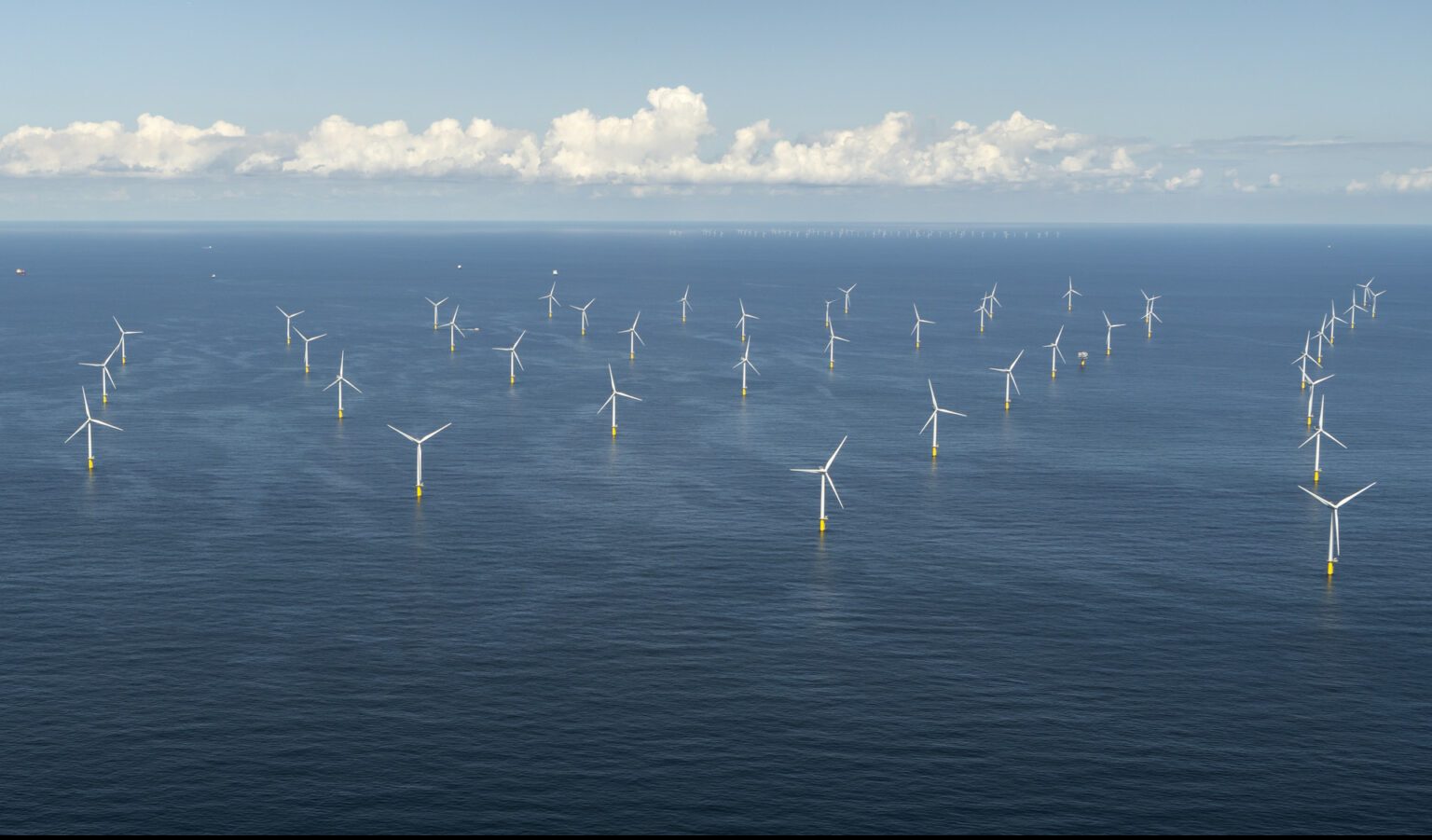
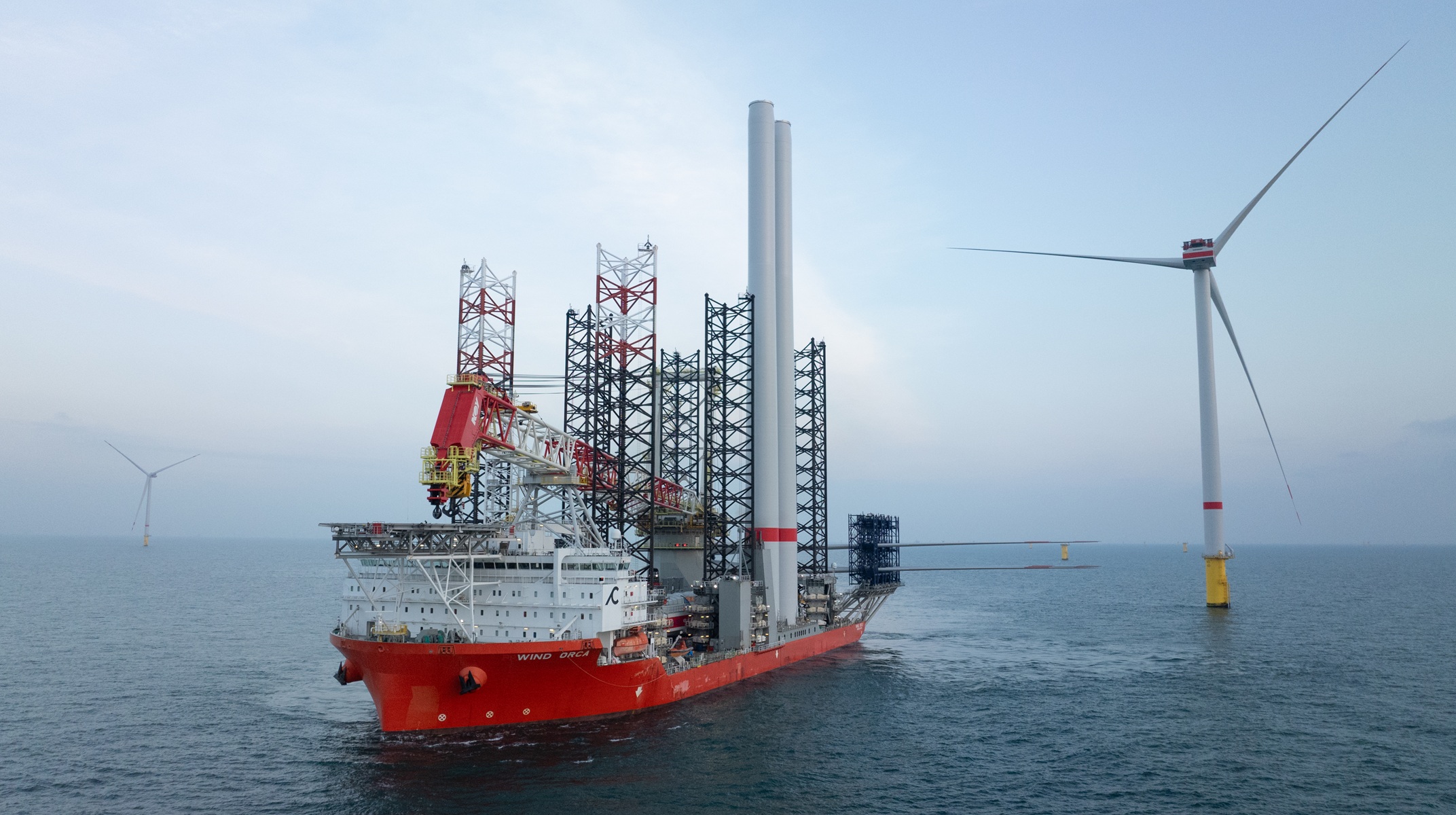
The industry associations of the German offshore wind industry and the non-profit foundation OFFSHORE-WINDENERGIE today published the expansion figures for 2025. The figures, compiled by the consultancy Deutsche WindGuard, show that 41 new offshore wind turbines with a total capacity of 518 MW were connected to the grid in Germany during this period. By the end of the year, 65 foundations had been installed. 19 turbines with a combined capacity of 278 MW were erected but have not yet fed electricity into the grid. In total, 1,680 turbines with a capacity of 9,740 megawatts were installed in Germany by the end of 2025.
Delays in connecting the turbines to the grid and the lack of bids in the August 2025 tender round mean that the expansion target of 30 GW by 2030 will not be met. According to current forecasts, around 20 GW of offshore wind energy capacity will be connected to the grid in 2030. The current challenges jeopardize investments in projects that have already been awarded as well as future projects, and thus the progress of an economically efficient offshore wind expansion. The 30 GW target will not be achieved until 2032 at the earliest. This requires a tender design that secures investments and predictable framework conditions for the industry which focus on project implementation.
Urgent need for political action
“15 years after Alpha Ventus, the first German offshore wind energy project, was connected to the grid, the industry sees an urgent need for political action after a year of modest expansion and a failed tender round in August 2025. The federal government is now called upon to fundamentally and quickly reform the future tendering system in cooperation with the industry. Instead of maximizing revenue for the state, the focus must be on project implementation for a secure and cost-efficient energy supply. A genuine restart is now needed, otherwise there is a risk of losing European and German added value and failing to achieve the necessary expansion for the future electricity supply. The example of the UK shows how short-term adjustments can lead to a rapid improvement in the framework conditions and successful tenders with a high prospect of project implementation,” comment the industry organizations BWE, BWO, VDMA Power Systems, WAB e.V., WindEnergy Network e.V., and the OFFSHORE-WINDENERGIE Foundation on the current challenges facing the industry.
Tender design needs reform
The German government plans to put the spaces that were not awarded in August 2025 back into the tender process in June of this year. It is to be expected that this round will fail again if the necessary adjustments are not discussed as quickly as possible and take effect for the 2026 tenders. If necessary, deadlines must be slightly adjusted so that awards can be turned into contracts and projects.
To avoid another no-bid round, a new tender design must put an end to negative bidding. Instead, the industry is calling for a revenue model that better guarantees both project realization and investment security within a harmonized European market framework. For example, by abolishing the uncapped bid component, introducing bilateral contracts for difference (CfD), which have been successfully implemented in the United Kingdom, and securing power purchase agreements (PPAs) to reduce implementation risks, lower financing costs, and secure the expansion path. At the same time, sanctions and security deposits, as well as penalties, must be adjusted to avoid option-based bidding and prevent project cancellations.
“Industry associations and organizations have been criticizing the tender design for years and calling for comprehensive changes. The failure of the tender in August 2025 underscores the validity of this criticism, as well as the urgent need for reform. The necessary changes to the Offshore Wind Energy Act (WindSeeG) must not be put on the shelf any longer, but must finally take into account the urgency of the challenges. There also needs to be a greater focus on revenue in spatial planning, for example by reducing shadowing effects. It is not the number of turbines built or the installed capacity that is decisive, but the most cost-efficient energy yield. In the case of offshore wind energy, too, it is important to keep an eye on the overall system costs and not just the grid costs,” according to the organizations. Necessary adjustments must be discussed as quickly as possible and already take effect for the 2026 tenders. In order to implement the corresponding changes to the tender rules, it is conceivable that the tenders will be postponed to the fourth quarter of 2026.
Strengthening European cooperation for greater security and fair competition
The industry is also calling for intensified European cooperation. “The governments of the European countries bordering the North Sea and Baltic Sea should coordinate more closely on expansion paths, spatial planning, and their goals in order to ensure a continuous ramp-up of the market and investment security. Germany and Denmark in particular should work closely together on cross-border land use. In addition, effective instruments are needed at the European level to protect against market distortions caused by unfair pricing practices by state-subsidized players. A level playing field is essential.”
The European cooperation promoted by the North Sea Summit to support market ramp-up and investment security sends a strong signal to the industry. It is now important to implement these plans and thus create a stable and reliable framework for the industry.
Protecting national security interests
Offshore wind turbines are a decentralized and digitally networked infrastructure and a central component of the energy system. In times of increasing geopolitical tensions, the political and regulatory framework must effectively address the seamless security and resilience of the energy system, including all energy facilities connected to the power grid, in order to minimize existing risks and ensure supply and national security. This concerns the physical and digital security of the facilities, for example, access to critical facilities by operators, service providers, and manufacturers. This explicitly concerns the protection of national security interests.
Seaports form the backbone of offshore wind energy
Without sufficient port capacity and an efficient infrastructure, the expansion targets cannot be achieved. This requires significantly greater financial participation from the federal government. The special infrastructure fund opens up the opportunity to consistently fulfill this responsibility.
Source: VDMA