To assess the potential impact of the offshore wind park on bats, in March of 2025 the joint Estonian – Latvian project ELWIND signed an agreement with the Polish company “3Bird”, which has extensive experience and studied the impact of offshore wind parks on these protected animals in other similar projects. The study was conducted in both Estonian and Latvian territorial waters, covering the areas of both offshore wind parks and a 4-km buffer zone around them.
The activity of bats was analyzed in the Baltic Sea area designated for the planned ELWIND wind park in Latvian waters, as well as at coastal points, to determine migration periods across the region.
According to Klaudyna Świstun, representative of “3Bird”, the aim of the study was to determine whether bats occur in the open sea, how frequently and during which seasonal periods they appear there, and whether there is potential interaction between bats and offshore wind turbines. Based on available information, no marine bat monitoring has been conducted to date in the Latvian part of the project area.
Monitoring was carried out from 1 May to 20 September 2025, covering the full seasonal cycle of bat activity and migration in this area.
“Data were recorded continuously – 24 hours a day – throughout the entire monitoring period, and they are being analysed together with meteorological information, including wind speed, direction, and temperature,” says Świstun. “The collected data will help document the presence of bats at sea, identify their seasonal migration patterns, and assess potential collision or attraction risks in relation to wind turbines. The proposed research methods will also make it possible to identify bat migration routes and key activity zones, thus supporting biodiversity conservation objectives within the ELWIND project area.”
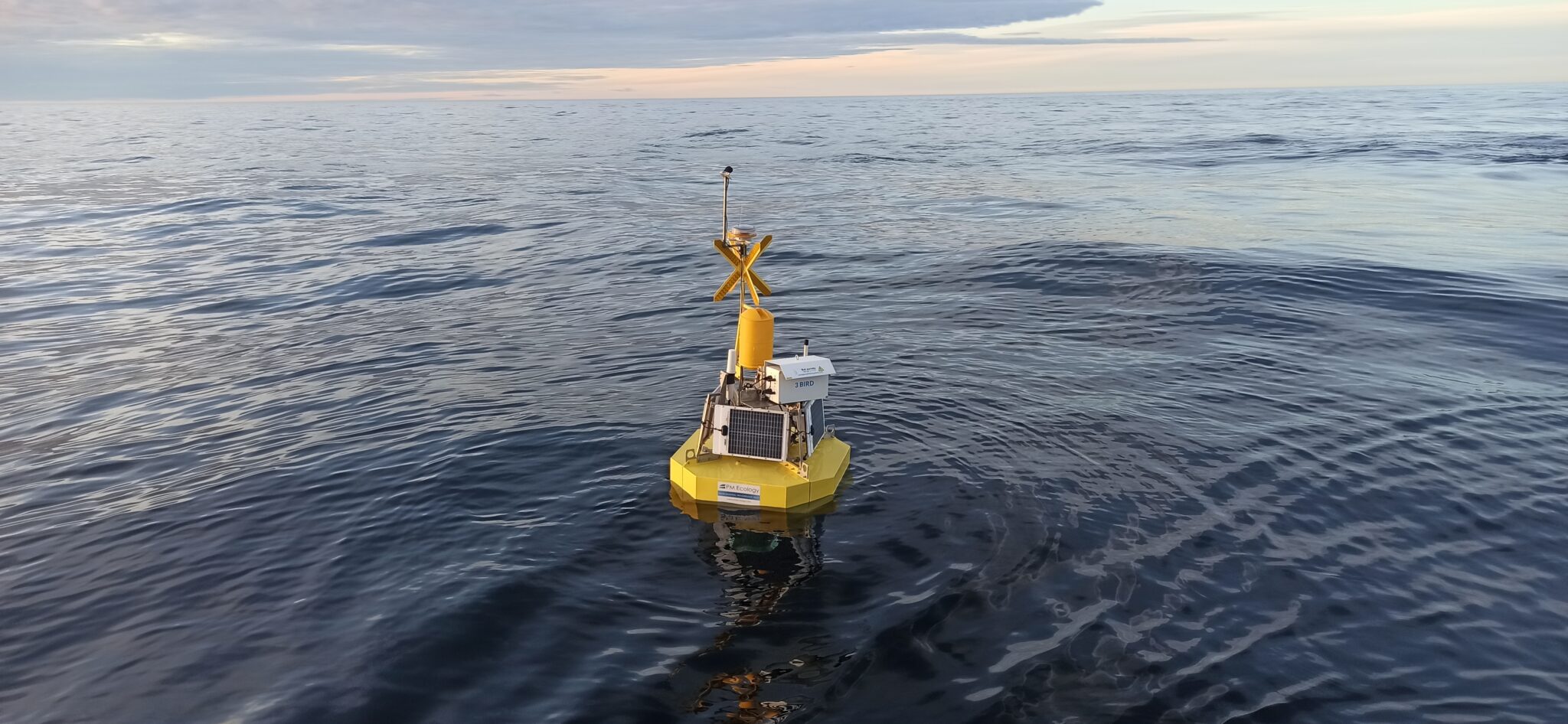
An important part of the study was the use of local infrastructure – buoy deployment, maintenance, and servicing were carried out using the port of Ventspils and local maritime service providers, ensuring regional involvement. The company has cooperated with local vessel owners and used fishing boats to service and dismantle the buoys after fieldwork was completed.
Nine bat species identified
Current observations show that bats appear mainly seasonally – during spring migration and with the highest activity in autumn when weather conditions are favourable (warm, calm nights). Outside these migration periods, bat activity is low, which is characteristic of species observed in the Baltic Sea. According to the researchers, high-sensitivity ultrasonic sensors provide precise monitoring of bat activity during migration and supply the necessary data for evaluating the wind park’s impact on sensitive species. All results obtained will be included in the ELWIND offshore wind park’s environmental impact assessment.
As a result of the marine monitoring, four bat species out of the 16 known in Latvia have been identified: Eptesicus serotinus (serotine bat), Pipistrellus nathusii (Nathusius’ pipistrelle), Pipistrellus pygmaeus (soprano pipistrelle), and bats belonging to Eptesicus spp.
Along the coast, the following species were observed: Eptesicus nilssonii (northern bat), Eptesicus serotinus (serotine bat), Myotis daubentonii (Daubenton’s bat), Nyctalus noctula (noctule), Pipistrellus nathusii (Nathusius’ pipistrelle), Pipistrellus pygmaeus (soprano pipistrelle), Pipistrellus pipistrellus (common pipistrelle), Plecotus auritus (brown long-eared bat), Barbastella barbastellus (barbastelle), as well as bats from the genera Eptesicus spp. and Myotis spp.
Goal – reducing collision risk between bats and wind turbines
In-depth data processing and analysis are currently under way.
“First, we determine the intensity of bat activity in space and time – how frequently and under what conditions bats appear at sea. We analyse whether the activity is migratory or local in nature, and during which periods and under what weather conditions these animals are most active,” explains Świstun from 3Bird.
At the same time, the sensitivity of individual species is being assessed, since all bat species in Europe are protected, and some are particularly vulnerable to risks associated with wind infrastructure, especially migratory species. The obtained data are used to model collision risk with recognised methods and to assess the likelihood that a bat might come into contact with an operating turbine. The results will include proposed mitigation measures, such as optimising turbine layout and increasing cut-in speeds to reduce collision risk between bats and wind turbines.
Although scientific data and publications on the impact of offshore wind parks on bats exist, resources remain limited and scattered. Published studies and impact assessments indicate that bats use both the Baltic coast and the open sea during seasonal migrations.
According to Jānis Ločmelis, Head of the ELWIND Project Division at the Investment and Development Agency of Latvia:
“This monitoring marks a significant milestone in Latvian nature research, as until now bat presence in the open sea had practically not been studied in our country. Available data mostly concern only the coastline, so the monitoring carried out within the ELWIND project provides a scientifically unique perspective – documenting for the first time, in a systematic way, how and when bats use the Baltic Sea space during migration. These findings not only expand our understanding of bat ecology but will also help develop more precise, scientifically grounded risk-mitigation measures for future offshore wind park development.”
Świstun emphasises that it is still too early to draw final conclusions about the project’s potential impact – full data analysis must first be completed, followed by the determination and evaluation of environmental impacts related to bats.
Source: ELWIND