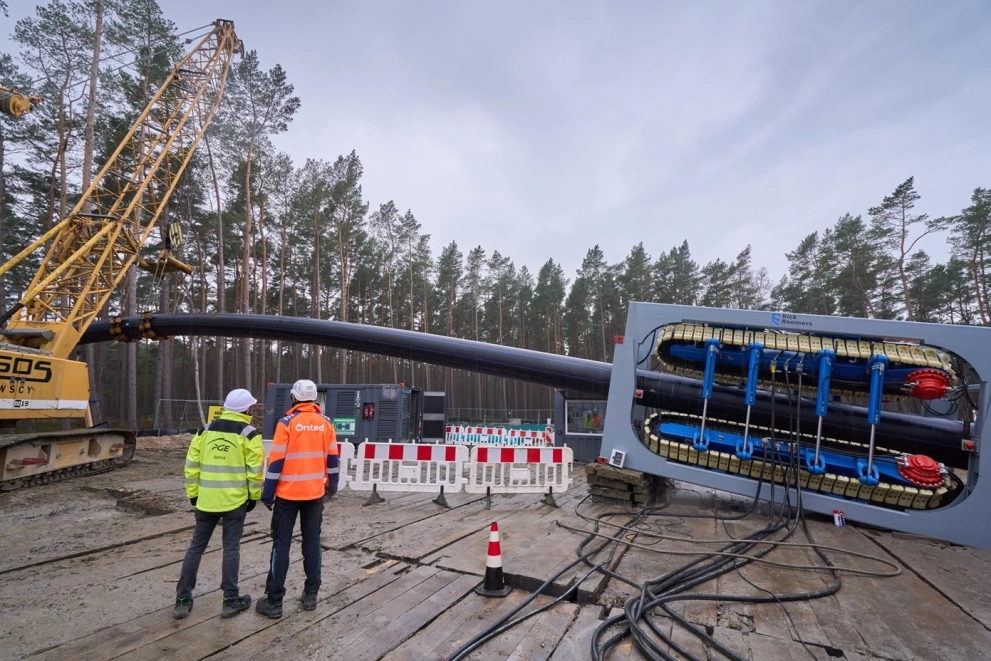
The sea-to-land directional drilling campaign for the Baltica 2 project—a joint venture between PGE and Ørsted—has been completed. Thanks to the use of advanced HDD technology, it will be possible to lay export cables under the shoreline without trenching and connect the offshore portion of the wind farm to the onshore grid infrastructure without disturbing the beach or dunes.
The sea-to-land transition is one of the most challenging sections of the entire cable route—both technically and environmentally. It is precisely at this point that the offshore infrastructure meets the onshore infrastructure, which is why the execution of this stage is critical for the further implementation of the system for transmitting power from the farm to land.
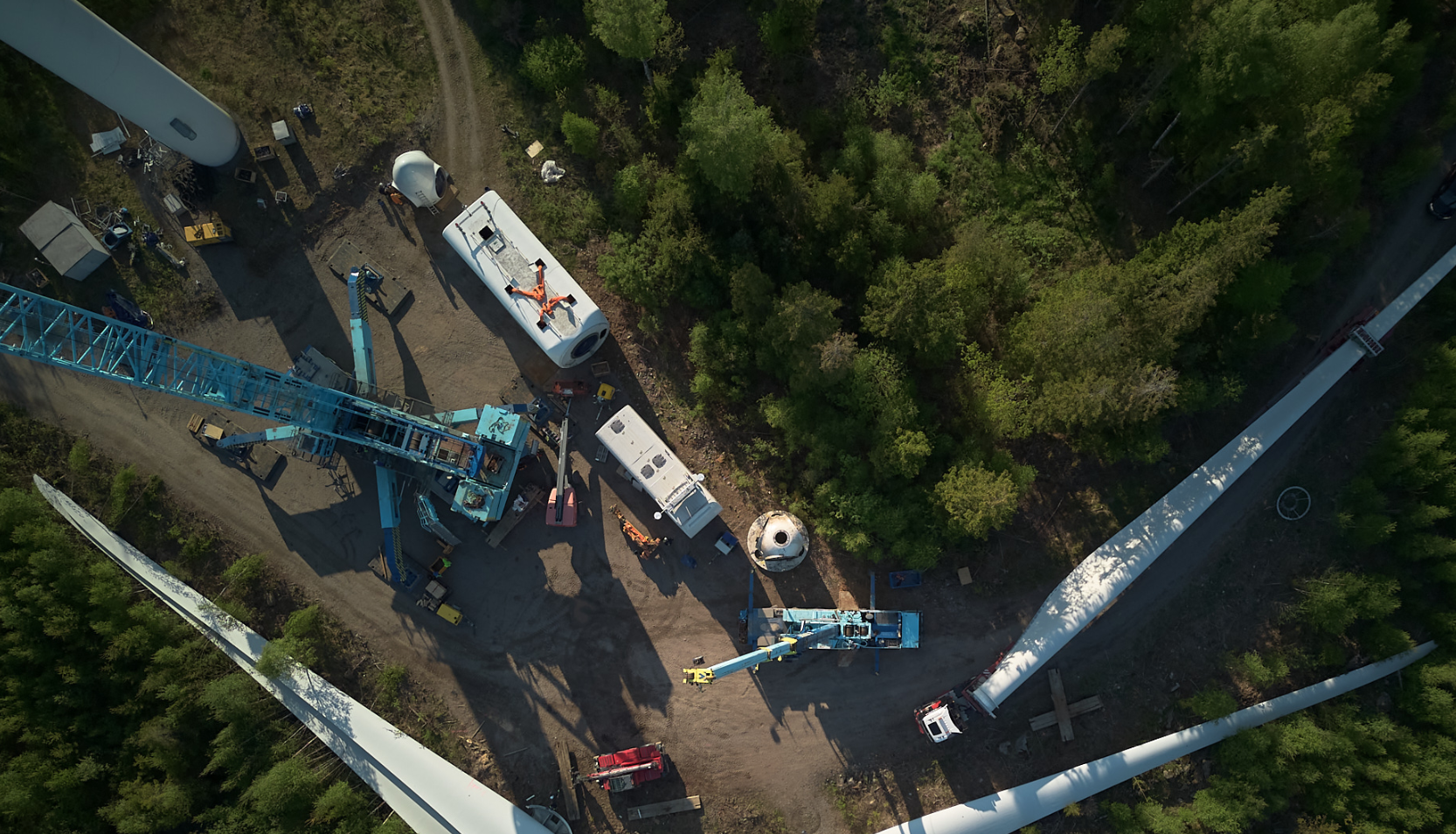
Behind the construction of this section lies a complex engineering process, involving the preparation of the infrastructure necessary for the subsequent laying of cables beneath the shoreline. The HDD campaign involved the preparation of four cable channels with a diameter of 800 mm. The pipes were assembled on-site by butt-welding 18-meter sections into four runs, each approximately 1,240 meters long—totaling about 5 kilometers of infrastructure prepared for cable routing.
Work related to the sea-to-land drilling, including pipe installation, began in July 2025 and lasted nine months. The pipe prefabrication process alone required 42 shipments of components to the construction site. Work was carried out under demanding and highly variable weather conditions, with temperatures ranging from 30°C in summer to –20°C in winter, including snowfall and icing.
After the drilling operations were completed and accepted, the cable ducts were prepared for the next phase of the project. Until the installation of the export cables begins, their ends will remain secured beneath the seabed. The work was successfully carried out by the Romgos-RBS Janicki consortium, with the support of other Polish subcontractors.
During this phase, it was important to minimize disruption to the beach and dunes while maintaining beach access for residents and tourists. The use of HDD technology made it possible to reconcile these objectives, as the crossing is carried out in the coastal zone beneath the ground surface, rather than through open trenches. Throughout the duration of the work, access to the beach was maintained via existing and designated pedestrian paths, and activities were coordinated with local authorities.
– The successful installation of the fourth and final section of the HDD cable represents a significant step forward in the project’s implementation and reflects the excellent coordination and commitment of the entire project team, as well as our collaboration with our contractors. We are particularly proud of the high safety culture we have established on the construction site during this technically demanding operation, as well as the commitment of everyone working there. In April, dredging work will be carried out on the seabed to secure the four ends of the protective pipes. This will complete the preparatory phase for the installation of the export cable and the process of splicing the subsea and onshore cables. “We are doing all this to enable the cable system to transmit the energy generated by the offshore wind farm to the Polish power grid – said Ulrik Lange, Managing Director of the Baltica 2 project at Ørsted.
– The subsea cables carrying electricity generated by the Baltica 2 wind farm will “come ashore” near the coast in Lubiatowo, in the municipality of Choczewo. Here, they will connect with onshore cables running 7 kilometers to our onshore substation. Then, via the PSE Choczewo substation, the energy from the sea will be fed into the national grid. It is particularly important to us that a consortium of Polish companies is involved in this project, and they have also included subcontractors from Pomerania – said Bartosz Fedurek, CEO of PGE Baltica.
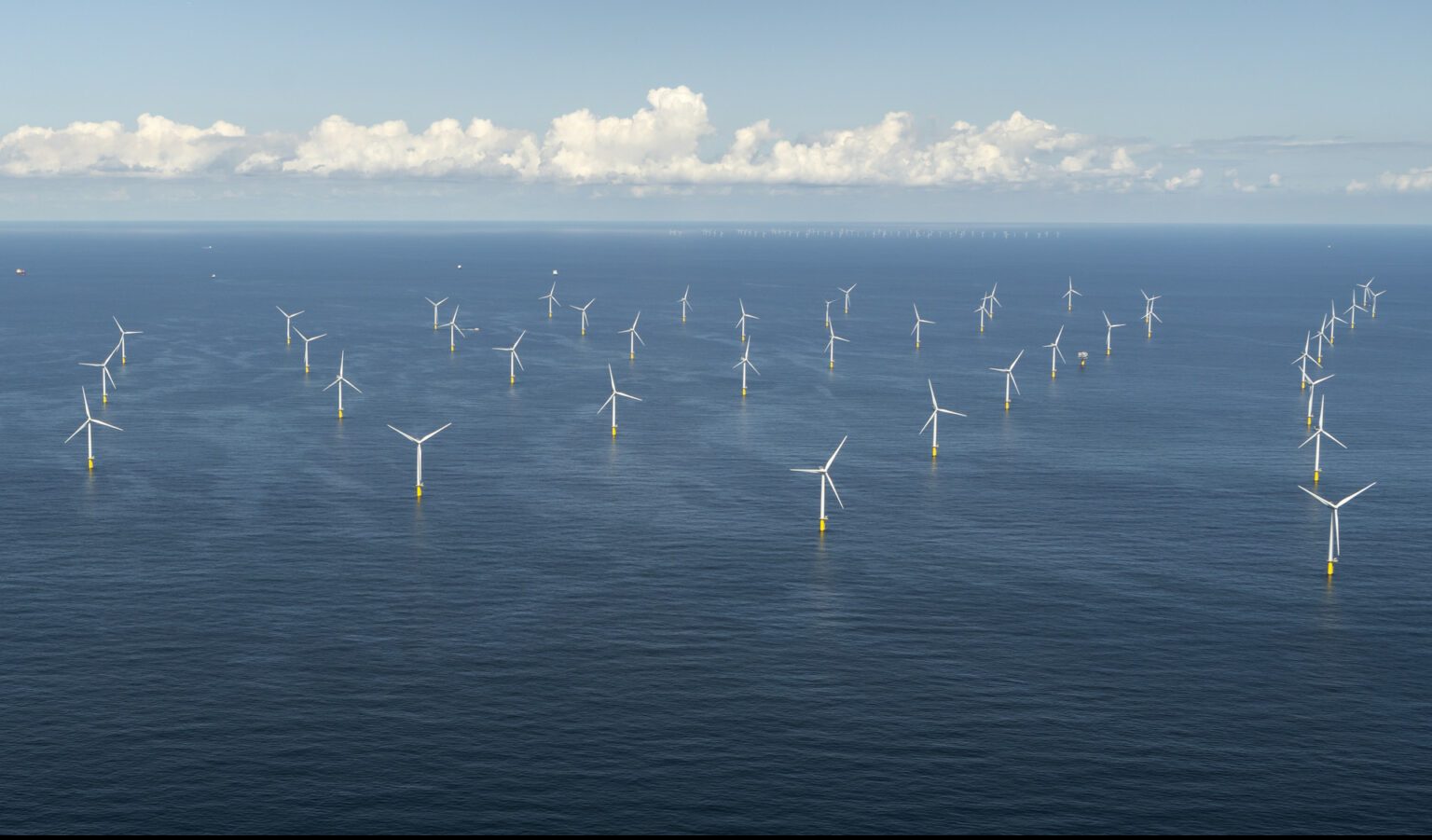
Baltica 2, with a capacity of approximately 1.5 GW, is a joint investment by PGE and Ørsted. Later this year, work will begin on installing the foundations, laying export cables at sea, and installing offshore substations. Once these phases are complete, interconnection cables will be installed between the turbine foundations and the offshore substations. Testing of the onshore substation is also scheduled to begin this year. Upon its launch in 2027, Baltica 2 will be the largest offshore wind farm in Poland. It will significantly contribute to the country’s energy transition, providing clean energy to approximately 2.5 million households.
Source: PGE Baltica