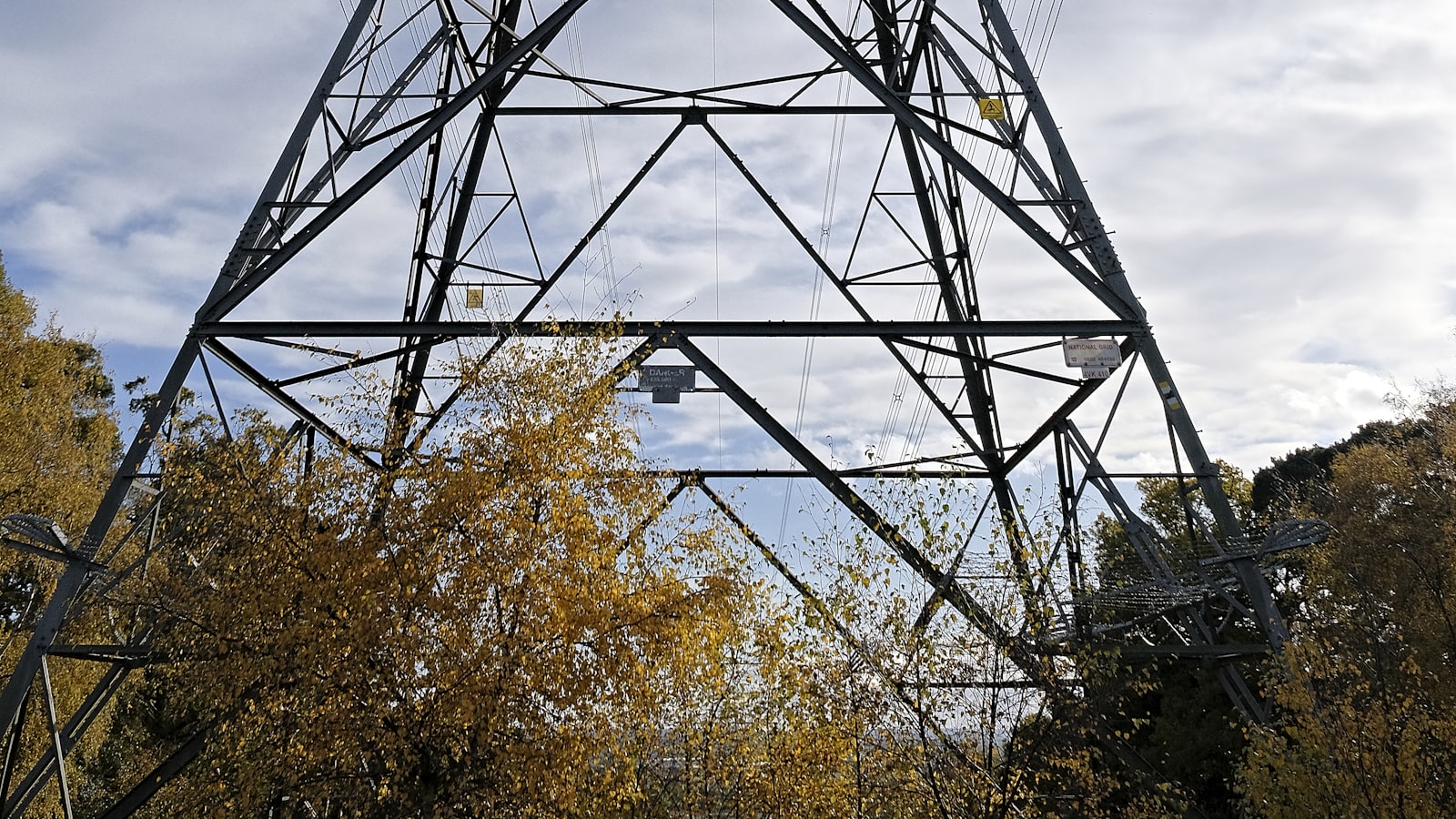
The Baltic Sea is quietly becoming a single piece of infrastructure. Not a collection of national wind farms with national grid connections, but an interlinked system of interconnectors, subsea cables and, increasingly, hydrogen corridors. The projects announced over the past year only make sense read together — and read together, they point at one conclusion: the constraint on Baltic wind is shifting from generation to everything that moves it.
The investment gap, in numbers
Aurora Energy Research put figures on the problem in its meta-analysis of European power grids, and they are uncomfortable. Congestion management cost Europe EUR 8.9 billion in 2024 — roughly 13 per cent of annual grid investment spent on managing the consequences of not having enough grid. In the same year 72 TWh of mostly renewable generation was curtailed because of bottlenecks, an amount comparable to Austria’s entire annual electricity consumption.
The queues are worse than the curtailment. More than 800 GW of solar and wind, plus 550 GW of battery projects, are currently requesting grid access in the UK, France, Italy, Spain and the Netherlands alone. Aurora’s assessment is blunt: most European connection queue processes are no longer fit for purpose.
Investment has risen — up 47 per cent over five years to around EUR 70 billion annually — and it is still 15 to 44 per cent short of what net zero requires each year. The gap widens with distance. By 2040, distribution operator commitments fall more than 66 per cent short of requirements; transmission lags by 29 per cent. By 2050 Europe needs 576,000 km of transmission lines, 7.8 million km of distribution lines and over five million transformers. That is rebuilding the grid inside a single generation.
“The technologies are available; we now need to deploy them at speed and scale,” said Gerhard Salge, Chief Technology Officer at Hitachi Energy. Frederik Beelitz of Aurora framed the political point: renewables targets cannot be met without regulatory focus on the transport infrastructure that carries the energy to users.
What a meshed sea actually looks like
GriffinLink is the clearest picture of where this goes. National Grid and TenneT Germany are developing a multi-purpose interconnector between Great Britain and Germany that would connect offshore wind in both countries to both markets — the first project of its kind in Europe.
The distinction matters. A conventional interconnector links two grids. A multi-purpose interconnector links two grids and the wind farms between them, so a single set of cables does the work that would otherwise need separate radial connections plus a separate interconnector. Fewer cables, less steel, less seabed, lower cost, less disruption to coastal communities.
“Instead of isolated individual projects, we will see more and more hybrid, cross-border connections in the future, and we need clear political framework conditions to achieve this,” said Tim Meyerjürgens, CEO of TenneT Germany. Ben Wilson of National Grid Ventures made the same point from the other side: the frameworks need to be developed and deployed at pace. Both companies bring scale to it — National Grid operates a 7.8 GW interconnector portfolio, TenneT Germany 23 GW.
The Baltic has the same geography and the same logic. It does not yet have the same regulatory machinery for splitting costs and revenues between two states and a wind farm that belongs to neither.
The security layer
Then there is the part of this that is not an engineering problem. The European Commission has allocated EUR 347 million under the Connecting Europe Facility to strategic submarine cable projects, alongside a Cable Security Toolbox of six strategic and four technical measures and a list of 13 Cable Projects of European Interest running in three five-year stages to 2040.
One detail deserves attention. A EUR 20 million call funds adaptable repair modules to be stationed at ports and shipyards for rapid restoration of cable services — and the pilot is focused on the Baltic Sea specifically, because of the rise in disruptions suggesting these cables may be subject to hostile acts. Applications are open only to public entities with an emergency response mandate: civil protection bodies, national emergency agencies, coastguards and military navies.
That is a meaningful shift. Cable repair has historically been a commercial service procured by cable owners. Treating it as a civil-protection capability, pre-positioned and state-held, reflects a judgement that the Baltic’s subsea infrastructure faces a threat model closer to defence than to maintenance. Further calls of EUR 60 million for repair modules and EUR 20 million for smart cable sensing follow in 2026, with EUR 267 million for CPEI projects across 2026 and 2027.
Hydrogen as the second network
Finland is building the region’s other backbone. The Finnish Hydrogen Cluster’s roadmap sets out to make the country Europe’s most competitive hydrogen economy by 2035, against a government target of producing and using 10 per cent of the EU’s clean hydrogen by 2030.
The first concrete move is a Lead Market Task Force for sustainable aviation fuel, targeting 60,000 tonnes of eSAF annually by 2030 — around a tenth of the entire EU mandate — rising to 250,000 tonnes by 2035. Picking aviation fuel as the entry market is a deliberate choice: it has a regulatory mandate behind it, which solves the demand problem that has stalled hydrogen elsewhere.
“Every ton of hydrogen and e-fuel produced in Finland reduces our dependence on imported energy,” the roadmap argues, tying the programme explicitly to security of supply. Sari Multala, Minister of Climate and the Environment, framed clean hydrogen as a route to energy and fuel self-sufficiency. Herkko Plit, who chairs the cluster, was more pointed about the risk of moving slowly: “This roadmap is our common playbook to ensure that Finland is not a bystander as the industrial map of Europe is redrawn.”
The cluster is explicit that this cannot be done nationally, calling for collaboration with partners across the Baltic Sea region and the EU. Hydrogen networks, like electricity networks, are worth more when they cross borders.
The thread
Grid investment, meshed interconnectors, cable security and hydrogen corridors look like four separate policy files. They are one question asked four times: can the Baltic build the connective tissue as fast as it is building generation?
The honest answer today is no. Generation is being contracted years ahead through auctions and contracts for difference. Networks are planned in regulatory cycles that lag those auctions, and the cost gap widens the further out you look. Meanwhile the intelligence layer that could squeeze more from existing assets is arriving — Belgian operator Elia has cut its system imbalance forecast error by 41 per cent using AI — but better forecasting does not add a cable.
What to watch over the next two years is not the next gigawatt of Baltic capacity. It is whether a multi-purpose interconnector reaches financial close in this sea, whether the cable repair modules are actually stationed and staffed, and whether Finland’s hydrogen demand materialises on schedule. Those three answers will determine what the generation is worth.