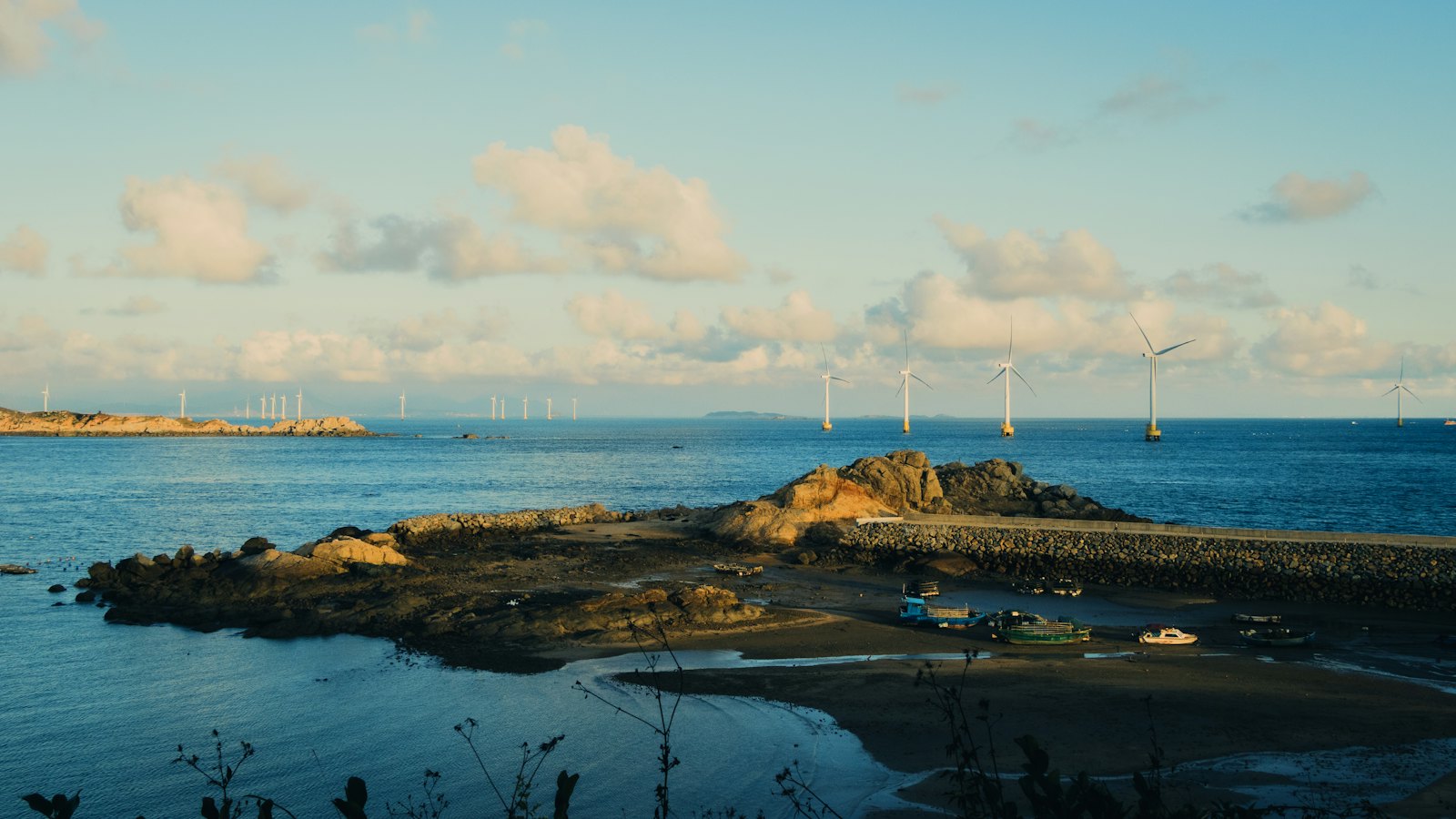
For most of the past decade, “local content” in Polish offshore wind was a word that appeared in strategy documents and conference panels far more often than in signed contracts. That has changed. Across the first wave of Baltic projects, the domestic share has moved from ambition into procurement — into towers, cables, foundations, engineering studies and permits with Polish names on them. The interesting question is no longer whether Polish industry can participate, but which parts of the value chain it has actually captured, and which it has not.
What has been won
The most visible wins are in heavy steel. Baltica 2, the 1.5 GW joint venture between PGE Polska Grupa Energetyczna and Ørsted, will mount its Siemens Gamesa turbines on towers built in Poland by Baltic Towers, with the largest batch of more than 100 towers manufactured at the Gdańsk facility. Foundations tell a similar story: of the 400-plus secondary steel units being fitted to the project’s 111 monopiles — anode cages, boat landings, internal and external platforms — around three quarters are made in Polish plants.
“Offshore wind energy projects require the highest standards of quality and precision,” said Dariusz Lubera, President of the Management Board of PGE Polska Grupa Energetyczna, when the tower agreement was announced. “Baltic Towers’ participation in the supply of towers confirms that the Gdańsk facility meets the most demanding international standards and successfully competes with leading global suppliers.”
Ocean Winds reached a similar point with BC-Wind, which closed EUR 2 billion of financing with the European Investment Bank covering close to a third, Spain’s ICO alongside it and 13 commercial banks, three of them Polish. Kacper Kostrzewa, the company’s Managing Director in Poland, has been explicit that the local content commitment had to survive contact with procurement. “From the beginning, we were determined that declarations regarding local content would translate into concrete contracts,” he said, pointing to work with Tele-Fonika, CRIST Offshore and P&Q. The project’s onshore substation and land export cable, plus an operations and maintenance base at Władysławowo, come before installation vessels arrive; first power is targeted for 2028.
The quieter capture: engineering and studies
Steel is the headline. Engineering is arguably the more durable win. For the 900 MW Baltic East project, ORLEN Neptun awarded preliminary design, FEED and permitting work to a consortium of PROJMORS ASE Group, RAMBOLL Polska and Enprom — with Geofizyka Toruń, the archaeological firm Glesum, the Maritime University of Szczecin, the National Institute of Telecommunications, the Polish Naval Academy, Squadron and ASE Offshore drawn in around them.
That list matters because FEED sits upstream of everything. It sets turbine, foundation, substation and cable specifications, produces the cost estimate that underpins the final investment decision, and determines where risk is priced. A supply chain that only fabricates what someone else has designed remains a subcontractor. One that does the design work is closer to owning the project.
“The domestic market is increasingly ready to invest in the rapidly growing offshore wind power sector,” said Janusz Bil, President of the Management Board of ORLEN Neptun, framing it as the compound return on first-phase experience. Baltic East was among the winners of Poland’s first offshore auction, held by the Energy Regulatory Office at the end of 2025, and runs in parallel with Baltic West’s four Oder Bank licences. The ORLEN Group is targeting 12.8 GW of installed renewable capacity by 2035.
The machinery behind it
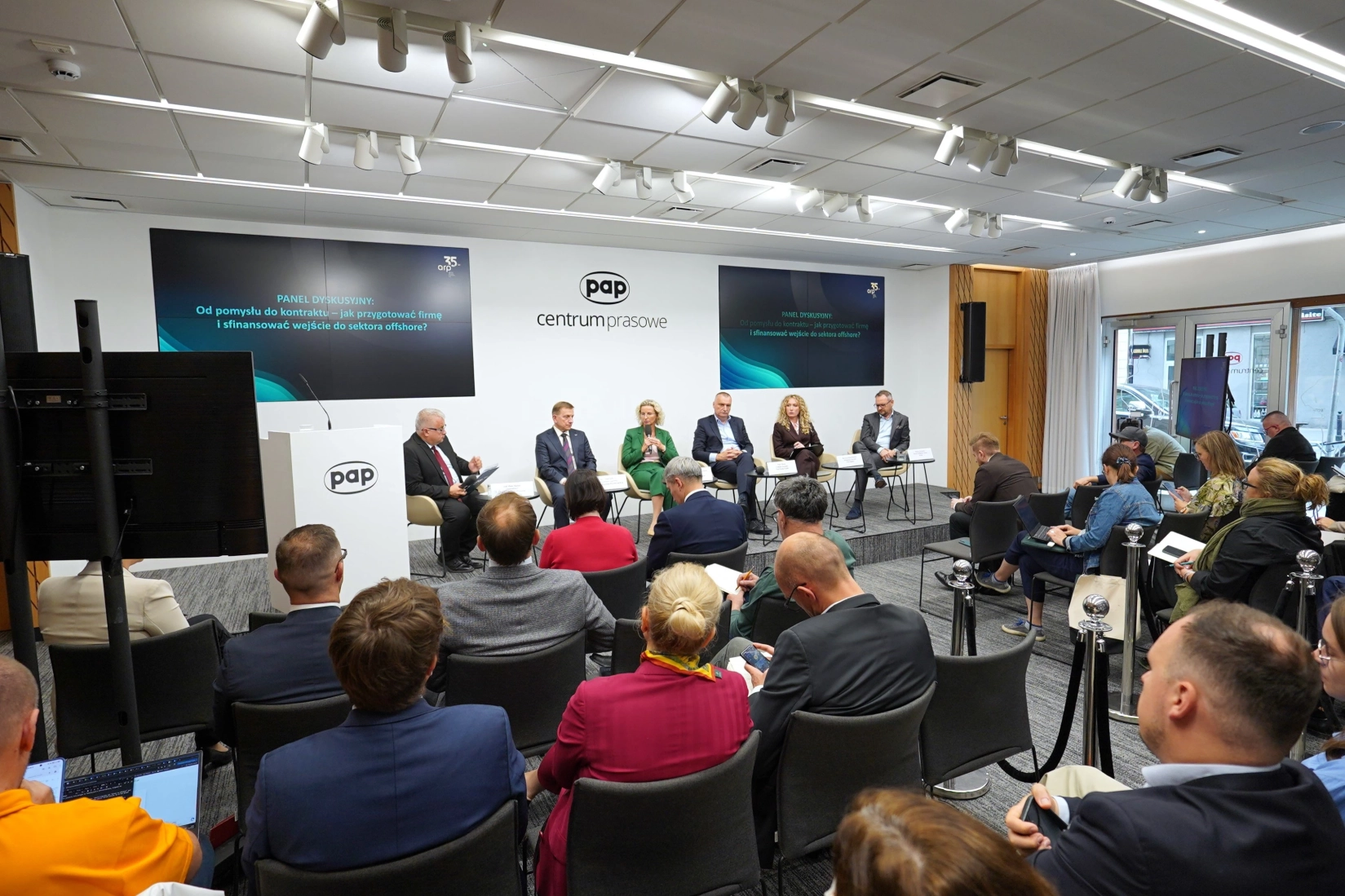
None of this happened by accident. Local content in Poland now has institutional plumbing: a dedicated Local Content Team at government level, the Industrial Development Agency (ARP) offering financing, advice and access to industrial sites, and a recurring circuit of supplier events. The Polish Wind Energy Suppliers Forum in Szczecin — held under the slogan “Wind Factory of Europe” — brought together ministries, state-owned energy companies and the SME sector around a single proposition: that the scale of the transition should convert into Polish firms, technologies and skills.
“Local content is no longer just a slogan, but has become a real element of state policy,” said Ilona Deręgowska, Vice President of the Management Board of ARP. Minister of Climate and Environment Paulina Hennig-Kloska put the strategic case more bluntly: “We cannot replace one dependency with another.”
In Pomerania the same machinery runs in a more practical register. Workshops in Gdańsk organised by PGE Baltica, Polskie Elektrownie Jądrowe and ARP walk regional firms through development funds, loans, entry programmes, advisory tools and investment land — with the Pomeranian Special Economic Zone, the Pomerania Development Agency, the Pomeranian Development Fund, the Polish Investment and Trade Agency, InvestGda and Rumia Invest Park all in the room. “Interest in the supply chain is growing, and experience from offshore wind energy projects confirms that Polish companies are ready to participate in large energy investments,” said Piotr Dziubałtowski, Vice President of Operations at PGE Baltica.
Note what those workshops are really doing: bundling offshore wind and the Lubiatowo-Kopalino nuclear programme into one supplier pipeline. A firm that qualifies for offshore quality standards is most of the way to qualifying for nuclear. That is deliberate, and it is how a temporary construction boom becomes a permanent industrial capability.
What is still missing
The honest reading is that Poland has captured the labour- and steel-intensive middle of the chain, plus a growing share of engineering services, and very little of the high-margin top. Turbines are Siemens Gamesa. Installation vessels are Van Oord and their peers. The specialist cable-lay and heavy-lift fleet is foreign. Those are the parts of an offshore project where scarcity — not cost — sets the price, and they are the hardest to enter.
The next test is whether the second phase converts fabrication into ownership: Polish stakes in vessels, in service operations, in the long O&M tail that runs for 25 to 30 years after commissioning. Contracts for difference and auction volumes give developers the visibility to make those commitments. Ports — Gdańsk, Świnoujście, Łeba, Ustka, Władysławowo — determine whether the physical capacity exists to honour them.
The first phase answered the question of capability. The second will answer the question of margin.