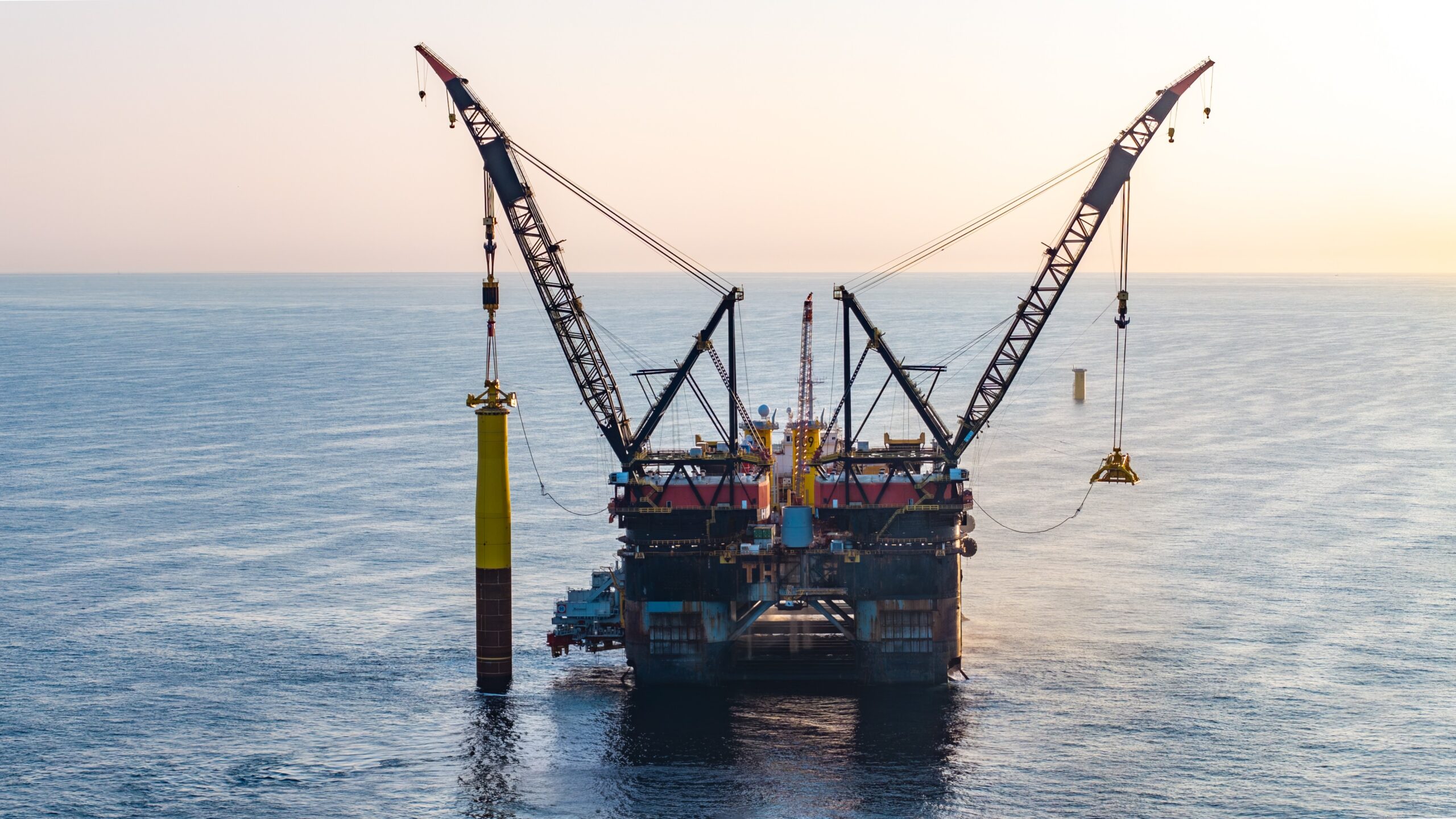
Bałtyk 2 and Bałtyk 3 are the largest offshore wind development under construction in Polish waters. Equinor and Polenergia are building two farms of 720 MW each, 1,440 MW in total across 100 turbines, with the first electricity due in 2027 and full commercial operation scheduled for 2028. This tracker follows the build from the first rock placed on the seabed in January 2026 through the first foundations, the substation topsides and the onshore grid link, and sets out what the developers have said comes next.
January: a million tonnes of rock before any steel
The offshore campaign did not start with a monopile. It started with rock. In January 2026 Van Oord began Subsea Rock Installation across both sites, using four dynamically positioned vessels to lay layers of selected stone where the foundations and cables would later go. The purpose is scour protection: the rock stops waves and currents from washing away the seabed around the monopiles, and it stabilises the export and inter-array cables once they are buried, especially on stretches exposed to stronger currents or vessel traffic.
The scale is easy to underestimate. The developers put the total at more than one million tonnes of rock, roughly 400,000 cubic metres of material, placed with precision at significant water depths. This work followed years of seabed assessments, unexploded ordnance surveys, environmental studies and geophysical and geotechnical campaigns.
February: the installation campaign is declared open
In February 2026 Equinor and Polenergia formally launched the offshore installation campaign and published the scope for the year: 100 monopiles, the matching transition pieces, components of the two offshore substations, subsea cables and supporting infrastructure. More than 20 vessels were assigned to the 2026 season, headed by Thialf, one of the largest heavy-lift installation vessels in the world, with a continuous stream of support vessels feeding components to the site.
The developers described the sequence at the time: rock first, then monopiles and transition pieces from spring, then export and inter-array cables in the following months, with turbine installation and substation outfitting continuing into 2027.
First quarter: the first foundations are in the seabed
The first foundations went in faster than the February plan implied. In its first-quarter results, published in May 2026, Polenergia reported that the first turbine foundations at Bałtyk 2 and 3 had been installed on schedule during the quarter, immediately after the rockfill operations. Chief executive Adam Purwin called it a landmark project that would add 1.44 GW to the Polish system and strengthen the country’s energy security in the current geopolitical environment.
The same results release is a useful reminder of what sits behind the project. Polenergia closed the quarter with over PLN 1 billion in cash, 83 per cent of its debt hedged against interest-rate risk, and a target of PLN 1.6 billion in EBITDA by 2030, of which the two Baltic farms are the largest single driver.
April: topsides, transition pieces and the supply chain abroad
While the vessels worked in the Baltic, the heaviest components were taking shape in the Netherlands and the United Kingdom. In April 2026 the Bałtyk 3 substation topside was rolled out of the production hall at Smulders’ yard in Vlissingen and parked next to the Bałtyk 2 topside, which had left the hall earlier in the year. Each topside measures 51 by 38 by 43 metres, roughly a 15-storey building, and weighs around 3,700 tonnes. Both were to be outfitted outdoors, including the installation of transformers, ahead of load-out. The jackets that will carry them were being fabricated at Smulders’ yard in Newcastle.
At the same Vlissingen site, Smulders and Sif had by April assembled more than 60 of the transition pieces, each about 17 metres high and close to 400 tonnes. The developers stressed that Polish suppliers provided steel components, auxiliary systems and technical solutions for both the topsides and the transition pieces, part of the local-content commitment attached to the projects.
Onshore: transformers, cables and the Łeba base
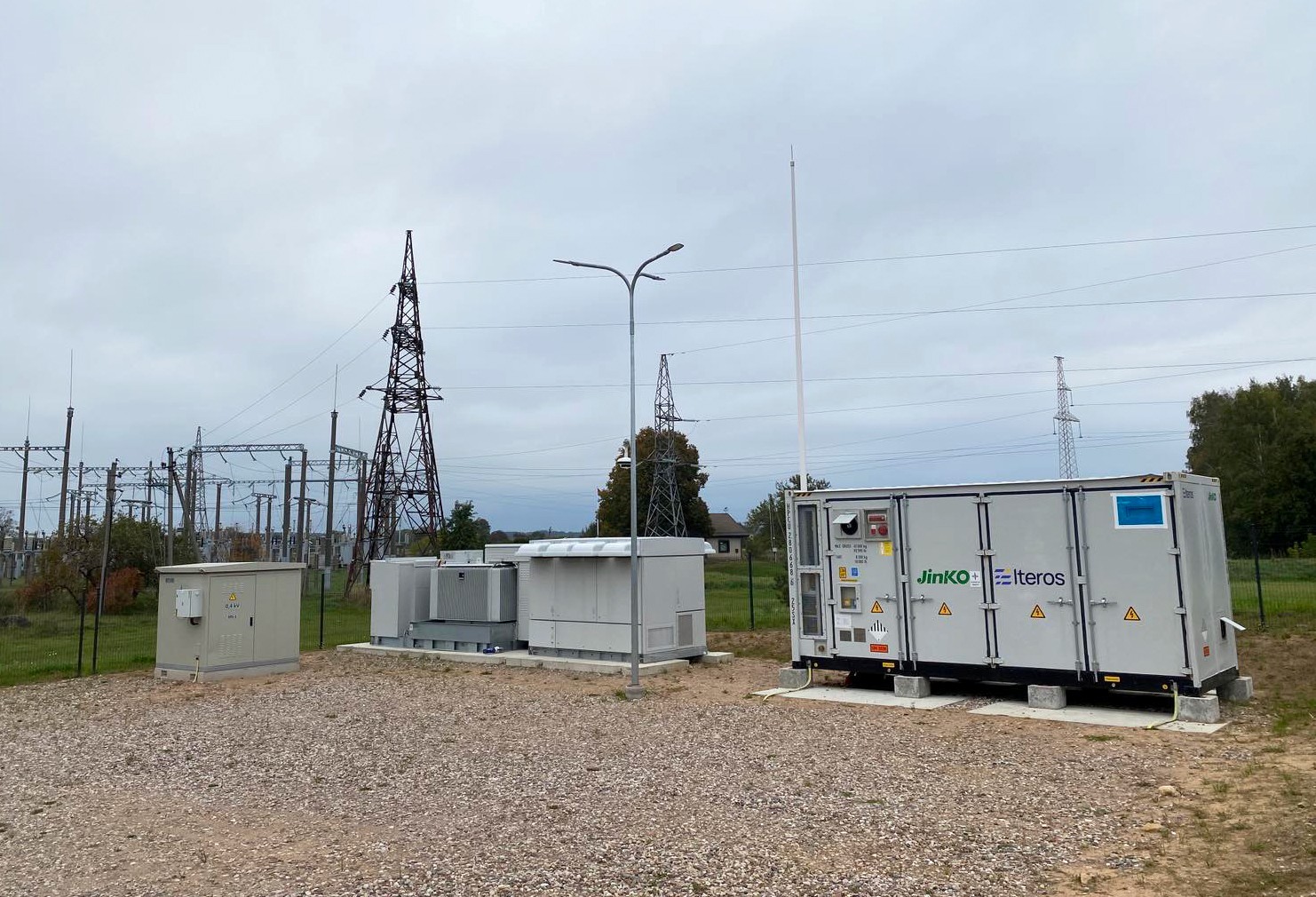
The end-of-first-quarter status published on 30 April showed the onshore side moving in parallel. The onshore substations at Pęplin, in the municipality of Ustka, had received the first two of their transformers, each rated at 450 MVA and weighing 352 tonnes. The 220 kV connection line was close to 80 per cent complete and the 400 kV line around 90 per cent, with horizontal directional drilling under way at the cable landfall. Production of turbine towers for Bałtyk 2 had also begun.
In Łeba, the operations and maintenance base was in its final stage of construction, with a spare-parts warehouse, offices housing a remote control centre for the farms, and a quay for service vessels. During construction the base will coordinate vessel traffic and offshore operations; afterwards it becomes the management and service centre for the two farms, and recruitment for that team was already running.
May: wiring up 100 turbines
In May 2026 SPIE Wind Connect, the high-voltage arm of SPIE Global Services Energy, was awarded a contract by Seaway7 to terminate and test the 66 kV inter-array cable network. The award also revealed the electrical layout: each farm is arranged in ten strings of five turbines, with a 400 mm² cable connecting the outermost turbine and a 1,000 mm² cable carrying the full string power to the offshore substation. The main offshore cable campaign was expected to start in the second quarter of 2026.
What comes next
The published schedule leaves three milestones to watch. The first is the completion of the 2026 marine season: 100 monopiles and transition pieces in the seabed, the export and inter-array cables laid, and the Łeba base commissioned. The second is 2027, when the developers plan to install turbines, outfit the two substations and deliver the first power to the Polish grid. The third is full commercial operation in 2028.
Beyond that sits Bałtyk 1. The third Equinor and Polenergia project, with a capacity of up to 1.56 GW, won a 25-year contract for difference at the end of 2025 and secured an environmental decision for its grid connection infrastructure in the first quarter of 2026, with technical design and permitting continuing. If Bałtyk 2 and 3 hold to their timetable, the partners will have around 3 GW in Polish waters either operating or in the pipeline before the end of the decade.