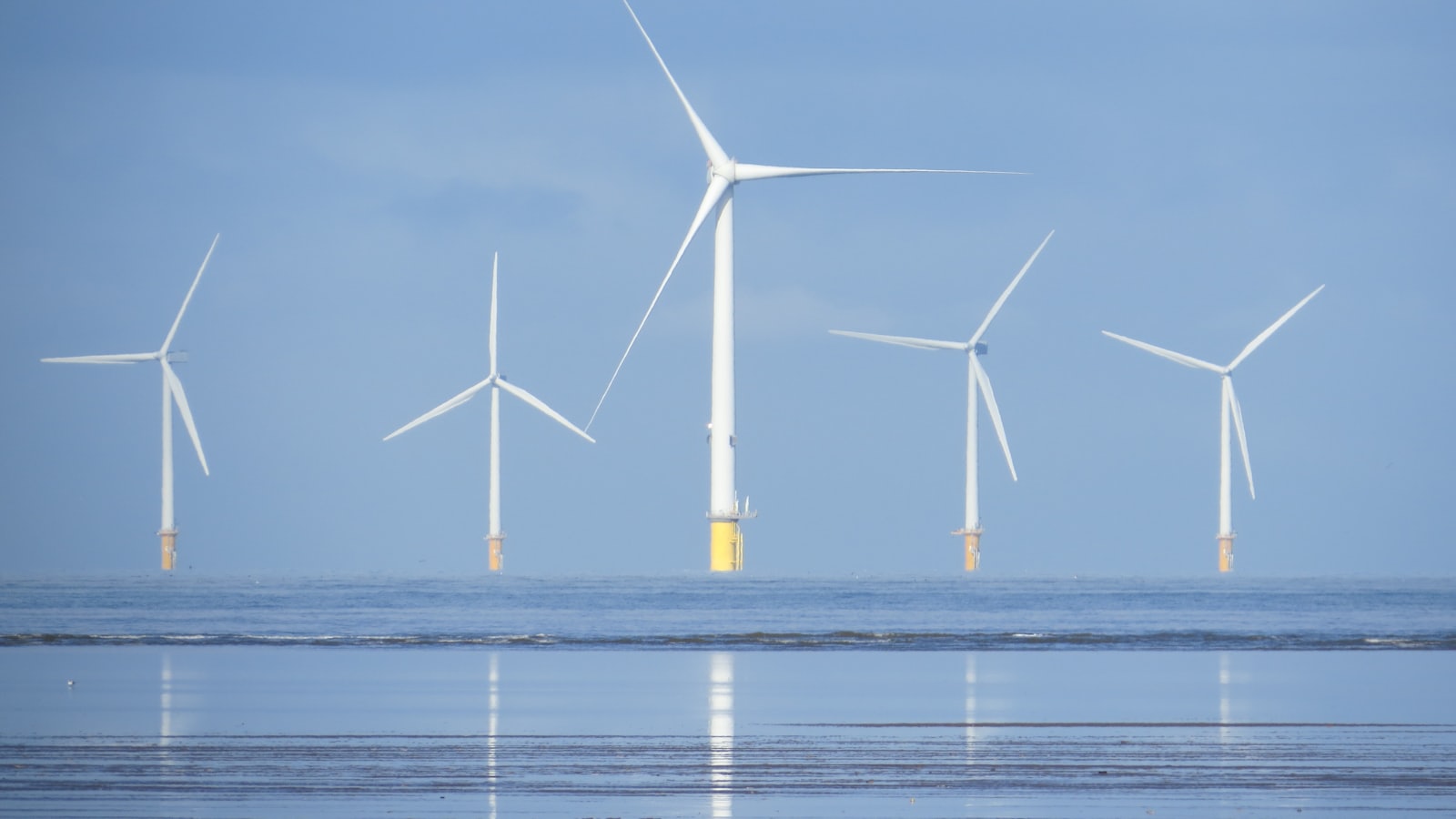
Offshore wind in northern Europe is no longer argued for on decarbonisation grounds alone. Across summit declarations, think tank reports and military intelligence assessments, the same claim keeps surfacing: turbines, cables and the ports that serve them are infrastructure a state has an interest in defending. For the Baltic Sea, where that argument meets the hardest security environment in the region’s recent history, the consequences are practical rather than rhetorical.
From national to regional
The third North Sea Summit, held at Hamburg City Hall in January 2026 under the motto “From National to Regional”, set the tone. Hosted by Federal Chancellor Friedrich Merz and Federal Minister Katherina Reiche, it brought together heads of state and government and energy ministers from ten countries – Belgium, Denmark, Germany, France, Iceland, Ireland, Luxembourg, the Netherlands, Norway and the United Kingdom – with the European Commission and NATO also invited.
The agenda was telling. Alongside investment conditions and cross-border planning and financing of wind farms and their grids sat a third item: the protection of critical infrastructure. The summit series began in Esbjerg in 2022 as a response to fossil fuel dependence on Russia, and in Ostend in 2023 committed the participating states to up to 300 GW of North Sea capacity by 2050. Hamburg was about delivery – cooperation projects connecting wind farms to more than one country, and links drawn from other states’ exclusive economic zones.
Paying for resilience out of the defence budget
The most concrete proposal on the table came from outside government. In its report Empowering Europe: Delivering the security and economic benefits of clean energy in the North Seas, the climate think tank E3G argued that part of the broader security-related spending allies agreed at the 2025 NATO Summit – up to 1.5 per cent of GDP, close to €200 billion a year across North Seas NATO members – should finance a security-by-design approach to energy infrastructure.
In practice that means dual-use assets: new infrastructure specified from the outset for surveillance and protection roles, and existing wind farms retrofitted with security equipment. E3G also pressed for a North Seas Spatial Energy Plan by 2027, on the argument that predictability is itself a security asset. “Offshore wind, when built for defence and properly funded, can strengthen national security,” said E3G chief executive Nick Mabey, adding that the sector needs meticulous planning for physical and cyber resilience alongside secure supply chains.
Why the Baltic reads the same brief differently
What is a policy option in the North Sea is closer to an operating condition in the Baltic. The Finnish Defence Forces’ Military Intelligence Review 2026 was not written for the energy sector, but it describes the environment offshore projects are now planned and operated in: damage to seabed assets, interference with navigation systems, and the use of civilian or dual-use vessels for ambiguous operations, treated not as isolated incidents but as an established pattern.
The review also notes Russia’s readiness to protect its maritime interests through escort operations and shadow-fleet activity, raising the risk of accidents and miscalculation. NATO’s answer – enhanced surveillance, greater naval presence and initiatives such as Baltic Sentry – has made protection of undersea infrastructure a standing task rather than a response to a particular incident.
The sector’s takeaway from the Finnish assessment is less about acute threat than about permanence. Even with Russia’s main military focus on Ukraine, hybrid influencing and infrastructure risk are expected to persist below the threshold of open conflict. That turns security from an external factor into part of project logic: site selection, design, insurance, stakeholder engagement and long-term operations.
Poland as the test case
Poland shows what this looks like once the theory reaches a construction site. Polskie Sieci Elektroenergetyczne confirmed the technical readiness of its transmission infrastructure to receive power from Baltic offshore wind farms after the new Choczewo station, the expanded Żarnowiec station and the 400 kV line connecting them passed voltage tests. “The new Choczewo station, the expanded Żarnowiec station, and the 400 kV line connecting them are ready to transmit energy from wind farms being built in the Baltic Sea to consumers in the interior of the country,” said PSE Vice President Włodzimierz Mucha. PSE has been preparing the national power system in Pomerania since 2019, building two stations and more than 250 kilometres of extra-high voltage lines.
On the ports side, ORLEN Neptun signed a reservation agreement with the Kołobrzeg Seaport Authority covering land for a service port for Baltic West, the group’s second phase-two project after Baltic East. Baltic West combines four concessions in the Ławica Odrzańska area for roughly 4 GW of installed capacity, with full implementation planned by 2040. Kołobrzeg is the closest available port to the project area and already meets the standard expected of central-coast ports servicing offshore wind farms with crew transfer vessels.
Read through the security lens, neither of these is simply an energy asset. A 400 kV corridor carrying the output of several gigawatts, and a port that is the only practical service base for a 4 GW cluster, are single points of failure with national consequences.
The gap security money does not close
Germany supplies the counterweight. Fifteen years after Alpha Ventus began operating in 2010, the German offshore sector recorded a tender with no bids at all in August 2025, alongside delays connecting new turbines to the grid – the reason the industry associations and the OFFSHORE-WINDENERGIE foundation convened a joint stocktaking with Deutsche WindGuard data. Security framing does not, on its own, fix an auction design that no longer attracts capital. Europe’s industrial position is real – Siemens Energy and Vestas together held close to 40 per cent of the global market for complete offshore wind turbines in 2024 – but market share does not substitute for bankable demand.
What to watch
Three tests will show whether the security-by-design agenda is more than language. First, whether defence and security budgets actually disburse against dual-use offshore equipment, rather than leaving the cost with developers. Second, whether the Baltic gets an equivalent of the spatial planning discipline proposed for the North Seas, given that its projects sit closer to contested waters. Third, whether lenders and insurers begin pricing the security layer explicitly – the point at which a political commitment becomes a line in a financial model.