US Marines to join NATO’s Baltic Sentry alongside Finland’s Coastal Brigade
Around 48 US Marines will support NATO's Baltic Sentry with surveillance and reconnaissance alongside Finland's Coastal Brigade, to help protect undersea infrastructure.


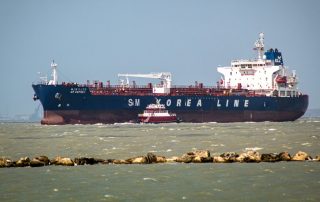
Around 48 US Marines will support NATO's Baltic Sentry with surveillance and reconnaissance alongside Finland's Coastal Brigade, to help protect undersea infrastructure.
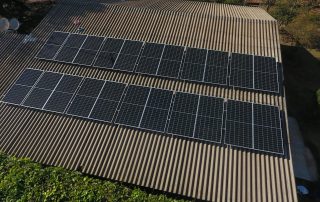
From Klaipėda's 2033–2044 LNG bookings to ORLEN's Norwegian stake and NATO's warning, the Baltic region is pursuing gas diversification, support for Ukraine and homegrown power at once.
WAT has signed offset agreements with Boeing and GE Aerospace for Poland's 96-helicopter Apache programme, including an AH-64E training centre and a composites laboratory.

EU funding for subsea cable repair covers telecom lines, not the power cables carrying offshore wind and interconnector traffic, leaving grid operators to pool their own vessels and spares as a nascent rental market fills the equipment gap.
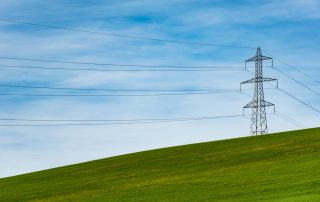
A wave of EU interconnection funding has collided with security fears and national pushback — from a Swedish cable freeze to a sabotage-repair fund and a Polish blackout drill.
A EUR 100 million EIB loan will adapt Klaipėda's cruise terminal for NATO vessels and fund shore power, green hydrogen and offshore wind quays in a EUR 201 million programme due by end-2027.
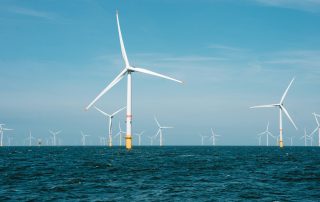
Four early-2026 forums, from the Hamburg North Sea Summit to a 47-region declaration in Stockholm, converged on cross-border offshore planning. A roundup of what they decided and what the Baltic can borrow.
A sensor buoy four nautical miles off Klaipėda now streams sea and GPS-interference data to shore, serving as a fixed reference for ships when satellite navigation fails.

Prevention and detection dominate the debate on Baltic subsea infrastructure. Repair capacity - vessels, spare sections and crews - is the thinnest layer, and the European funding that exists mostly covers telecom cables rather than power.
Energy ministers from the eight Nordic and Baltic countries met in Tallinn on 4 September to discuss Ukraine, the protection of critical energy infrastructure and market competitiveness, with Finland pressing for EU support on repairing undersea assets.
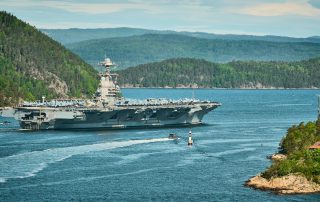
Mine clearance, anti-submarine patrols, air defence and a defence-tech accelerator each protect Baltic energy assets in part. None of them was designed to, and the financing question is still open.
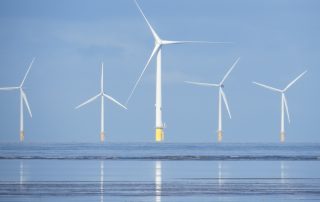
Summit declarations, a NATO-funding proposal and a Finnish intelligence assessment now point the same way: Baltic offshore wind is being treated as critical infrastructure. Poland shows what that means on the ground.
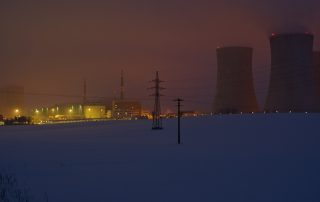
Sustained heat and low river levels cut European nuclear output, leaving Romania without nuclear generation for the first time since 2003.
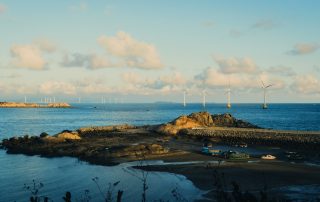
Sweden has rejected Eolus's Vaestvind and Najaderna offshore wind projects on defence grounds, part of a round rejecting 11 projects and a shift to tenders.
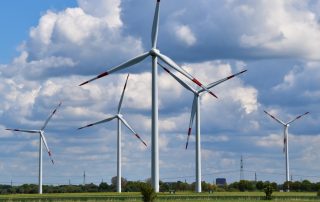
Familiar claims paint Polish wind power as unhealthy, unreliable and uneconomic. A growing body of research maps where those narratives come from, what they cost, and why Poland's own Grajewo model points to the answer.
The IEA, IMF, World Bank and WTO have jointly warned that the Middle East war is straining global energy supplies, with record oil-stock draws through the Strait of Hormuz and higher fuel and fertiliser prices.
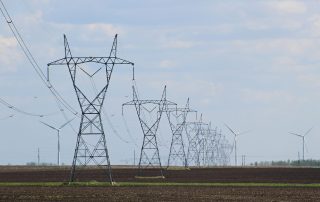
Ahead of the EU's 17 July ETS review, WindEurope wants the Commission to keep a clear carbon price and channel ETS revenues into industrial electrification.
Irregular crossings into the EU fell nearly 40% in the first five months of 2026 to about 39,000, Frontex says, as the EU Pact on Migration and Asylum introduces standardised screening.
Parliament and Council negotiators have provisionally agreed a defence-readiness package to speed permits and procurement and back up to €800 billion of investment under Readiness 2030.
A report compiled for Poland's CBSS presidency maps the dozens of security cooperation formats in the Baltic Sea region, spanning critical infrastructure protection and energy security.
At the Kiel Security Conference, German Foreign Minister Johann Wadephul called the Baltic Sea Europe's most obvious theatre of confrontation with Russia, citing repeated threats to critical maritime infrastructure.
EU energy ministers met in Luxembourg to agree a general approach on the European grids package, including EU funding to repair undersea energy infrastructure damaged by sabotage — a priority for the Baltic Sea region.
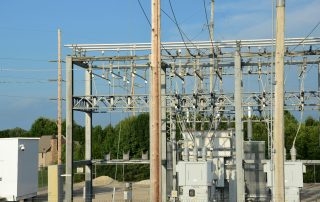
Poland's grid operator PSE ran a security exercise near Białystok simulating a physical attack on a highest-voltage substation, drawing in crisis services, PGE, the ABW security agency and military units.

ORLEN is buying a 20% stake in Norway's Goliat field from Vår Energi, adding about 58 million boe and tripling output from the assets by the decade's end.
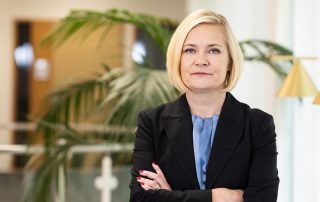
Interior ministers of nine Baltic Sea states met in Helsinki to coordinate joint measures against drone threats to critical infrastructure and public safety.
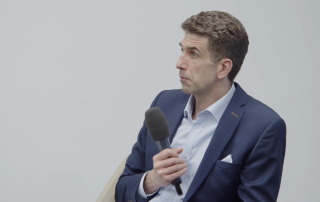
Experts told a Warsaw debate that wind-turbine health scares work by sowing doubt, and that trusted local voices — not technical papers — are what counter them.
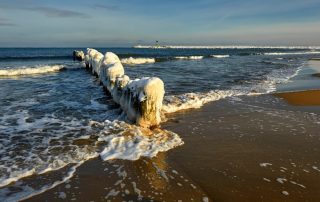
Figures presented in Warsaw show nearly 70,000 disinformation publications on energy since 2022 and a PSEW study in which one in four wind firms reported physical violence.
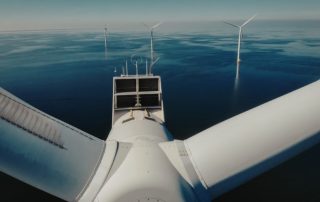
Speaking in Brussels, NATO Deputy Secretary General Radmila Shekerinska linked secure, resilient energy supplies directly to the Alliance's deterrence and defence.
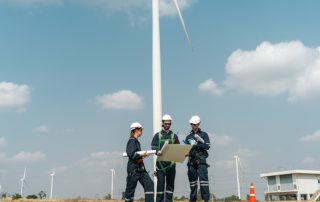
The EU's latest package lists 34 individuals and 47 entities, targeting Russia's shadow fleet, energy revenues, defence industry and propaganda networks.
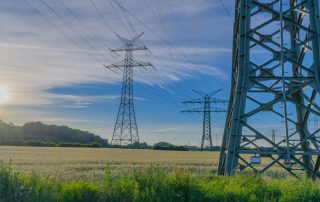
Twenty NATO ships and around 6,000 personnel from 15 nations have begun the annual BALTOPS exercise, commanded for the first time from JFC Brunssum.

Officials and analysts told a Warsaw press conference that disinformation against wind power is a funded Russian operation, with a record 2026 propaganda budget and energy named as a deliberate target.

A Warsaw press conference brought together ministers, analysts, scientists, an investor and a mayor to confront wind-energy myths and the funded disinformation behind them.
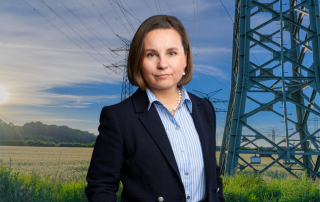
Opening a Warsaw conference, Minister Urszula Zielinska called wind-energy disinformation 'a slow drip of poison' and a deliberate, funded operation that is a matter of state security.
At E-PINE talks in Tallinn and Narva, Baltic, Nordic and US officials reaffirmed transatlantic security cooperation, flagging hybrid threats and Russia's shadow fleet.
Norway has become a full member of the EU Strategy for the Baltic Sea Region, gaining a formal role in the macro-regional framework's leadership and agenda-setting.
Baltic Sea foreign ministers adopted the Sopot Declaration, pledging tougher coordinated action to protect undersea cables and pipelines and to curb Russia's shadow fleet.
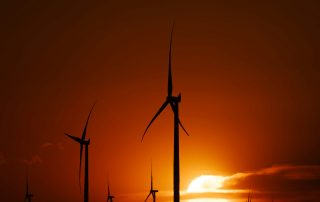
Energy security is now a necessity, not an option, for Polish firms, mBank's Michał Popiołek told EKF 2026, urging companies to invest in their own renewables.

At EKF 2026 in Sopot, PSE chief Grzegorz Onichimowski called Poland's low electrification rate a 'civilisational distance' and a question of security and resilience.
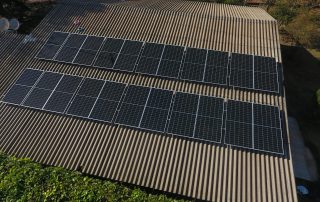
Lithuania will add EUR 4m for solar-plus-storage at Ukrainian public buildings and open a new LNG supply stage to Ukraine via Klaipėda, Energy Minister Vaičiūnas said.
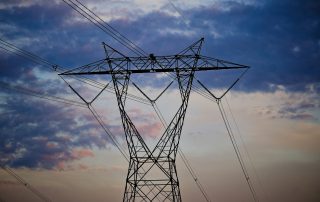
Lithuania, Latvia, Estonia and Poland agreed in Vilnius to accelerate joint protection of energy infrastructure against hybrid threats, prioritising counter-drone systems.
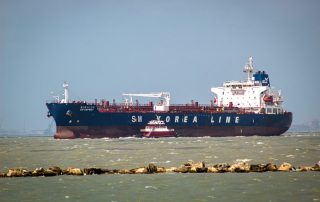
Lithuania's Klaipėda LNG terminal has booked over 20 TWh of long-term capacity to 2044, with Ukraine's Naftogaz and Finland's Gasum joining as first-time customers.
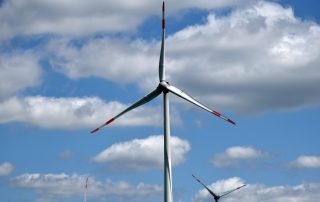
With Baltic hybrid threats rising, Poland is moving to formally classify offshore wind farms as critical infrastructure, the PSEW says ahead of its 2026 conference.
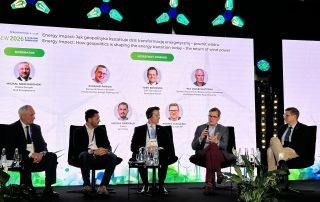
At PSEW 2026 in Świnoujście, PKEE Brussels' Ryszard Pawlik argued the energy transition 'triangle' has become a pentagon, adding affordable prices and resilience, and called for smart electrification and diversification.
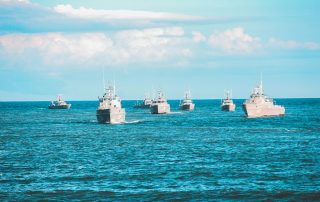
NATO's largest Baltic Sea exercise began on 4 June with 20 ships sailing from Gdynia — the first BALTOPS run under a NATO command structure since 1972.

Frontex has completed its 1,000th aerial surveillance mission of 2026, accumulating over 5,060 flight hours across operations in two continents as the agency expands coverage to 12 countries.

Exercise Open Spirit 2026 brought eight NATO nations to Latvian waters to neutralise World War-era ordnance from the Baltic seabed — a mission with direct implications for offshore wind installation safety.
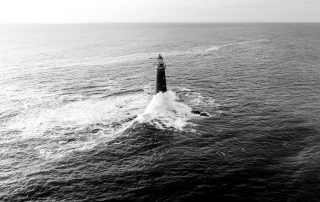
NATO's Dynamic Mongoose 2026 anti-submarine warfare exercise concluded on 29 May in the Norwegian Sea, with forces from nine nations testing detection and response capabilities across air, surface and sub-surface domains.

Leaders of the Bucharest Nine and Nordic Allies reaffirmed Baltic Sea maritime protection and commended Baltic Sentry operations in a joint declaration from Bucharest.
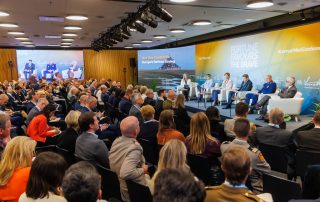
Latvia's FM Baiba Braže outlined four priorities for European security at the Lennart Meri Conference in Tallinn, calling for stronger NATO eastern flank defences and tighter sanctions on Russia's shadow fleet.
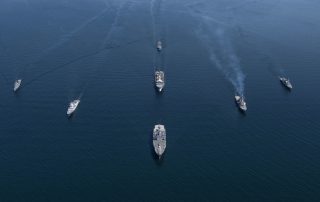
NATO's Open Spirit 2026 exercise brought ships from eight nations to Latvia to neutralise legacy WWII mines in the Baltic Sea, with nearly 400 personnel and five autonomous underwater vehicle teams participating.
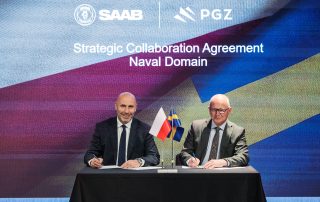
Saab and Poland's PGZ Group have signed a Strategic Collaboration Agreement covering naval vessels, submarines, an Underwater Technology Centre in Poland, and joint export opportunities.
Warsaw hosts the third Regional IAMD Coalitions Conference on 21–22 May 2026, bringing together NATO air and missile defence experts, defence industry leaders and scientists from Poland, the US, South Korea and beyond.