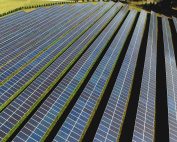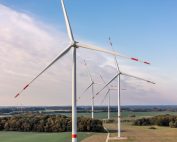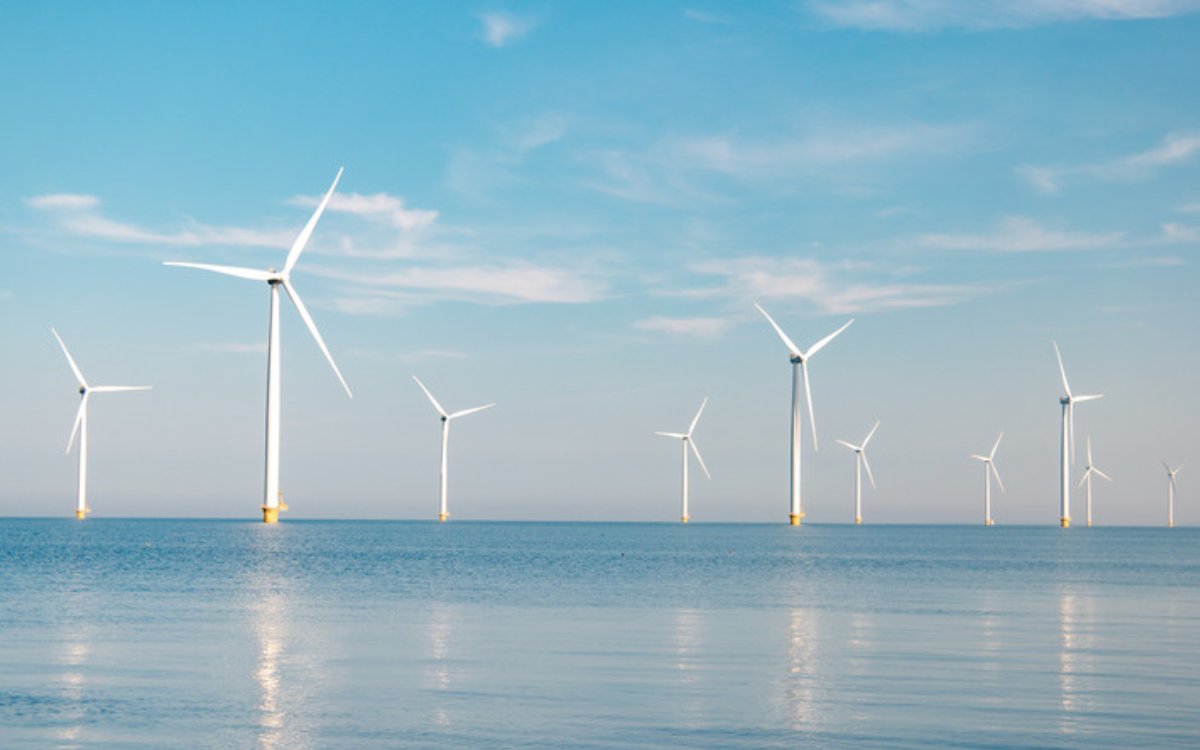
Electricity grid capacity has become a significant bottleneck for the green transition in Denmark and across Europe. In some cases, wind and solar projects that have received political approval remain unable to connect until well into the 2030s because the grid’s available capacity is already reserved for existing facilities. A new approach — hybrid power plants that combine wind, solar and battery storage — could help resolve this bottleneck, according to researchers at the Technical University of Denmark (DTU).
The core insight is that conventional grid reservation assumes a wind farm will always run at full rated capacity, even though wind turbines typically operate at full output only 20 to 50 per cent of the time. A 100 MW wind farm therefore occupies 100 MW of grid capacity whether or not that capacity is actually being used. Hybrid plants manage their combined output so that grid capacity is never exceeded — meaning more generation assets can share the same physical connection. A plant combining 100 MW of wind, 80 MW of solar and 50 MW of battery capacity could, depending on electricity prices, be connected and operated profitably on a 100 MW grid connection.
Beyond energy delivery, hybrid plants can provide ancillary services that grid operators need to maintain system stability — services that have traditionally been supplied by conventional power plants and are increasingly scarce as those plants are displaced by variable renewables. DTU researchers note that improved ancillary service provision can reduce the risk of large-scale outages: the Iberian Peninsula experienced a blackout affecting 60 million people last year, and batteries in hybrid plants can both reduce the probability of such events and shorten recovery times when they do occur.
Real-world hybrid plants are already operational. Kennedy Energy Park in Australia — the world’s first hybrid power plant — has been running since 2024 with 43 MW of wind, 15 MW of solar and a 2 MW/4 MWh battery. Denmark granted permits for several hybrid plants in 2025. DTU operates a small pilot facility, Risø HPP, comprising 450 kW of wind, 325 kW of solar and a 250 kW/1,155 kWh battery, to test commercial and research solutions in controlled conditions before they move to full-scale deployment.
DTU has developed a software platform called HyDesign to model the optimal mix of wind, solar and battery capacity for hybrid plants, with the goal of maximising economic returns. The researchers note that major energy companies have already expressed interest in the technology, and that further development of hybrid plants could significantly accelerate the integration of renewable energy into European electricity grids — including those serving the Baltic region.