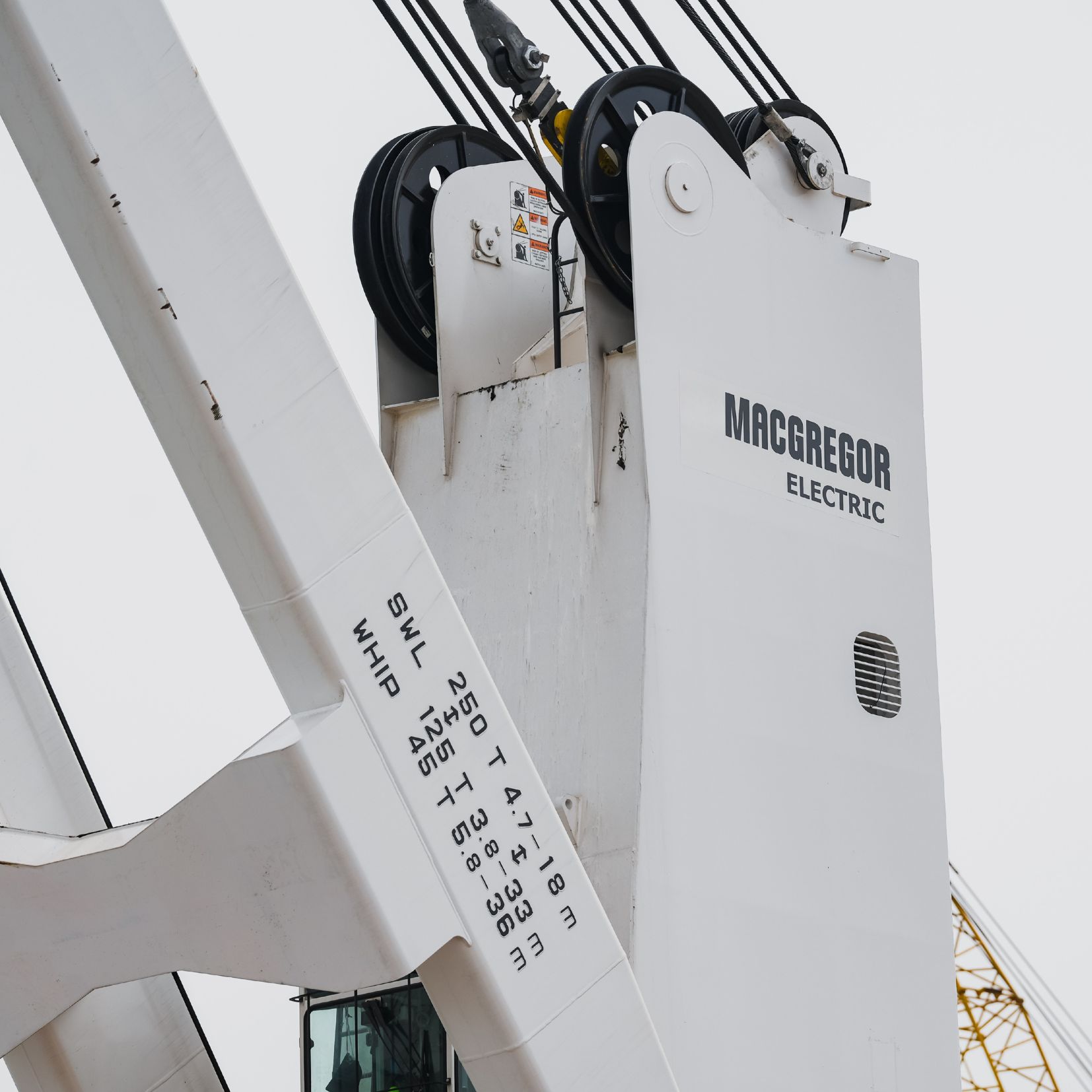
Electric cranes accounted for more than 80% of MacGregor’s crane order intake in the first half of 2026, the Finnish load-handling manufacturer said. Most of the orders were placed for heavy-lift and multipurpose vessels, with container ships making up another substantial share after several weaker years for that segment.
MacGregor did not disclose order values or unit numbers. Its current electric portfolio covers the HCE-series heavy-lift cranes and the MCE-series container cranes, both built around second-generation variable frequency drive (VFD) technology. According to the company, these systems consume up to 60% less energy than comparable hydraulic drives, allow more precise load control and remove the risk of hydraulic oil leakage.
“I’m very happy to see that electric drive technology became a new industry standard as our customers see the significant benefits,” said Magnus Sjöberg, Executive Vice President of MacGregor’s Merchant Solutions Division. “By leveraging our long-standing expertise, we continue to deliver solutions that combine precise load control with substantial operational savings and a reduced environmental footprint for our customers.”
MacGregor began developing electric cranes more than 20 years ago and says over 800 electric-driven units are now in operation. The company also supplies electric hatch covers, deck machinery and walk-to-work gangways, equipment used across offshore wind service fleets as well as merchant shipping. It reported sales of about EUR 830 million in 2025 and employs around 2,000 people in 30 countries.
The shift has a direct bearing on the Baltic Sea region. Shipowners operating in and out of Baltic ports face tightening EU rules on vessel emissions, while the installation and service fleet working on Baltic offshore wind projects relies on the same class of deck equipment. Replacing hydraulic drives also removes one recurring source of oil pollution incidents in a semi-enclosed sea already under environmental pressure.