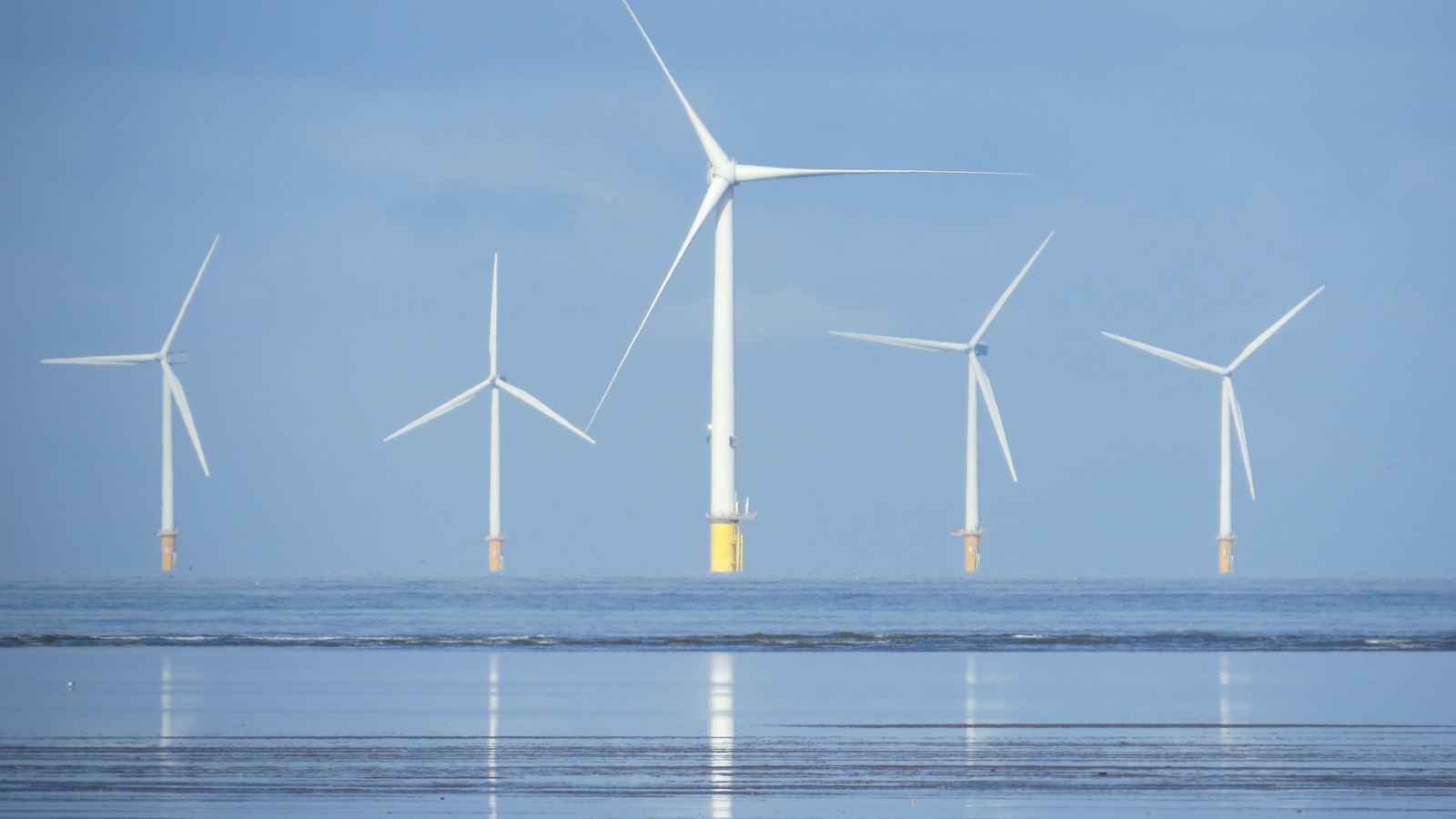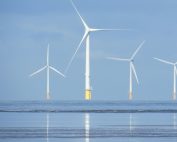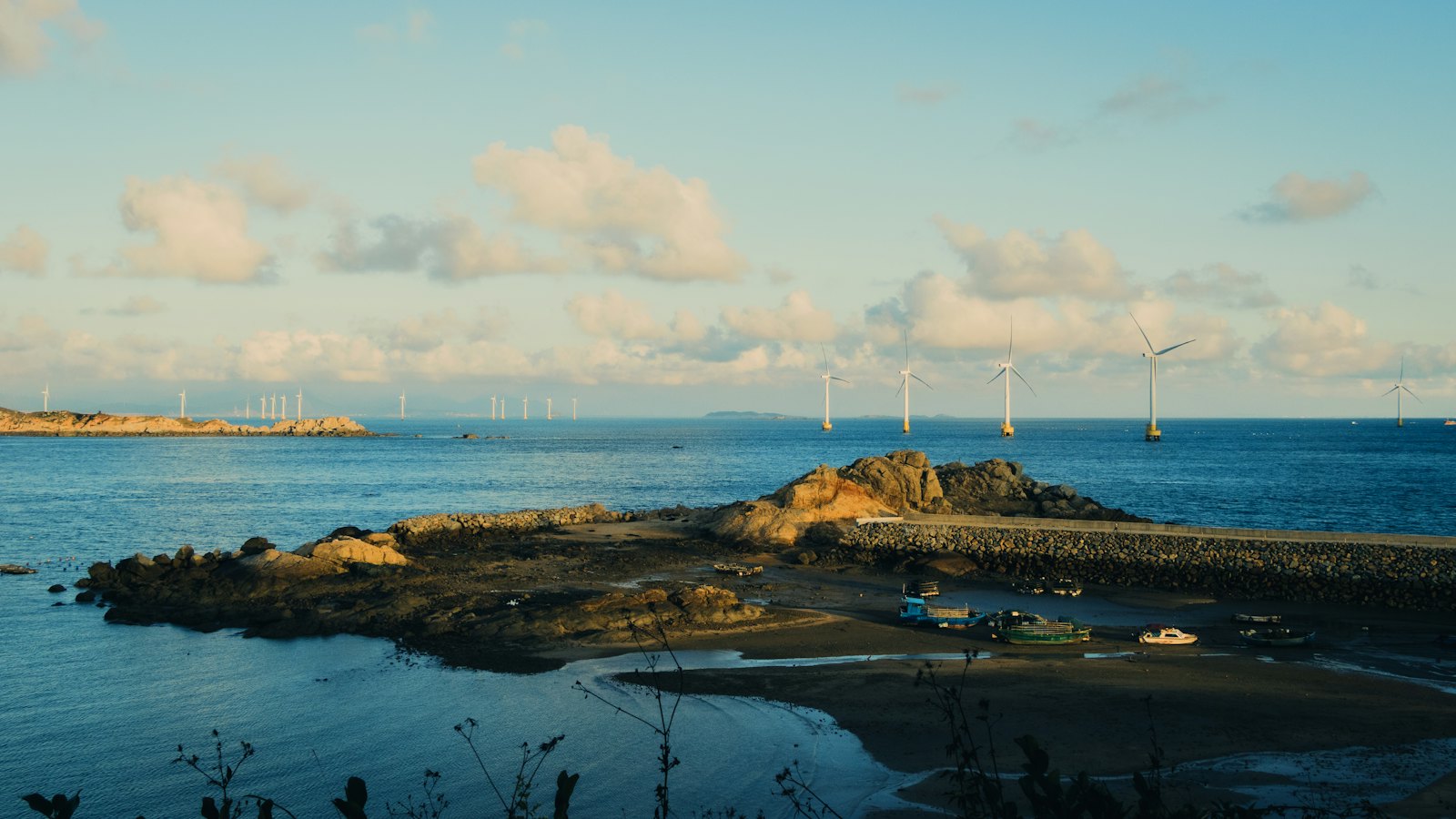
EnBW and its co-investors Allianz, AIP Management and Norges Bank Investment Management have formally inaugurated He Dreiht, a 960 MW wind farm in the German North Sea, in the presence of Federal Environment Minister Carsten Schneider. With 64 turbines the project is Germany’s largest offshore wind farm by installed capacity.
He Dreiht lies around 85 km north-west of Borkum and 110 km west of Heligoland. EnBW won the site in Germany’s 2017 auction with a zero-subsidy bid, and the roughly EUR 2.4 billion investment is being financed entirely through long-term power purchase agreements rather than state support. Offtakers include Evonik, Google, Fraport, Bosch, Salzgitter, SHS Stahl-Holding Saar, Deutsche Bahn and DHL Group.
The project is the first commercial deployment of Vestas’ V236-15.0 MW turbine. Construction began in May 2024 with the foundations, which were manufactured in Germany; the first turbine went up in April 2025, first power flowed in late 2025 and the last of the 64 machines was installed in August 2026. EnBW says commissioning is proceeding in stages and full operation is expected in the coming months. At full output the farm can cover the annual consumption of roughly 1.1 million households.
EnBW holds 50.1 per cent of He Dreiht; the remaining 49.9 per cent sits with a consortium of Allianz Global Investors, AIP Management and Norges Bank Investment Management. The Karlsruhe-based utility is already developing its next large offshore projects, the 1 GW Dreekant site in the German North Sea and the 2.9 GW Morven project off Scotland.
For the Baltic Sea market the inauguration is a reference point rather than a direct addition: it confirms that the 15 MW turbine class is now in commercial service in German waters, and that a subsidy-free, PPA-backed model can carry a gigawatt-scale project to completion. Both points feed into the debate on how the Baltic sites awarded in Germany’s recent offshore auctions, and Poland’s second-phase projects, will be financed and equipped.