Europe’s corporate renewable power purchase agreement (PPA) market is under pressure at the moment the EU wants to double its electrification rate, the RE-Source Platform said at the opening of its tenth annual event in Amsterdam on 4 November 2026. Around 1,400 participants are attending the two-day event, which runs on 4–5 November.
According to the platform, European companies contracted 5.9 GW of renewable capacity through corporate PPAs in 2026 so far, 9.7% less than in the same period of 2025. More frequent zero and negative electricity prices are raising risks for both sellers and buyers, and can make long-term, pay-as-produced contracts less attractive, particularly for buyers that cannot easily shift their consumption.
The organisers point to the European Commission’s Electrification Action Plan, published in July, which sets a target of raising Europe’s electrification rate to 46% by 2040 and acknowledges the need to remove barriers to PPAs. In their view, that ambition has not yet translated into concrete policies. As a first step they call for PPAs to be recognised as part of the EU’s decarbonisation toolbox and supported through the EU ETS Investment Booster, and for Guarantees of Origin to be acknowledged in carbon accounting.
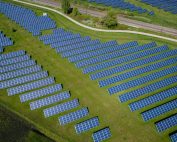
On the supply side, the platform says wind deployment is on track for a record year in 2026, while solar installations remain close to the record level of 2024. Insufficient investment in grids and battery storage, together with slow permitting, continues to constrain both technologies. Tackling these bottlenecks would reduce curtailment and negative prices, the platform argues, and give investors more confidence. On the buyer side it calls for more flexible demand, storage, stronger grids and well-designed support schemes.
“High gas prices show why Europe needs to electrify with home-grown renewables,” said Annie Scanlan, Managing Director of RE-Source. The platform brings together corporate buyers and suppliers of renewable electricity; WindEurope and SolarPower Europe are among its founding members. For the Baltic Sea region, where new offshore and onshore wind capacity increasingly depends on long-term offtake and grid access, the debate bears directly on how future projects are financed.