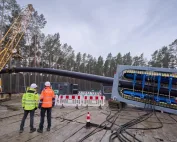
Alleged sabotage of a cable bridge in Berlin has sparked a debate in Germany that strikes at the foundations of renewable energy investment planning. The German association BDEW is appealing: we must stop serving up data on critical infrastructure “on a silver platter.” This is a warning to the entire wind sector, especially in the Baltic Sea region.
In an era of growing hybrid threats, transparency, which has been the pride of the European energy market, is becoming its Achilles’ heel. An incident in southwestern Berlin, where key cable infrastructure was targeted, has exposed a dangerous legal paradox.
Transparency vs. Sabotage
Kerstin Andreae, head of BDEW, points to a brutal contradiction in EU and national regulations. On the one hand, the NIS2 directive and the new framework law on critical infrastructure protection (KRITIS-Dachgesetz) impose strict physical and digital security requirements on operators. On the other hand, regulations on “open data” and freedom of information force them to publish precise maps, locations, and technical data online.
“Regulations on transparency and open data must be restricted where they threaten security. Government portals and open-source platforms that provide geolocation of critical facilities must move to a higher level of data abstraction,” warns BDEW.
Why is this crucial for the offshore and onshore sectors?
For the wind industry, which relies on dispersed and often isolated assets, this debate is of existential importance:
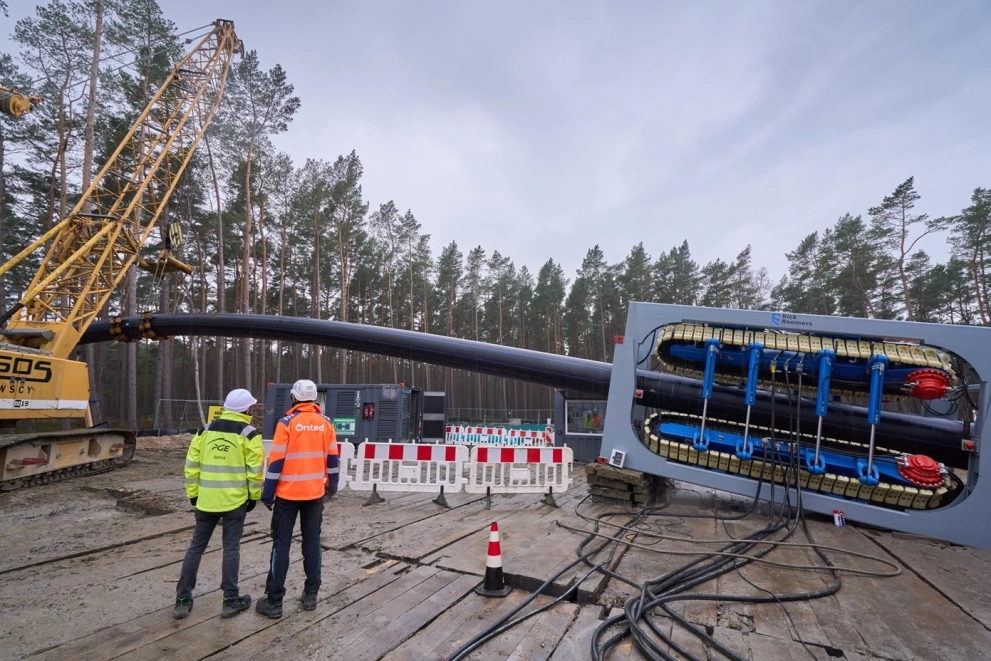
- Cable landfalls: Precise maps showing where cables from offshore wind farms connect to the onshore grid are a ready-made instruction manual for saboteurs.
- Transformer stations: Publicly available data on their capacity and exact coordinates make it easier to plan attacks that could paralyze entire regions.
- Interconnectors: Baltic interconnectors are monitored not only by operators but, thanks to open data, by any internet user.
Time to “black out” the maps?
The BDEW is calling for a radical rethinking of information policy. The industry is proposing that detailed technical data should only be available to verified entities with a legitimate legal interest. For the public and for statistical purposes, information should be provided in aggregated form, making it impossible to precisely locate an object in the field.
A consistent data protection policy for transmission infrastructure is just as important as naval patrols. The incident in Berlin shows that sabotage does not have to take place on the high seas—it can strike the land-based “lungs” of offshore energy.
The common energy market requires transparency to function effectively, but in 2026 we must ask ourselves: where does market information end and making the task easier for terrorists begin?