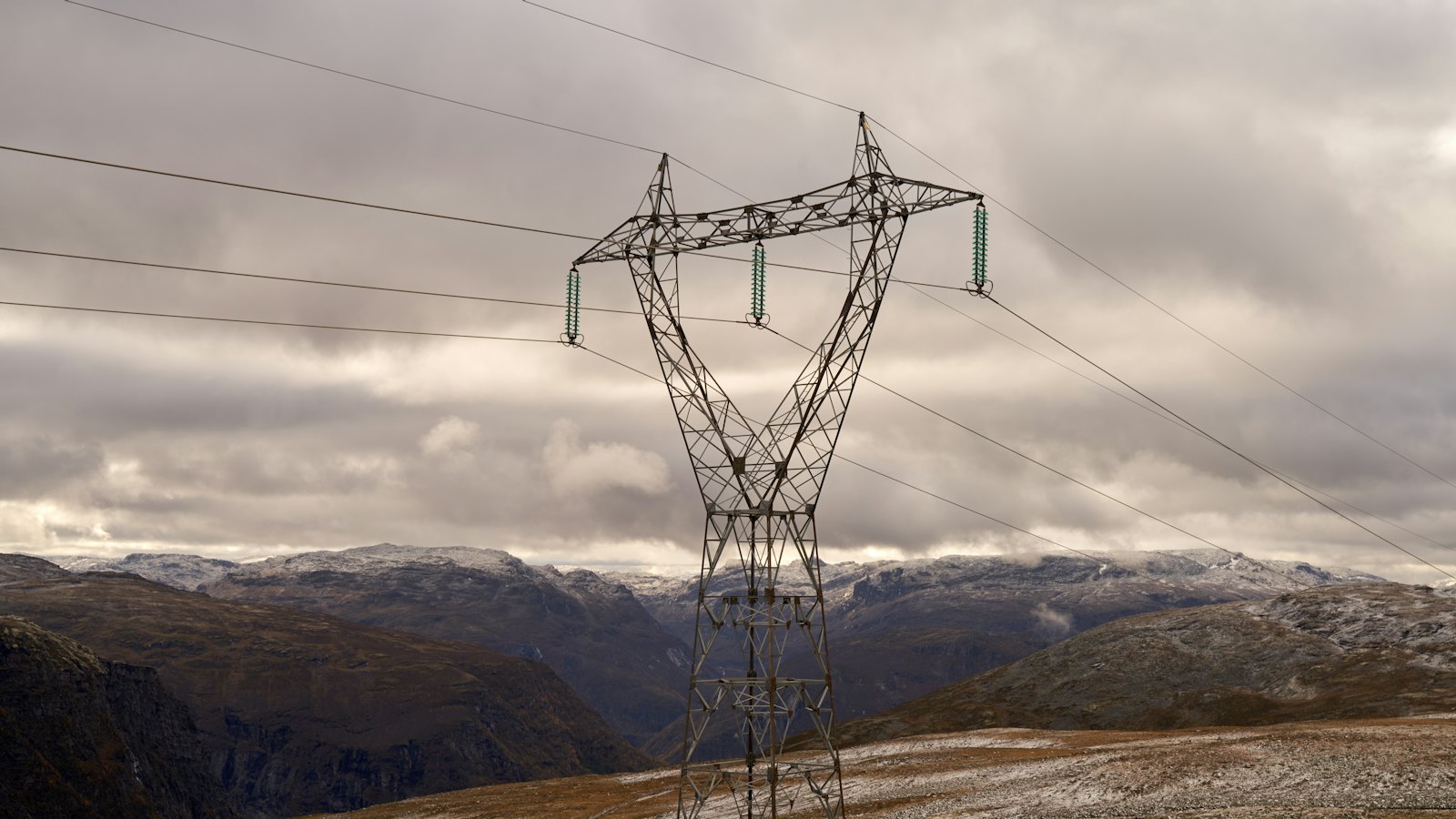
For most of the past decade the hard part of a wind project was getting it permitted and financed. That has changed. Across Europe the binding constraint has moved downstream, to the wires, the substations and the queue you join once the turbines are ready. For the Baltic Sea region, which is bringing its first large offshore capacity online while simultaneously trying to knit together a cross-border grid, the sequencing question is now the whole game.
The scale of the gap
Aurora Energy Research put numbers on it in its meta-analysis of European power grids, and they are uncomfortable. Congestion management across Europe cost 8.9 billion euros in 2024, roughly 13 per cent of annual grid investment. Some 72 TWh of mostly renewable generation was curtailed because of bottlenecks, about what Austria consumes in a year. Aurora’s modelling for Great Britain, Spain and Italy has curtailment doubling to 27 TWh by 2030.
The queues tell the same story. More than 800 GW of solar and wind, plus 550 GW of battery projects, are waiting for grid access in the UK, France, Italy, Spain and the Netherlands alone, far beyond what those systems can absorb. Requests from large power users in those countries already exceed 2024 peak demand. Aurora’s blunt assessment is that most European connection queue processes are no longer fit for purpose.
Money is going in, but not enough of it. Grid investment rose 47 per cent over five years to around 70 billion euros a year, still 15 to 44 per cent short of what Net Zero requires annually. The shortfall gets worse the further out you look: by 2040, distribution operator commitments fall more than 66 per cent below required levels and transmission operators lag by 29 per cent. Reaching 2050 means laying 576,000 km of transmission lines, 7.8 million km of distribution lines and more than five million transformers. Europe has to rebuild its grid inside one working generation.
Poland’s counter-example: build the wires first
Against that backdrop, Poland did something worth studying. Polskie Sieci Elektroenergetyczne confirmed the technical readiness of its offshore transmission infrastructure before the first Baltic farms needed it. The new Choczewo station, the expanded Żarnowiec station and the 400 kV line connecting them passed their voltage tests, with PSE vice president Włodzimierz Mucha confirming the chain was ready to move power from the Baltic to inland consumers.
That did not happen quickly. PSE started work in Pomerania in 2019, building two power stations and more than 250 kilometres of extra-high-voltage line while modernising what already existed. The lesson is unglamorous and expensive: a transmission programme started six or seven years before first power is what keeps a national grid from becoming the thing that delays the farms. Countries starting that clock now are already behind their own offshore auction timetables.
Hybrids: the Baltic’s specific answer
The more interesting structural response is the hybrid, or multi-purpose, interconnector, a single asset that both connects offshore wind and trades power between two markets. National Grid and TenneT Germany are developing GriffinLink between Great Britain and Germany, which they describe as the first project of its kind in Europe. TenneT Germany chief executive Tim Meyerjürgens framed it as connecting offshore farms so that a meshed European system can emerge rather than a set of isolated radial links.
The Baltic has its own version. Lithuania, Latvia and Germany signed a joint declaration of intent in Paris on cross-border renewable capacity, with transmission operators Litgrid, Augstsprieguma tīkls and 50Hertz agreeing to assess the feasibility of the Baltic-German PowerLink. Lithuanian energy minister Žygimantas Vaičiūnas argued the hybrid link would expand Lithuanian and Latvian export capacity and make more renewable build-out viable. The three countries committed to fund cost-benefit analyses, financing models and technical studies, with Project of Common Interest status and EU funding as the next targets. The operators had already filed the concept, then called the Baltic Hub, into ENTSO-E’s 2026 Ten-Year Network Development Plan, and the door is open for other Baltic Sea states to join.
Decisions on PowerLink’s next steps are due by the end of the third quarter of 2026, which makes this the near-term thing to watch. A hybrid interconnector solves two problems at once for the eastern Baltic: it gives Lithuanian and Latvian offshore ambitions a route to a deep market, and it gives the region a second interconnection axis that does not run through a single chokepoint.
The cost nobody budgeted: making the grid legible
There is a complication that grid planners did not have to think about a decade ago. Germany’s BDEW, after an incident targeting cable infrastructure in Berlin, has argued that European transparency rules now work against security. Its head Kerstin Andreae pointed at the contradiction directly: NIS2 and the German KRITIS framework law impose strict physical and digital protection duties, while open data and freedom of information rules push operators to publish precise maps, locations and technical specifications.
For wind that is not abstract. Cable landfalls, the points where offshore export cables meet the onshore grid, are published. So are transformer station coordinates and capacities. So are Baltic interconnector routes. BDEW wants detailed technical data restricted to verified entities with a legitimate interest and everything else published in aggregate. Whichever way that argument lands, it adds a cost line and a design constraint to every grid project in the region, and it applies to the interconnectors above as much as to anything already in the water.
What to watch
Three things, in order of nearness. First, the PowerLink decision at the end of the third quarter, which will show whether the Baltic hybrid concept converts into a funded project or stays a study. Second, whether connection queue reform arrives before the queues themselves become the binding constraint on Baltic auctions, since Aurora’s judgement on queue management applies to markets that have not yet felt the crunch. Third, whether the security-versus-transparency argument produces a workable European rule rather than eight national ones, because a meshed offshore grid with eight different data regimes is a slower grid to build. None of this is as photogenic as a turbine going up. All of it now decides when the turbine earns anything.