Finland’s Ministerial Finance Committee voted on 3 September in favour of a commitment allowing the Ministry of Economic Affairs and Employment to grant 21 million euros in investment aid to Metsä Fibre Oy. No aid decision has been taken yet; the ministry will prepare one for approval by Sari Multala, Minister of Climate and the Environment.
The money is earmarked for a planned biogenic carbon capture plant in Rauma, on Finland’s west coast. The facility would capture 100,000 tonnes of carbon dioxide a year from the flue gases of Metsä Group’s Rauma pulp mill, at a total investment cost of 70 million euros. The captured carbon dioxide would then be delivered onward to produce renewable electrofuels.
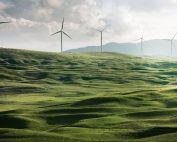
That last step is what places the project in the energy conversation rather than purely in forestry. Electrofuels are made by combining captured carbon with hydrogen produced from electricity, which ties the plant’s economics to the availability and price of renewable power. Finland’s grid is among the more wind-heavy in the Baltic region, and industrial demand of this type is one of the routes by which surplus wind generation finds a buyer.
“One of the priorities of the Government’s climate policy is to develop solutions that reduce emissions and capture carbon from industry and energy production. Finland needs leading innovators to develop industrial-scale projects, which in turn will help promote the implementation of more large-scale capture plants in future. The project endorsed by the Ministerial Finance Committee is exactly the kind we need,” Multala said.
The aid sits within a fixed-term investment programme in the Government Programme that reserved 90 million euros for biogenic carbon dioxide capture. The ministry received eight applications by the deadline of 31 March 2026, and all final decisions rest with Multala. The Rauma project is therefore one call among several still to be settled.
The ministry notes that solutions developed at the plant could later be scaled up and replicated at comparable sites – a relevant point across the Baltic, where pulp and paper capacity in Finland and Sweden represents a concentrated source of biogenic flue gas.