When Wind Industry Hub, the Polish Wind Energy Association (PSEW) and CEE Energy Group put a number on Poland’s onshore wind market in May 2026, the figure travelled fast: up to PLN 214 billion between 2026 and 2040. Four months on, with the government’s energy and climate plan still setting the demand side and grid congestion setting the physical limit, it is worth asking what that number actually assumes, and what has to go right for it to materialise.
What the PLN 214 billion is made of
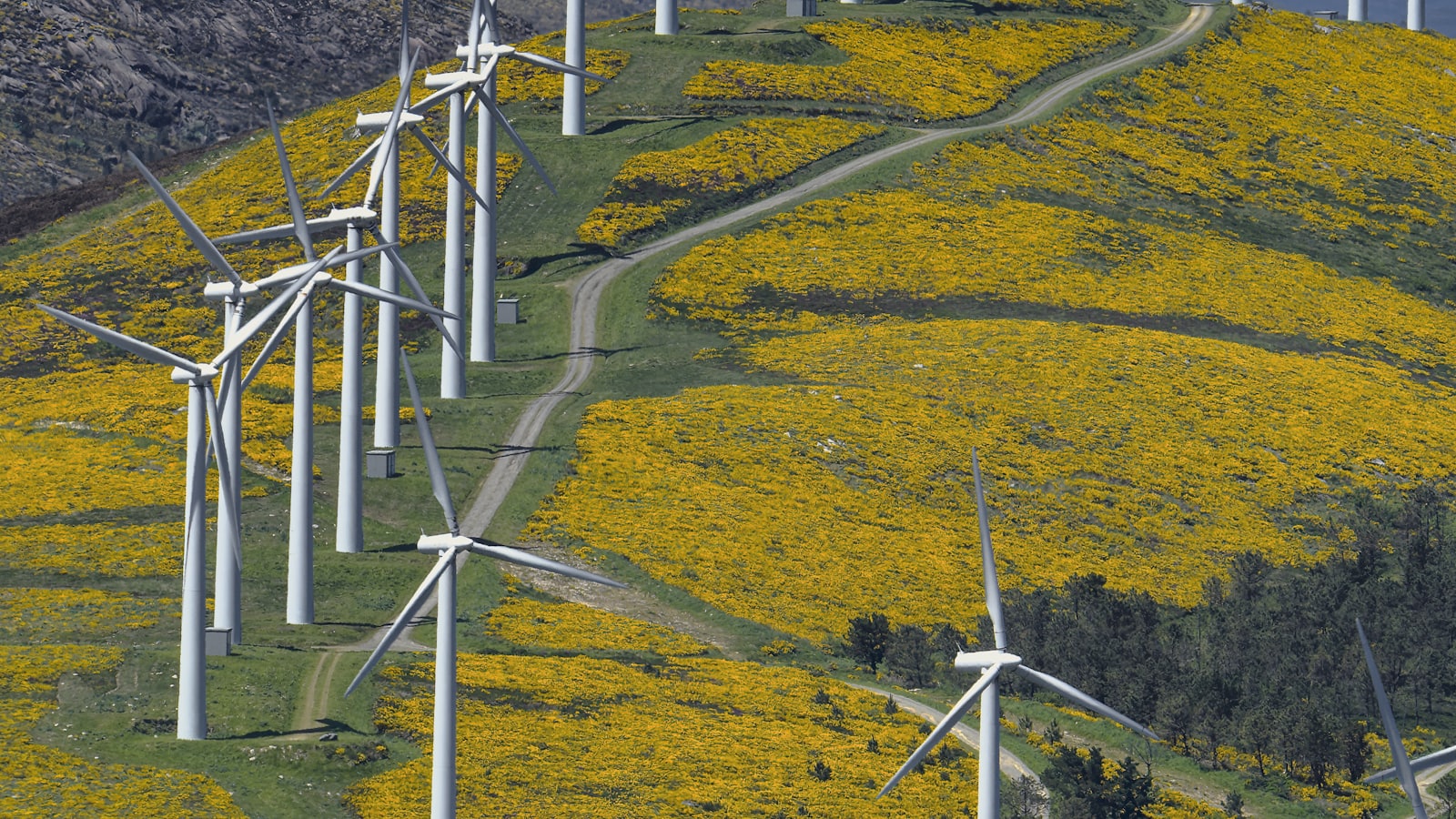
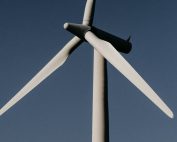
The Polish Strategy for Onshore Wind Industry Development splits the total into PLN 150 billion of capital expenditure and PLN 60 billion of operations and maintenance spending over the period. The arithmetic rests on one condition: Poland keeps adding 1.5 to 2 GW of onshore capacity every year, reaching an installed base of roughly 34 GW within about fifteen years. At that pace the annual investment stream could reach PLN 17 billion.
The authors’ argument is industrial rather than energy-focused. Polish firms already capture 70 to 90 per cent of project value in construction and balance-of-plant work, and around 75 per cent in operations and maintenance. The gap is turbine technology, where the domestic share sits near 25 per cent. “Onshore wind energy is not merely energy infrastructure. It should be the foundation of a programme to build modern Polish industry,” said Dominika Taranko, managing director of Wind Industry Hub, at the launch. PSEW president Janusz Gajowiecki framed the prize as a European market some fifteen times the size of the domestic one, provided manufacturers get administrative support and investment predictability.
The strategy organises its response into four priority programmes, covering a domestic steel and construction base, EPC capabilities, long-term O&M and repowering capacity, and integration into the turbine technology chain, backed by six implementation packages on market stability, EU regulation, financing, coordination, innovation and skills. It sits alongside the earlier offshore industry strategy as a combined map of the country’s wind supply chain.
Does the demand exist?
The draft National Energy and Climate Plan (KPEiK) published by the Ministry of Energy at the start of 2026 provides the demand backdrop. It assumes deep electrification lifting electricity consumption to around 200 TWh in 2030 and 270 TWh in 2040, installed capacity in the national system rising above 90 GW by 2030 and doubling from 2025 levels by 2040, and a renewable share of electricity production of 51.6 to 53.2 per cent by 2030 depending on the scenario. Onshore and offshore wind and photovoltaics are named as the main contributors, with nuclear providing the stable base from the late 2030s.
Minister of Energy Miłosz Motyka has described the plan as “the most important roadmap for the development of the Polish energy sector”, and the ministry projects unit generation costs falling by 8 per cent by 2030 and 18 per cent by 2040 against 2025. On paper, then, 34 GW of onshore wind fits inside the system the government is planning for. The KPEiK does not, however, guarantee an annual build rate; it sets a destination, and the 1.5 to 2 GW cadence in the industry strategy is an assumption about how fast the market can move within it.
The grid is the constraint
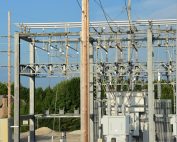
The variable the strategy cannot control is transmission. An Aurora Energy Research study released in June 2026 found that Europe’s grid congestion management reached 72 TWh in 2024, and that Poland was already curtailing between 5 and 10 per cent of its renewable output because the network could not absorb it. Aurora’s modelling suggests a 25 per cent increase in cross-border interconnector capacity would let Europe absorb a further 27 TWh of wind and solar by 2040, displacing roughly 35 TWh of gas-fired generation.
For Poland the implication is direct. Each gigawatt added without matching grid capacity raises curtailment and erodes the revenue case for the next project, which in turn weakens the order book the industrial strategy is trying to build. The PLN 214 billion figure is therefore as much a grid number as a turbine number.
What to watch
Three markers will show whether the plan is on track. The first is the annual capacity added: anything consistently below 1.5 GW pushes the 34 GW target past 2040. The second is the local content share in turbine technology; the strategy’s ambition stands or falls on moving that 25 per cent upward through nacelle, blade and component work. The third is grid investment by the transmission operator and the pace of interconnector expansion, which will decide whether new farms sell their output or spill it. The final version of the KPEiK, and the auction volumes that follow it, will set the tone for all three.