POLAND
POLAND




LATEST ARTICLES

Poland’s PLN 214 billion onshore wind plan, revisited: the assumptions behind the number
The industry strategy values Poland's onshore wind market at up to PLN 214 billion by 2040, but the figure rests on 1.5 to 2 GW of annual additions, a turbine supply chain still 75 per cent foreign, and a grid that already curtails 5 to 10 per cent of renewable output.

Who repairs a cut cable? The missing layer in Baltic subsea infrastructure protection
Prevention and detection dominate the debate on Baltic subsea infrastructure. Repair capacity - vessels, spare sections and crews - is the thinnest layer, and the European funding that exists mostly covers telecom cables rather than power.
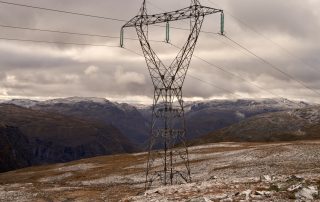
The grid is the bottleneck: what Europe’s connection queues mean for Baltic wind
Permitting used to be the hard part. Now it is the wires: 72 TWh curtailed across Europe, 800 GW stuck in connection queues, and a Baltic hybrid interconnector facing a decision point.
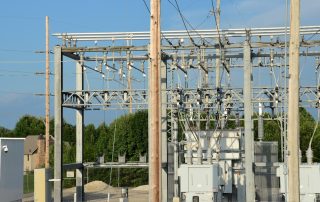
Fourteen transformers reach Baltica 2 site after six-month heavy transport from Türkiye
COLI Group has completed a six-month transport of 14 power transformers from GE Vernova's Turkish factory to the onshore site for Poland's Baltica 2 offshore wind farm, using three vessels, two ports and temporary structures over bridges too weak to carry the load.
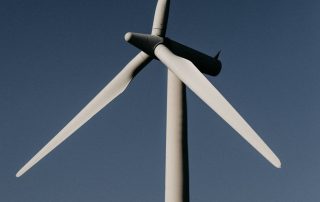
Onshore wind costs 8.2 cents. Getting permission still costs years
German data puts new onshore wind at 8.2 cents per kWh against gas backup at three to four times that. Auctions are oversubscribed and capital is queueing. The bottleneck has moved entirely to permitting.
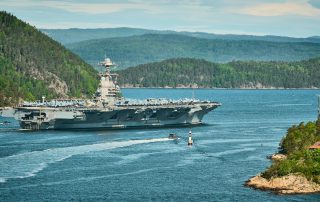
From the seabed to the airspace: what actually protects Baltic energy infrastructure
Mine clearance, anti-submarine patrols, air defence and a defence-tech accelerator each protect Baltic energy assets in part. None of them was designed to, and the financing question is still open.
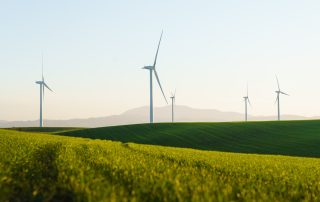
Why onshore wind’s next megawatts are coming from sites that already exist
Repowering and life extension are becoming a mainstream route to new onshore wind capacity in Germany and the Nordics, as permitting and grid constraints slow greenfield development.
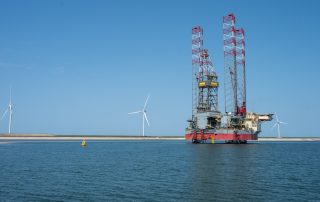
Świnoujście and Szczecin: how West Pomerania became Poland’s offshore wind industrial base
With 2.6 GW installed, Poland's first dedicated offshore installation port and a 6 GW project pipeline offshore, West Pomerania has the infrastructure. Whether it becomes an industrial base or a transit hub depends on local content.
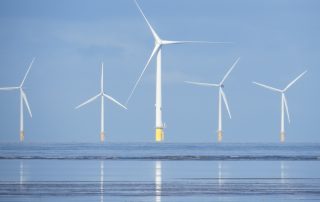
Security by design: how the Baltic’s offshore build-out became a defence question
Summit declarations, a NATO-funding proposal and a Finnish intelligence assessment now point the same way: Baltic offshore wind is being treated as critical infrastructure. Poland shows what that means on the ground.

Electrum passes 4 GW of Polish renewables under operations and maintenance contracts
Electrum says the renewable capacity it services under O&M contracts in Poland has passed 4 GW, up from close to 3 GW less than a year ago.
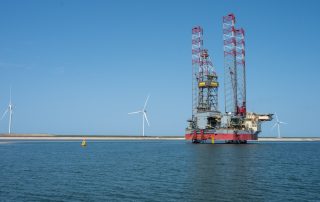
From construction site to 30-year job: what Baltic Power’s operations phase means for Łeba
Baltic Power's construction ends in the second half of 2026 and the Łeba base pivots to roughly 30 years of operations. The open question is whether it becomes a single-farm service base or the anchor of a Baltic O&M cluster.

Baltica 2 turns to secondary steel as 400 components follow the foundations
With 111 foundations in place at Baltica 2, more than 400 secondary steel units follow — around 75 per cent of them made in Poland — in work running to the end of 2026.
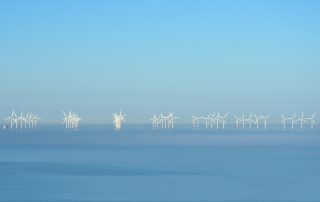
Local content in Polish offshore wind: from pledge to purchase order
Polish offshore wind has moved local content from strategy documents into signed contracts — towers, foundations, FEED work and permits. A look at which parts of the chain Poland has captured, and which remain out of reach.
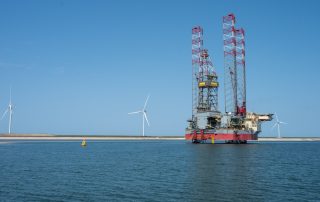
Baltica 2 completes monopile campaign with all 111 foundations installed
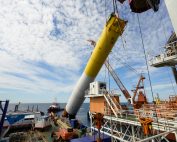
PGE and Ørsted have installed all 111 monopile foundations at the 1.5 GW Baltica 2 offshore wind farm on schedule. Secondary steel work now runs to the end of 2026, with turbines due in 2027.
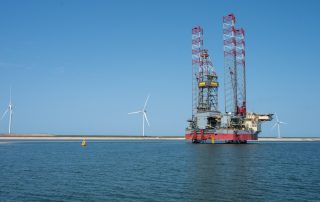
Deepwater foundations: why the 60-90 metre gap matters to the Baltic supply chain
The Baltic is too shallow to need Neretek's BC90 foundation. But the factories, quays and welders that a 60-90 metre foundation class would draw on are already working on Baltica 2.
Strategic Partners


STRATEGISCHE PARTNER