The economics of onshore wind in Europe are no longer the argument. The German government puts the expected support level for new onshore turbines at 8.2 cents per kilowatt hour, and estimates the production cost of the gas plants held in reserve to back them up at between 132 and 366 euros per megawatt hour, or roughly 13 to 37 cents per kilowatt hour. On the numbers the state itself publishes, the cheap megawatt already won.
What has not been settled is how long it takes to build one. That gap between price and permission is now the defining feature of the onshore market in both Germany and Poland, and it shows up in three separate places in the record.
The demand side is not the constraint
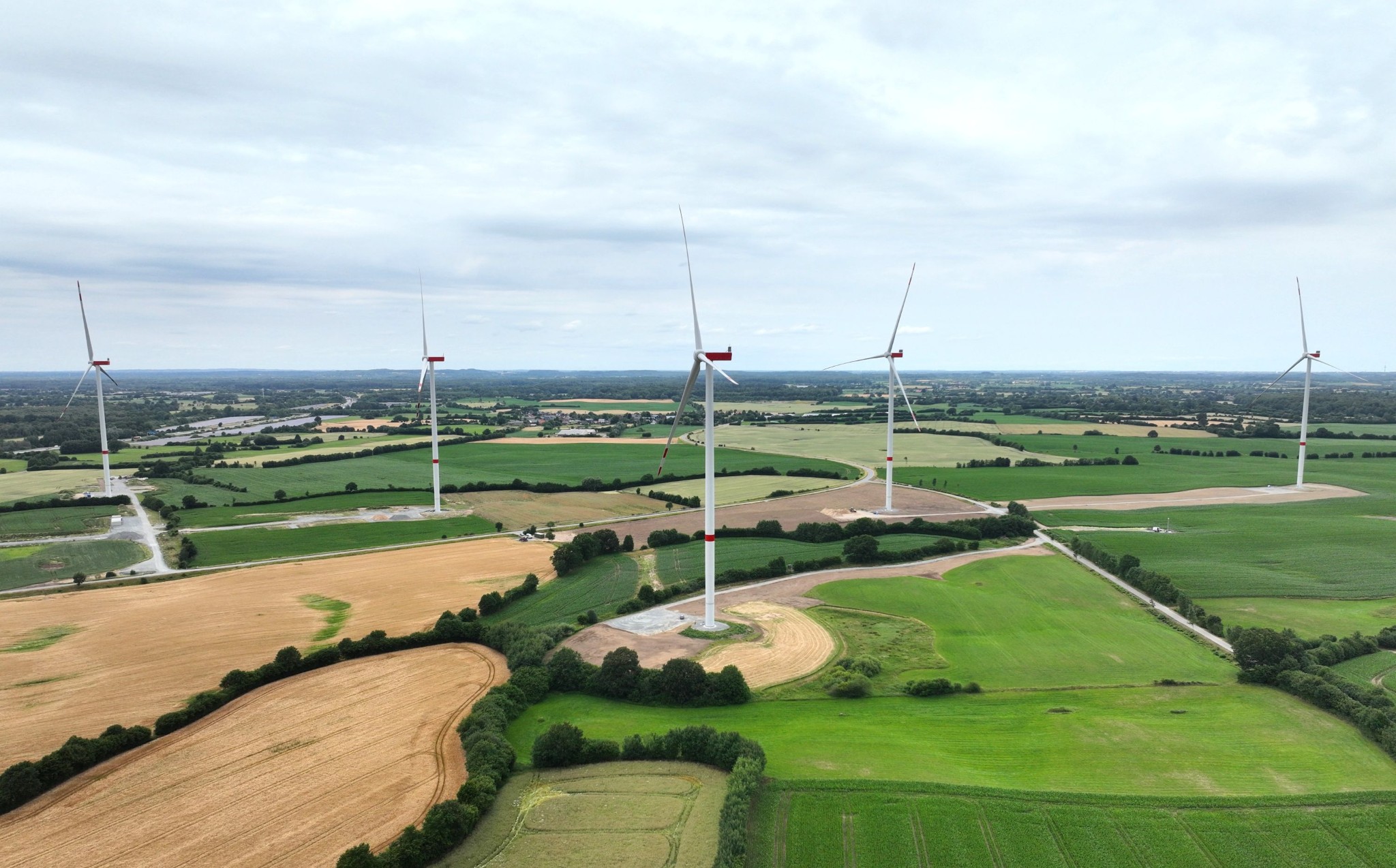
Germany’s February 2026 onshore auction drew 924 bids for 7,858 MW against an available volume of 3,445 MW. More than twice as much shovel-ready capacity turned up as the state was willing to award. Qualitas Energy took 126 MW of it across three projects in Lower Saxony, North Rhine-Westphalia and Baden-Württemberg, 18 turbines expected to supply around 84,000 households, and still holds a late-stage pipeline of 3 GW in the country.
Capital is not the constraint either. Ørsted sold its entire European onshore platform to Copenhagen Infrastructure Partners for 1.44 billion euros, a portfolio of 578 MW operating and 248 MW under construction across Ireland, the UK, Germany and Spain. A seller refocusing on offshore and a buyer paying that price for onshore wind, solar and storage tell the same story from opposite sides: the asset class is financeable and there is a queue to own it.
The constraint is the paperwork
Poland is where the mismatch is loudest. At the European Economic Congress in Katowice, Olga Sypuła, vice president and regional manager for Central Europe at European Energy, said she saw no improvement in the investment process and that it had never been as difficult, with new barriers appearing every year. Panellists pointed to flight path restrictions and new bird monitoring guidelines as among the hardest to work around.
Grid connection reform was supposed to help. The stated aims, full transparency, removing speculators and tidying up procedure, were not in dispute. The doubt was about delivery, and Sypuła’s assessment was that in practice little may change. That scepticism matters more than it sounds, because connection queues, not turbine prices, now determine when a project earns anything.
What the supply chain is quietly doing anyway
While the permitting argument runs, the industrial base keeps forming. Polish contractor Enprom took the commissioning contract for the Baltica 2 onshore substation at Osieki Lęborskie in the Choczewo municipality, a 21-month scope, and is now present on all four wind farms under construction in the Polish Baltic. That is an offshore project, but the point carries: domestic firms are learning high-voltage connection work at scale, and that competence transfers to onshore build-out.
Sypuła set out the condition attached to that. She would welcome a 70 per cent domestic share, but said it requires continuity in the investment process and legislation moving in the same direction as policy, adding that relaxing regulations does not make factories appear overnight. Industrial capacity follows a credible pipeline, not an announcement.
What to watch next
Three things will show whether the gap is closing. First, whether German auction rounds stay heavily oversubscribed, which would mean the bottleneck has moved fully downstream of the tender. Second, whether Poland’s connection reform produces measurably shorter queues rather than a rebuilt one. Third, whether the local content share in Polish projects rises on its own or only where a specific project forced it.
None of those depend on the cost of a turbine. At 8.2 cents against gas at three to four times that, the technology has made its case. Everything left is administrative, and administrative problems are the ones governments can fix fastest if they decide to.