The “Local Content. For the Benefit of Poland” („Local content. Z korzyścią dla Polski”) project is part of the government’s economic philosophy and the implementation of a priority set by the Ministry of State Assets (MAP). Its main objective is to localise supply chains, particularly in investments carried out by companies with State Treasury shareholdings. On Thursday, at the Apator SA factory, with which Enea has signed a contract for the supply of remote-reading meters, the Minister of State Assets, Wojciech Balczun, presented the results of the work carried out by the Team for the Domestic Component’s Participation in Key Investment Processes. The aim of the proposed solutions is to systematically increase the participation of Polish companies in the ongoing modernisation of the Polish army, the energy sector, infrastructure and the country’s digitalisation, which is intended to strengthen Poland’s strategic autonomy and economic security.
– Poland has been benefiting from free trade in Europe and globally for 20 years, and we do not intend to undermine this. Local content is an expression of concern, responsibility and care for the safety of Poles in a difficult and ever-deteriorating geopolitical situation. We must rapidly increase our strategic autonomy and develop our own capabilities. We have joined the ranks of Europe’s economic leaders and are creating a sensible procurement policy that complies with European regulations and can serve as a model for the whole of the EU – said Minister Balczun.
The launch of the “Local Content. For the Benefit of Poland” project took place on 9 April 2026 at the headquarters of Apator SA in Ostaszewo near Toruń, attended by Prime Minister Donald Tusk, the leadership of the Ministry of State Assets headed by Wojciech Balczun, and the CEOs of the largest state-owned companies.
SSP’s involvement
The largest Polish state-owned companies have joined the project, including by organising supplier days and initiatives encouraging Polish firms to actively participate in tenders. The Ministry of State Assets aims to create an economic ecosystem which, on the one hand, will make it easier for small and medium-sized domestic enterprises, often operating outside major urban centres, to join the supply chains of large corporations, and on the other hand, will reward corporations that implement such principles.
– Over the next decade, investment in the energy sector will amount to one trillion zlotys, and in rail, road and maritime infrastructure – several hundred billion zlotys. Similar expenditure is planned in the areas of defence, digitalisation and IT. Our aim is for as much of this sum as possible to go to domestic companies. This will be the driving force that transforms our economy for many years to come – added Minister Balczun.
Social and economic benefits of local content
Local content also has a tangible, positive social impact:
- more resilient and flexible supply chains, less susceptible to geopolitical turmoil and price pressures,
- greater employment stability,
- the development of technical skills in smaller centres,
- an increase in orders for local SMEs,
- stronger local authority budgets.
Incorporating local content principles into the state’s procurement policy means moving away from the ‘buy the cheapest’ model towards ‘buy the wisest’, which is expected to bring long-term benefits to the economy. This approach is already being adopted by the largest and most technologically advanced economies in the EU – from Germany and France to Denmark – to protect and develop their strategic industrial sectors.
– We do not discriminate, we promote. We support Polish companies, but also international businesses that decide to establish a deeper presence in our country: set up a branch, employ people, create research centres, work with Polish suppliers or reinvest profits in Poland – said the head of MAP.
The four pillars of local content
The systemic approach to local content is based on four pillars:
1. Building the market position of domestic companies – integrating them into the supply chains of major investments and strengthening strategic business and manufacturing capabilities.
2. Strengthening security of supply in times of geopolitical tension – particularly in strategic sectors such as energy and defence.
3. A long-term state procurement policy – public procurement supports economic development.
4. Support from a team of experts from key financial institutions – developing products to support businesses in their investments.
Tools supporting the development of local content include:
1. Definition and methodology for calculating the domestic component (the Central Statistical Office (GUS) will measure the value of the domestic contribution to investments).
2. Code of Good Practice – this will enable state-owned companies to level the playing field for domestic firms when competing for contracts.
3. Key Performance Indicators (KPIs) – in companies with State Treasury shareholding, supervisory boards will hold management boards accountable for the implementation of the MAP priority.
4. The State Procurement Policy adopted by the Council of Ministers at the end of March.
The “domestic component” refers to the value of goods or services produced or provided by a domestic entity. Initially, as part of a pilot scheme for the energy sector, the contracting authority in a government investment project, along with its suppliers and sub-suppliers, will complete a form for the Central Statistical Office (GUS) disclosing the structure of the supply chain for that project. This form will be sent after the contract is signed, and forms for subsequent years of the contract’s implementation will be sent after the end of the relevant reference year. In this way, the contracting authority will be able to determine the percentage of the domestic component.
Additionally, during the tender process, the Contracting Authority will inform its bidders of the requirement to report subcontracting within the project.
The experience and lessons learned from the pilot scheme in the energy sector will form the basis for the comprehensive implementation of local content reporting in other strategic sectors of the economy.
– We have introduced ‘thinking Polish’ into the boards of Polish state-owned companies – the impact on the local community is playing an increasingly important role, but we are approaching this issue systematically. Thanks to the Central Statistical Office (GUS), we will know how many Polish government investments are actually carried out by Polish companies, and we will examine their level across three tiers of execution. We also encourage Polish private companies to join the local content programme – said the minister.
Domestic component in terms of entities
In addition to defining what the term ‘domestic component’ means in the local content scheme, the Code of Good Practice also sets out criteria to help determine the level of domestic ownership of individual entities with which companies with State Treasury shareholdings wish to cooperate. The following percentage weights have been assigned to these criteria:
- Weighting 25% – criterion regarding the top-tier parent company having its registered office in Poland,
- Weighting 25% – criterion for the main business activity carried out on Polish territory,
- Weighting 15% – criterion for tax residence in Poland,
- Weighting 15% – criterion regarding the employment of over 50% of staff who are Polish citizens or residents of Poland paying taxes and social security contributions in Poland,
- Weighting 10% – criterion regarding a registered office in Poland (KRS / CEIDG) and uninterrupted operation for ≥ 3 years,
- Weighting 10% – criterion for over 50% of annual turnover generated in Poland.
Apator and Enea – a model example of cooperation in the spirit of local content
The venue for the event is no coincidence – the contract between Enea and Apator SA, worth approximately PLN 300 million for the supply of over 750,000 meters, provides a model example of cooperation within the domestic supply chain.
Apator SA is a Polish technology group competing with Asian manufacturers, which will supply Enea with approximately 750,000 smart remote-reading meters. The devices not only measure energy consumption but also monitor network parameters, enable real-time optimisation and detect anomalies. As a result, they contribute to energy security, grid stability and better management of energy flows throughout the system.
The product was developed as part of an innovation partnership involving 29 entities, including universities, research institutes and technology companies. The contract presents significant development opportunities for Apator and the entire national technology ecosystem.
– We are not only the recipients of this technology, but also its co-creators. From the outset, we have opted for an innovation partnership model, in which we do not purchase ready-made solutions from the market, but instead, together with the Polish company Apator, we develop products tailored to the real needs of our network and our customers – said Grzegorz Kinelski, Chairman of the Management Board of Enea SA – This approach fits perfectly with our local content strategy, which in practice means building a strong domestic value chain – from design, through production, to skills development and collaboration with scientists. “Thanks to this, at Enea we are not only investing in modern infrastructure, but also strengthening the Polish economy and the country’s energy security,” added Grzegorz Kinelski.
The smart meter project is an example of the practical application of local content principles – from building local technological expertise to harnessing the potential of Polish companies in major investment programmes of state-owned enterprises. It is also a model of cooperation between industry, science and the state in the field of modern technologies.
– The technology partnership with Enea demonstrates how much we can achieve by combining the expertise of Polish leaders in energy, business and science. Thanks to the cooperation between the two companies, we have created a meter that not only addresses Enea’s current challenges related to grid digitalisation, but also significantly expands its capabilities. This meter ensures full control over energy, data security and readiness for the development of the energy sector of the future, said Maciej Wyczesany, President of the Management Board of Apator SA – The energy transition should strengthen not only the security of the system, but also national industrial and technological capabilities. The participation of Polish companies in this process is crucial, as it allows us to build technological sovereignty and maintain control over solutions vital to critical infrastructure. This is a real opportunity to strengthen the competitiveness of the Polish economy in the long term. We hope that the issue of local content and the participation of Polish companies in investment processes will be a key element of the government’s policy – added Maciej Wyczesany.
The launch of the “Local Content.
For the Benefit of Poland’ and the launch of mass production of meters for Enea is a symbolic yet very concrete step towards the rapid development of the country’s industrial potential. It proves that Polish companies – with the support of appropriate regulations and a stable investment policy – are capable of creating advanced products, competing globally and strengthening the country’s security.
Selected examples of local content from recent months
The MAP project is a systematic approach to promoting the growth of the domestic component in investments, which we have been observing in recent months. Below are a few examples:
- Orlen Kolej (Poland’s second-largest rail operator) signed a contract at the end of 2025 to purchase 40 modern locomotives (20 304E Gama locomotives and 20 E6ACTadnb Dragon 2 locomotives) manufactured by two Polish companies: Pesa and Newag. PKO Leasing was also involved in the transaction, worth PLN 800 million.
- ORLEN Termika is building Europe’s largest thermal energy storage facility at the Żerań Combined Heat and Power Plant. The tank, 70 m high and 36 m in diameter, will hold 61,000 m³ of water (the equivalent of 24 Olympic-sized swimming pools) at a temperature of up to 98°C. The thermal energy stored in this way is sufficient to heat 75,000 homes during the winter. The project, which is due to be commissioned in autumn 2027, is being built by the Polish company Inżynieria Rzeszów SA in a consortium with Energy Solution sp. z o.o.
- The leader of the consortium building a combined cycle power plant for Orlen in Gdańsk is the Polish company Polimex-Mostostal. 80 per cent of the project’s expenditure will go to the Polish market. The company is working with around 150 subcontractors and suppliers. The installation work will be contracted to Polish firms.
- Polimex-Mostostal is also the leader of the consortium modernising power units in Rybnik for PGE (an investment worth PLN 3–4 billion) and building new power units in Gryfino in the Lower Oder region. The value of the investment is approximately PLN 3.7 billion.
- The PGE Group has signed a contract with the DORACO Construction Corporation for the construction of an operational and maintenance base in Ustka. The modern facility will serve as a key base for servicing offshore wind farms in the Baltic Sea.
- PGZ is developing the production of 155 mm ammunition (the entire manufacturing process in Poland) and unmanned systems. Programmes worth billions of zlotys are supported by funds from the Capital Investment Fund.
- The SAFE Programme (Armed Poland): approx. PLN 180 billion in EU support earmarked for Poland. 89 per cent of the funds will go to domestic companies, and around 12,000 enterprises will be involved in the supply chains. This is a flagship example of local content on a national scale.
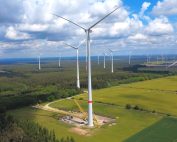
- Grupa Przemysłowa Baltic sp. z o.o., in a contract with the German company Vensys (onshore wind), ensured approx. 80% local content by purchasing materials and components from Polish suppliers. This mainly concerns the supply of wind turbine tower components.
- Construction of three new KGHM mine shafts: Retków, Gaworzyce, GG-2 ‘Odra’ (made possible by tax cuts). PeBeKa SA and Cuprum sp. z o.o. Research and Development Centre, part of the KGHM Capital Group, are responsible for the project’s implementation.
-
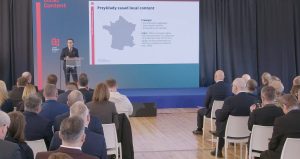
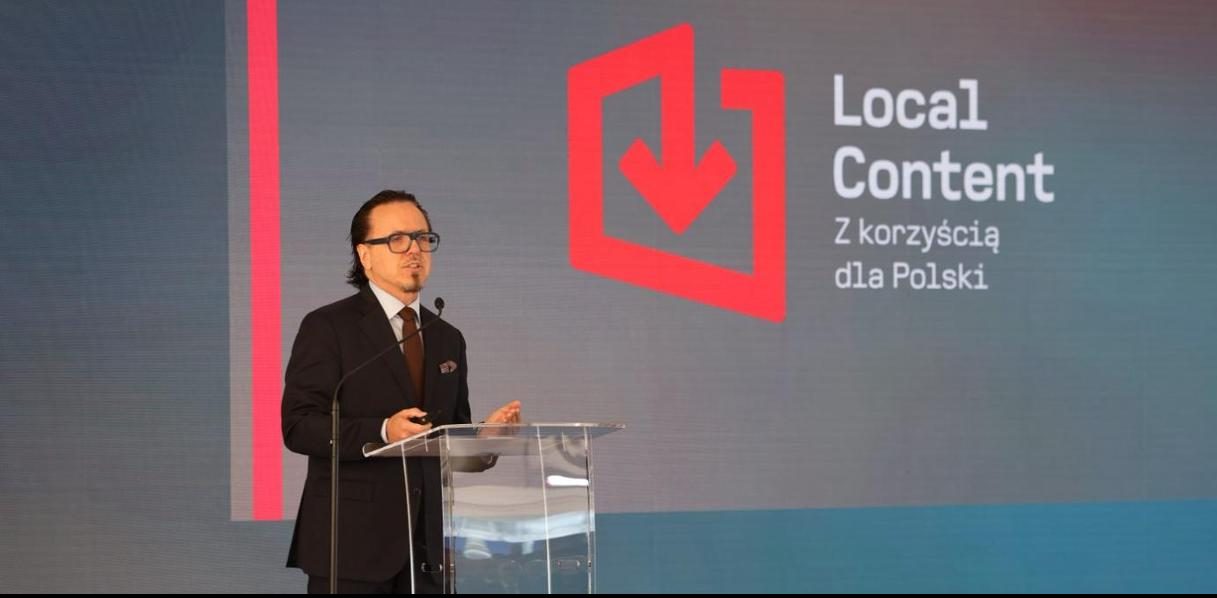
- Minister Wojciech Balczun podczas konferencji „Local Content. Z korzyścią dla Polski”
-
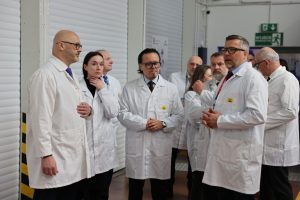
- Wizyta w Apator S.A.
-

- Inauguracja projektu “Local Content. Z korzyścią dla Polski”
-

- Inauguracja projektu “Local Content. Z korzyścią dla Polski”
Source: gov.pl