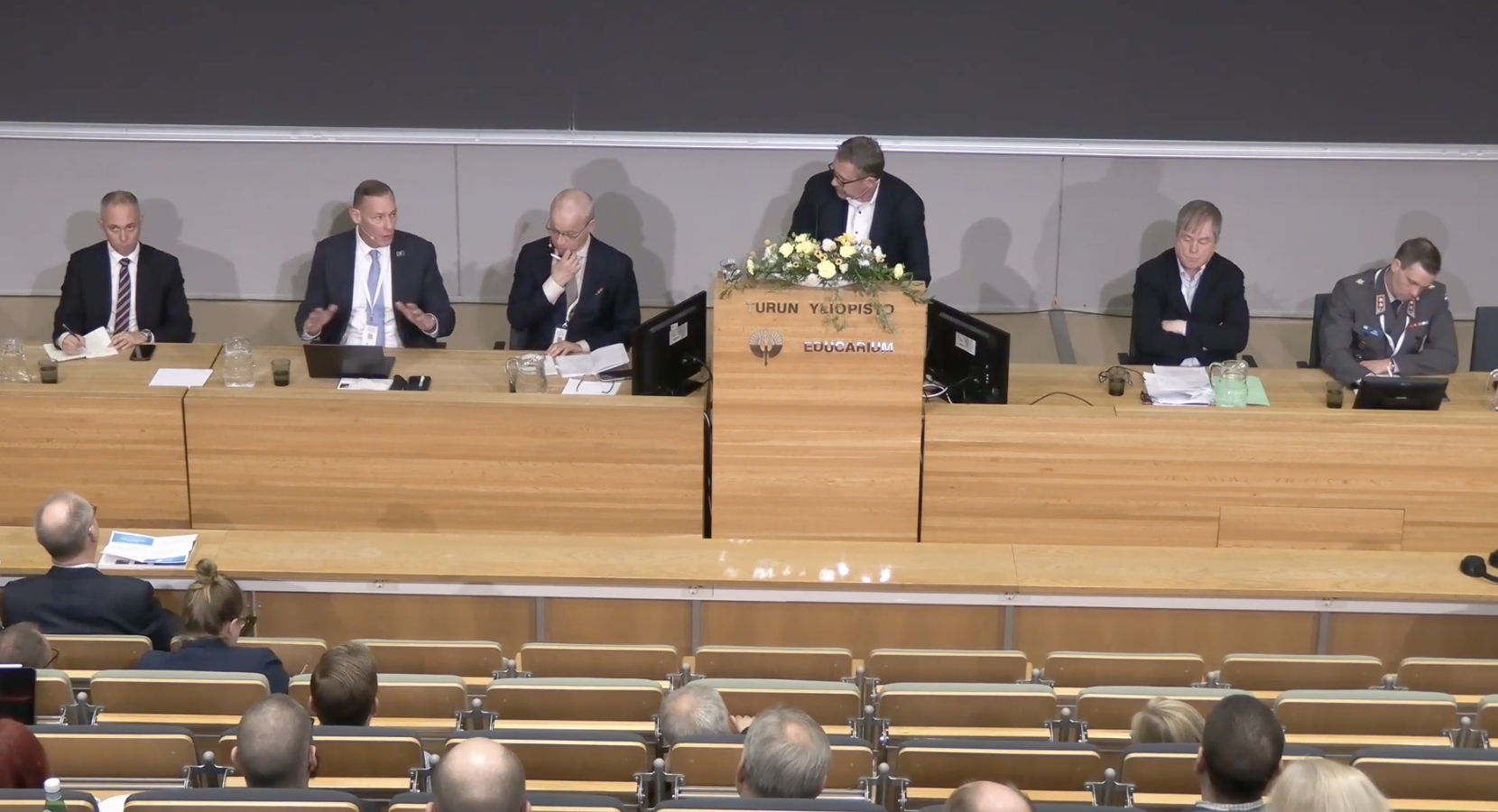
Security, strategic intelligence and logistics of the northern and Arctic area took centre stage at the Baltic Sea Region Forum in Turku on 4 May 2026, drawing a record 580 registered participants both on-site and online. The forum opened with Taneli Lahti of the European Commission’s DG International Partnerships arguing that economic tools — trade, investment and technology governance — are as central to geopolitical power as military capability.
Finnish Chief of Defence Janne Jaakkola stressed that the Baltic Sea and the Arctic must be understood as a single interconnected strategic space, where crises in one area can rapidly escalate into the other. He called for Europe to take greater responsibility for its own defence: “It is about readiness, it is about preparedness, but it is even more about the capacity to adapt.”
A key panel on critical natural resources and logistical infrastructure highlighted how ports, undersea cables, transport routes and energy networks have become core security concerns. Europe’s vulnerability to external energy dependencies — including former reliance on Russian supplies and Chinese-controlled supply chains for green technology components — featured heavily, with panelists urging stronger Nordic-Baltic-European cooperation.
Finnish Security and Intelligence Service Director Juha Martelius closed the forum, stating that Russia’s war in Ukraine represents an enduring confrontation with the West. He noted that China has become indispensable to Russia’s war effort: “It’s not a partnership. Russia needs China. China is making the most of its relationship with Russia.”