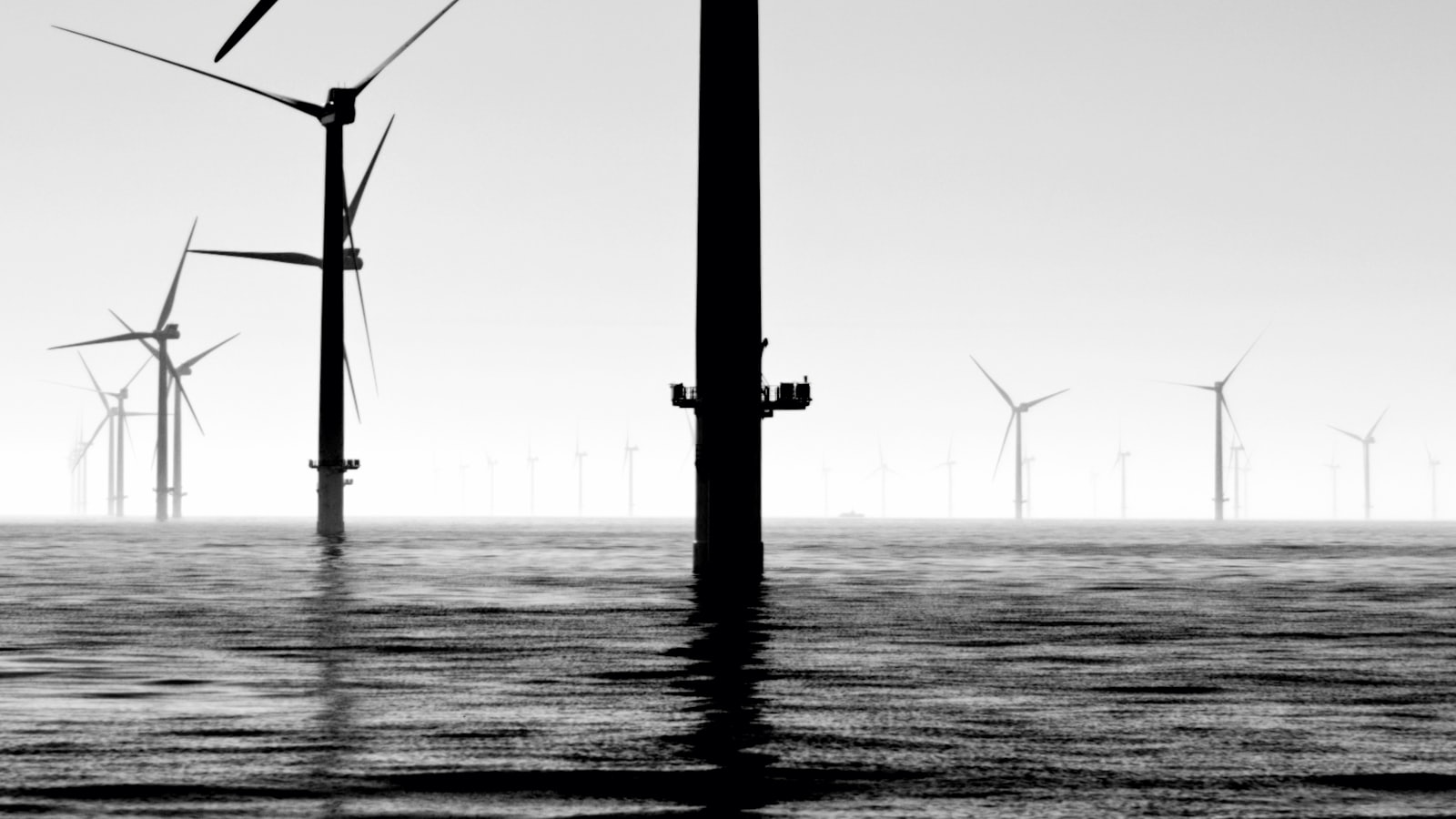
Germany has set itself the largest offshore wind target in Europe — at least 70 gigawatts by 2045 — but the harder question is no longer how much to build. It is how to pay for it. Three reforms are moving through Berlin at once: a new auction design built around contracts for difference, an overhaul of electricity network charges, and a push to plan offshore wind across borders. Together they are quietly rewiring the economics that decide whether German offshore projects get financed at all.
The auction reset
The trigger was failure. Germany’s 2025 offshore auction fell flat, areas went unwanted, and the 2026 rounds were suspended amid uncertainty over whether awarded projects would actually be built. The German Offshore Wind Energy Association (BWO) has argued that the underlying design is the problem, and it wants a single fix: an indexed, two-sided contract-for-difference (CfD) model. A two-sided CfD caps windfall revenues when power prices are high and guarantees a floor when they are low, which lowers financing costs and raises the odds that projects reach construction.
That view has gained political weight. A Bundesrat resolution — introduced by North Rhine-Westphalia, Schleswig-Holstein and Lower Saxony — took up much of the industry’s case, calling on the federal government to table an amendment to the Offshore Wind Energy Act (Windenergie-auf-See-Gesetz) in time for a new design to apply to tenders from 2027. The resolution also backed a mechanism for the voluntary return and rapid re-tendering of sites awarded between 2023 and 2025 that no longer look viable, so that seabed areas and scarce grid-connection capacity are not left blocked for years.
Who pays for the grid
The second reform is less visible but just as consequential: how network costs are charged. Germany’s Federal Network Agency (Bundesnetzagentur) has been designing a new General Electricity Network Tariff System, known as AgNes, and its early concept would exempt existing offshore wind farms and already-tendered projects from a planned capacity charge. A study for the BWO by the consultancy Neon Neue Energieökonomik made the structural argument against generator network charges for offshore wind: unlike other power plants, offshore sites, grid connections and connection capacity are planned and assigned centrally by the state. There is no siting decision left for a charge to influence, so the tariff cannot steer anything — it would simply raise costs.
And those costs do not disappear. Higher charges would push up bid prices in future CfD tenders, and because the federal government underwrites those contracts, the money would loop back to the public budget. In other words, a charge sold as an efficiency tool would function as indirect grid financing through public spending. The regulator’s willingness to exempt offshore wind, and to hold off on dynamic generator charges, is what the industry wanted to see — though the BWO continues to press for a permanent, formal exemption rather than a provisional one.
The cross-border lever
The third strand reframes the target itself. Research by Fraunhofer IWES, commissioned with the utility association BDEW, found that connecting offshore wind farms in Denmark’s and Sweden’s exclusive economic zones directly to the German grid — so-called radial connections — could raise the yield of the “German” offshore portfolio by up to 13 percent while cutting costs by up to 11 percent per megawatt hour. The logic is spatial: spreading turbines out of a crowded German Bight reduces wake shadowing, lifts full-load hours and steadies supply during low-wind spells. Under the modelled scenarios, up to 20 of the 70 gigawatts could sit in neighbouring waters yet still count toward Germany’s national goal.
That thinking is already becoming policy. At the North Sea Summit in Hamburg, coastal governments, transmission operators and industry agreed an Offshore Wind Investment Pact to tender 15 gigawatts a year between 2031 and 2040, with at least 10 gigawatts secured through indexed bilateral CfDs. The BWO and WindEurope also signed an Offshore Wind Industry Declaration backing a 300-gigawatt European build-out and committing the sector to cut offshore electricity production costs by 30 percent in real terms by 2040, against 2025 investment levels.
Why the Baltic should watch
None of this is confined to the North Sea. Cross-border radial connections point straight at the Baltic, where Germany shares waters — and increasingly grids — with Denmark, Sweden, Poland and the wider region. A separate mapping of Baltic Sea security cooperation, compiled at the initiative of Poland’s foreign ministry with the Council of the Baltic Sea States, is a reminder that energy and security now overlap in a sea dense with cables, pipelines and wind farms. The financial architecture Germany settles on will shape what a joint Baltic offshore market can look like.
The piece to watch is the amendment to the Offshore Wind Energy Act. If it lands a two-sided CfD design, locks in the network-charge exemption and opens the door to counting cross-border capacity, Germany will have turned a run of failed auctions into a more investable framework — and handed its Baltic neighbours a template worth studying.