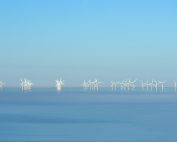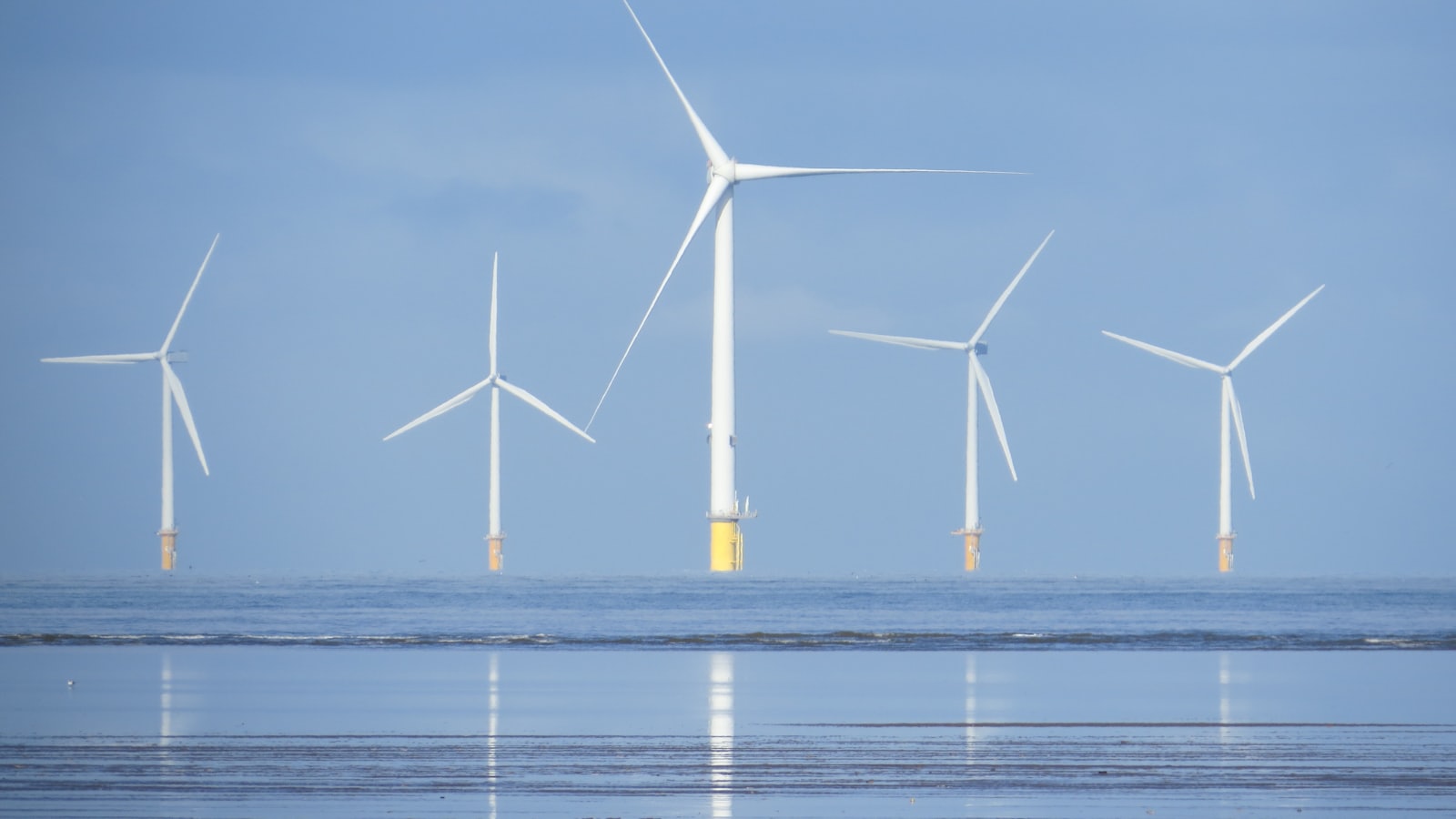
Poland’s offshore build-out no longer rests on a single project. With Baltic Power feeding its first electricity into the grid, the next wave belongs to the Baltica programme run by PGE and Ørsted — led by Baltica 2 (around 1.5 GW), followed by Baltica 3 (1 GW) and the newly contracted Baltica 9+. Together with earlier phases, these projects give PGE more than 3.8 GW of secured offshore capacity concentrated on the Słupsk Bank.
Baltica 2 is the furthest along and targets commissioning in 2027, which would make it the largest offshore wind farm in the Baltic Sea. On land, the project centres on a high-voltage substation on a roughly 13-hectare site at Osieki Lęborskie in the Choczewo municipality, Pomerania. The Polish power-engineering firm Enprom was contracted to commission the station under a 21-month programme covering compliance tests required by the transmission operator PSE. Power reaching shore travels through a six-kilometre 275 kV cable to the station, is stepped up to 400 kV and handed to the national grid via the neighbouring PSE Choczewo substation. Horizontal directional drilling links the onshore and offshore cable sections while limiting environmental disturbance.
Offshore, seabed preparation is well advanced. The BOKA Falcon vessel, operated by Boskalis, cleared and trenched 150 km of routes for the inter-array cables that connect the turbines to the offshore substations, after surveys confirmed no unexploded ordnance along the corridor. The next package covers a 260 km export-cable route, ahead of the installation of foundations, export cables and offshore substations. Once laid, the inter-array cables complete the link from turbine to substation to shore.
The turbines themselves — 107 Siemens Gamesa machines — are due for installation in 2027 from the new T5 terminal in Gdańsk, a 21-hectare installation port built by the Polish contractor Istrana to handle jack-up vessels and roll-on/roll-off transport. Local content runs deeper than logistics: more than 100 of the towers will be manufactured in Gdańsk by Baltic Towers, adding another Polish supplier to a chain PGE has pushed to broaden at every stage. Baltica 2 is backed by PLN 5.5 billion from Poland’s National Recovery Plan on the PGE side, with Ørsted financing its share directly.
Behind Baltica 2 sits a deliberately clustered pipeline. Baltica 3 (1 GW) and the Baltica 9+ undertaking — Baltica 9 at 0.975 GW plus the first 0.35 GW phase of FEW Baltic II, acquired from RWE — sit on the same Słupsk Bank, a choice PGE frames around shared operations and maintenance based in Ustka. Baltica 9 was contracted at PLN 489/MWh and the blended Baltica 9+ price lands near PLN 477/MWh in 2025 values, which PGE’s board reads as evidence of stable, competitive economics. Across its whole portfolio PGE Baltica counts eight Baltic projects exceeding 6 GW, with a target of 4 GW of operating offshore capacity by 2035, and has been running supplier webinars and procurement rounds to line up contractors for the construction phase.
The near-term test is execution. Over the coming stages, contractors move from clearing the seabed to installing foundations, export cables and the first turbines, while onshore-substation testing runs in parallel — each a first-of-its-kind operation at this scale in Poland. If Baltica 2 lands on schedule in 2027, it will supply clean power to roughly 2.5 million households and set the template for Baltica 3 and 9+ behind it. For a country still weaning its grid off coal, the Baltica cluster is where Poland’s offshore ambitions stop being auction numbers and become installed megawatts.