Few objections to wind power surface as often as the claim that living near turbines makes people ill. It is one of a small set of narratives — noise, health, birds, falling land values — that Polish researchers note have barely shifted in twenty years. Yet the scientific picture is settled enough to state plainly, and the more revealing question is why the health scare persists in spite of it.
On the evidence, there is no confirmed harmful health effect from turbine noise, and the condition popularly called “wind turbine syndrome” has never been substantiated. A separation distance of at least 500 metres is considered safe, and a modern turbine at that range produces sound comparable to rustling leaves or a household refrigerator. That consensus is not new. What changes from place to place is how rarely it reaches the residents actually weighing a project next to their town.
Health disinformation, the public-health researcher Filip Raciborski of the Medical University of Warsaw has argued, does not work by turning supporters into opponents. It works by sowing doubt and encouraging delay — “maybe we should wait for another study” — a mechanism he compares to vaccine disinformation. Part of the problem is structural: peer-reviewed papers are written for other scientists and hedged with caveats about their own limitations, which a lay reader can find unconvincing rather than reassuring. As the standing of experts erodes and influencers are weighted alongside researchers, hesitation, not outright opposition, becomes the usual outcome.
Facts can beat myths, the disinformation researcher Katarzyna Bakowicz has noted, but they never beat emotions. She describes an “emotional triad” — fear for one’s health, anger that looks for a culprit, and a lingering sense of inferiority — on which wind-energy disinformation feeds. The implication is that a leaflet full of decibel readings will not move someone who is frightened. What moves them is direct experience and a messenger they already trust.
The scale is not trivial. Poland’s media carried close to 70,000 disinformation publications about energy between 2022 and 2025, generating more than a billion audience contacts, and surveys of Polish wind firms found a majority reporting attacks that hit project schedules and costs — with a minority reporting outright violence. The World Economic Forum ranks disinformation among the leading short-term global risks. Health scares are effective precisely because their cost lands quietly: in projects delayed, jobs that never appear and municipal taxes never collected.
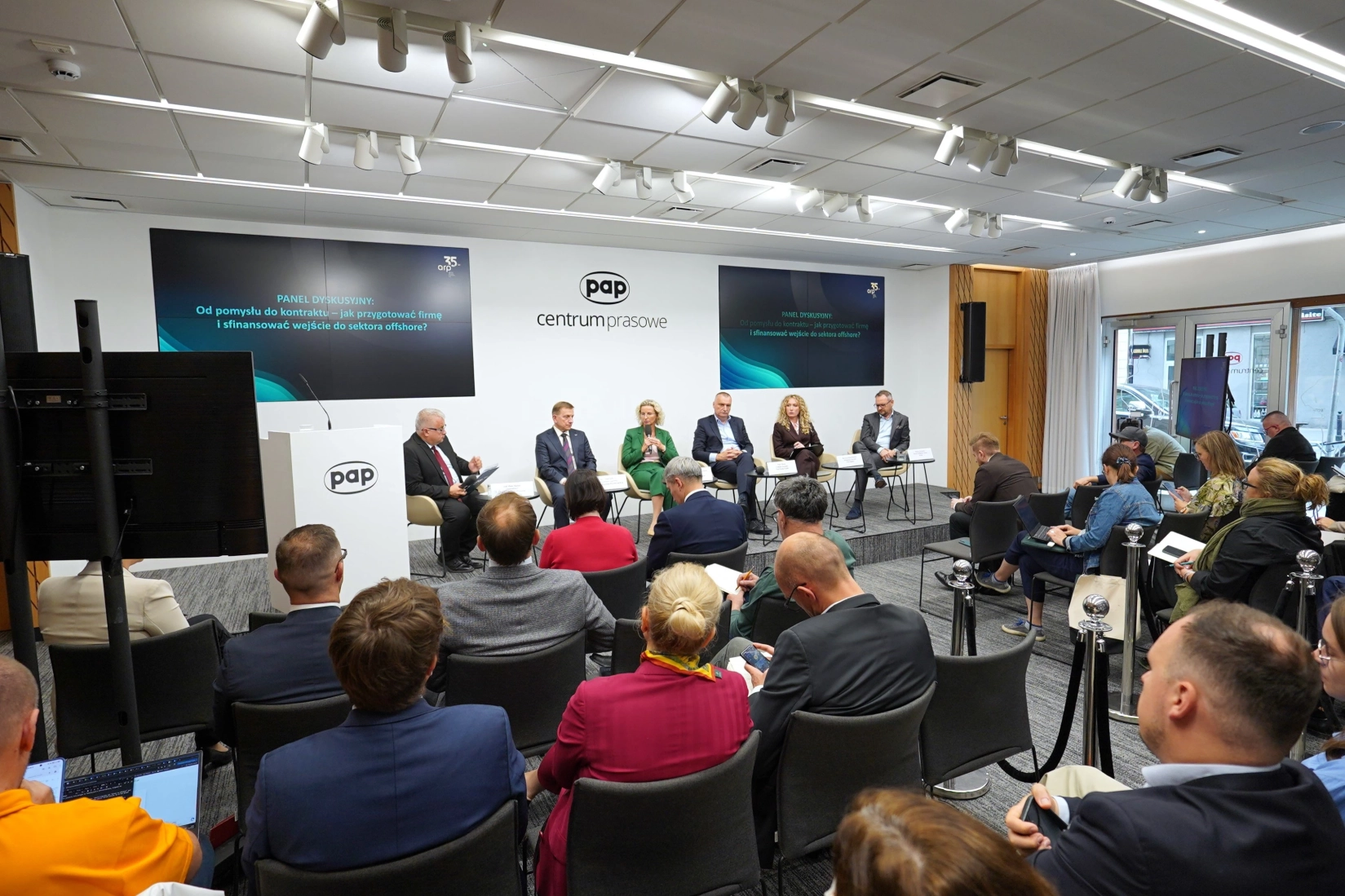
What counters it is slow and local. The responses that hold up share a pattern — trusted local messengers, honest treatment of trade-offs, and tangible benefits residents can see for themselves. Sweden’s Wind Centre took one version of this approach, sending every municipal politician in the country a research-based guide that tackles the common questions, including the awkward ones about birds and microplastics, rather than only the flattering ones. Polish municipalities that host turbines point to the same thing: predictable local revenue and improvements attributed openly to the wind farm. None of it is quick. As electrification brings more people to live near turbines and power lines across the Baltic region, the durable answer to the health scare is not a better fact sheet but patient, credible communication built on real experience — meeting, as one Warsaw panel put it, a farm of trolls with a farm of elves.