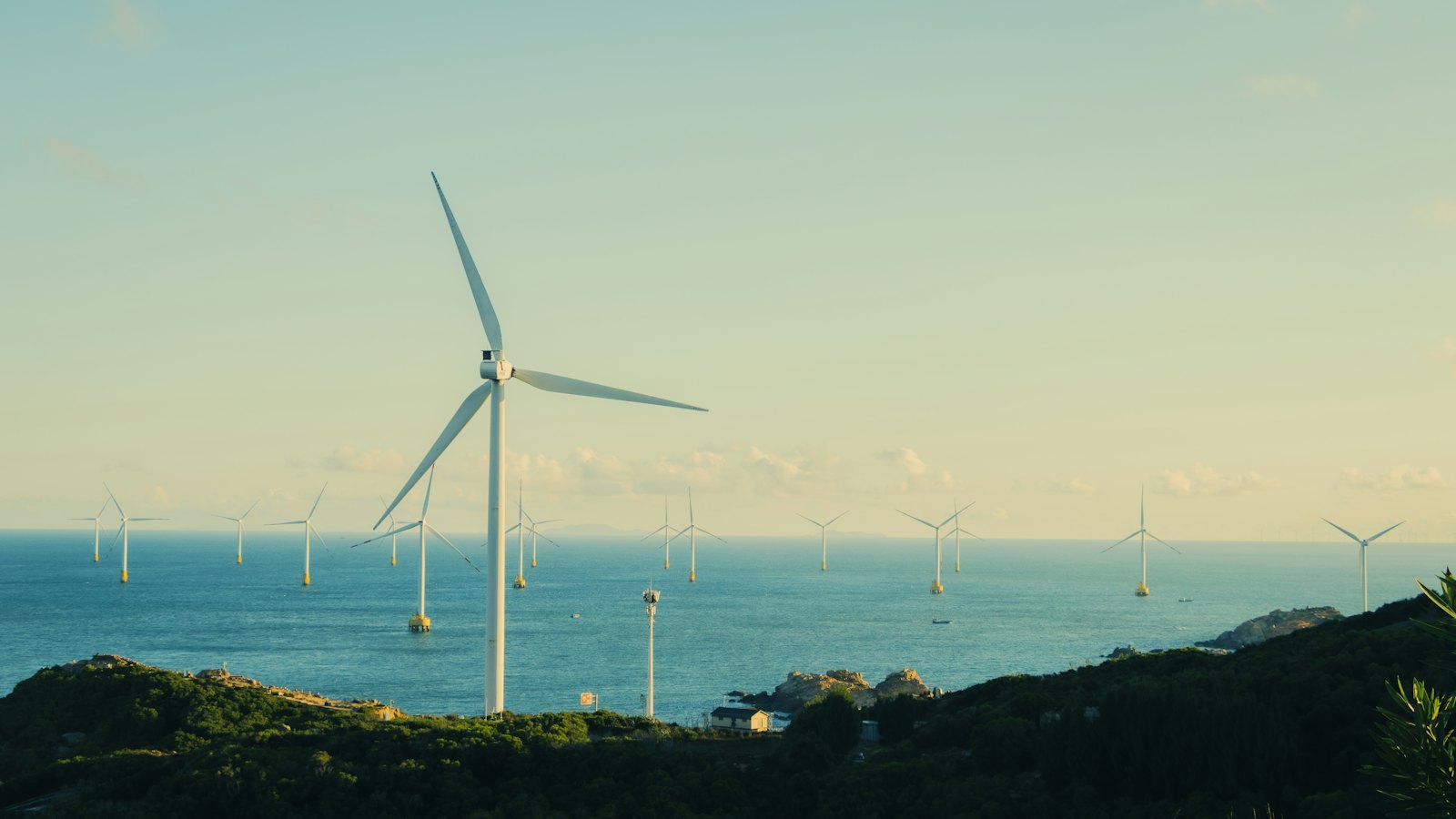
Germany is rewriting the rules under which offshore wind is auctioned, secured and built. The draft amendment to the Offshore Wind Energy Act (WindSeeG) was adopted by the federal cabinet on 2 September 2026 and now goes to parliament. It follows a year in which the old system stopped working: the Federal Network Agency’s 2025 tender for new sites closed without a single bid, and auctions for centrally pre-examined areas planned for 2026 were pushed to 2027.
What the draft keeps. The statutory goal stays at 70 GW of offshore wind by 2045. The draft sets an annual tender path of 2,000 to 4,800 MW, which gives suppliers and ports a planning corridor rather than a single number, and it extends the assumed operating life of new offshore wind farms from 25 to 35 years.
What changes in auction design. The central change is the introduction of two-sided contracts for difference. Unlike a one-sided subsidy, a two-sided CfD supports revenue when prices fall and caps it when they rise, which lowers the risk lenders price in. The offshore association BWO lists three auction-design items in the cabinet text: the so-called either-or procedure, maximum values for tenders, and the CfD itself. In the earlier consultation draft the CfD applied only once no company was willing to build without price protection. BWO managing director Stefan Thimm argued at the time that a hedge should be available from the outset, not as a last resort. The industry’s case is reinforced by EU electricity market rules, which already steer member states towards two-sided CfDs for new generation.
Securities, deadlines and the awarded sites. The second block covers the financial securities, realisation deadlines and penalties attached to a winning bid. BWO asks whether these are calibrated to the build-out path and flags the effect on cross-border projects. Related is the question of sites awarded between 2023 and 2025 that may no longer be viable. The Bundesrat resolution of 12 June 2026, introduced by North Rhine-Westphalia, Schleswig-Holstein and Lower Saxony, asked for a mechanism for voluntary return and quick re-tendering. BWO backs a one-time scheme under which a developer handing back an award forfeits payments already made, cannot re-bid and shares its site survey data.
Industrial policy, environment and operations. BWO’s remaining three groups are resilience criteria in tenders with centrally pre-investigated sites and implementation of the EU Net-Zero Industry Act; nature-conservation changes including central environmental monitoring in the exclusive economic zone and abolition of the 2K criterion; and, for the operating phase, treating continued operation and decommissioning as one lifecycle decision, plus offshore rescue infrastructure in the EEZ.
Why the Baltic is watching. German Baltic zones compete for capital with North Sea zones and with tenders in Poland, Denmark and the Baltic states. Poland’s first offshore auction cleared in late 2025 on a CfD basis, so the German reform moves its design closer to the Polish one. The Bundesrat resolution also cited a Fraunhofer study, commissioned with the BDEW, finding that directly connecting offshore wind farms in neighbouring exclusive economic zones to the German grid could raise yields by up to 13 per cent at up to 11 per cent lower cost. Cross-border cooperation is an option the draft leaves open.
What to watch. BWO says further changes are needed in the parliamentary stage and has not taken a position on the final text. The Bundesrat asked for a framework in time for tenders from 2027. Whether the CfD becomes the default route or stays a fallback, and how the securities are set, will decide how many projects developers are willing to bid.