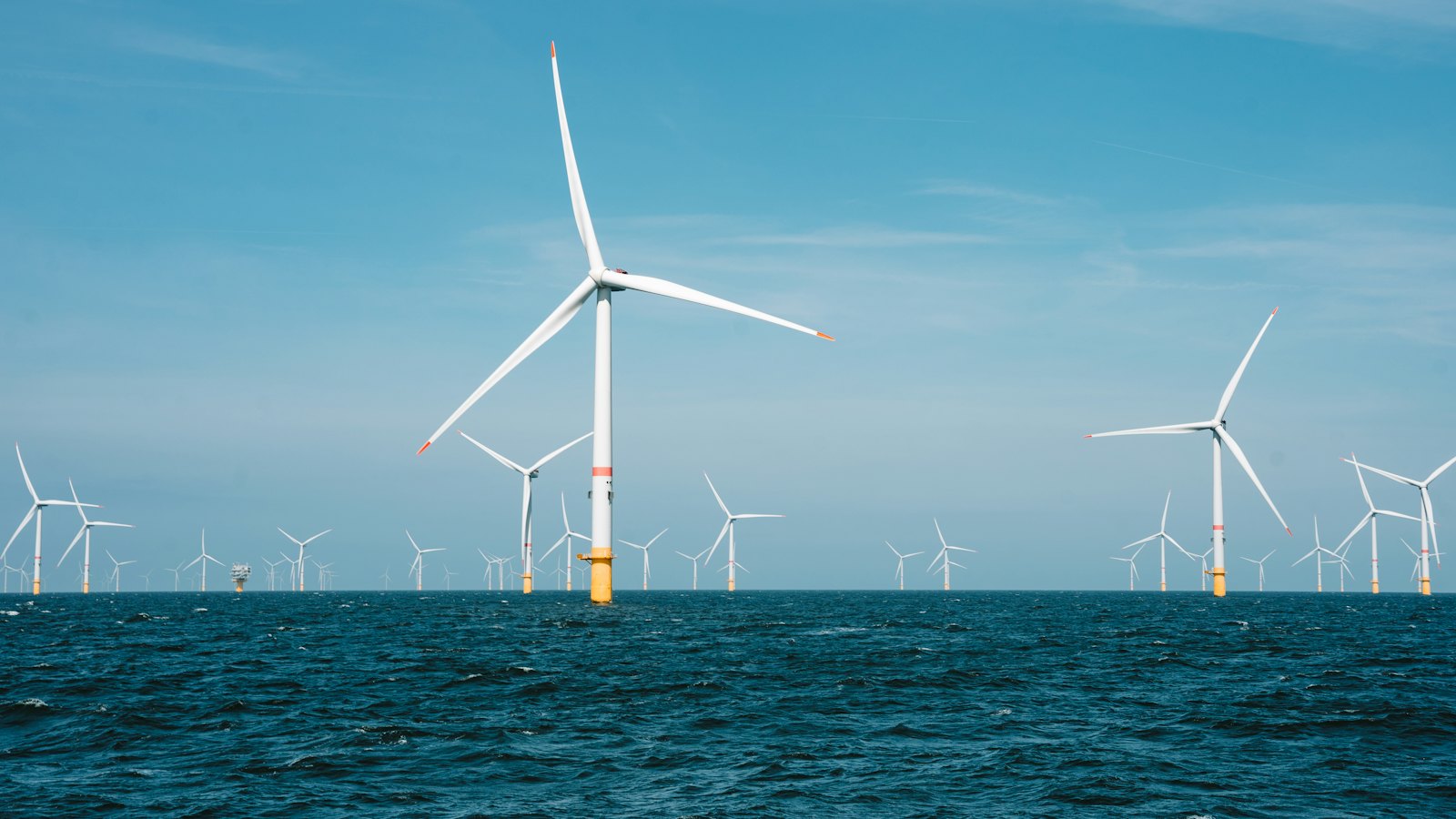
In the first two months of 2026, four separate forums reached the same conclusion from different directions: offshore wind and energy security in northern Europe are no longer national projects. A government summit in Hamburg, a Fraunhofer study for the German offshore industry, a declaration by 47 coastal regions in Stockholm and a ministerial meeting in Riga all pointed toward cross-border planning as the next stage of the build-out. This roundup pulls those threads together and asks what they mean for the Baltic side of the map.
Hamburg: the North Sea Summit sets the template
The third North Sea Summit, hosted by the German government at Hamburg City Hall on 26 January 2026, brought together heads of government and energy ministers from ten invited countries, with the European Commission and NATO also at the table. Its motto, “From National to Regional”, captured the agenda: joint investment conditions, cross-border planning and financing of wind farms and grids, and protection of critical infrastructure. The summit series began in Esbjerg in 2022 as a response to Russia’s war on Ukraine and the need to cut fossil imports; Ostend in 2023 set the goal of up to 300 GW of North Sea capacity by 2050. Hamburg was about implementation: so-called cooperation projects, meaning wind farms connected to more than one country or built in one state’s exclusive economic zone and wired into another’s grid. Federal Minister Katherina Reiche argued that only such projects can exploit the North Sea’s full potential economically.
The numbers behind the argument
A Fraunhofer IWES study commissioned by the German offshore association BWO and the utility association BDEW, published to coincide with the summit, gave the cooperation case a price tag. Comparing Germany’s legally fixed target of 70 GW offshore by 2045 built entirely in the German EEZ with scenarios in which up to 20 GW is built in Danish or Swedish waters and connected radially to the German grid, the study found electricity yields up to 13 per cent higher and costs per megawatt-hour, including grid connection, up to 11 per cent lower. The mechanism is spatial: spreading turbines out reduces wake losses in the crowded German Bight and raises full-load hours across the whole portfolio. The Fraunhofer authors also found that a wider geographic spread strengthens security of supply, because Danish and Baltic wind often blows when German wind does not. BWO’s Hans Sohn called the result a route to the 70 GW target that is “significantly more cost-efficient”.
Stockholm: the regions widen the frame to security
Two days after Hamburg, the executive committees of the CPMR Baltic Sea and North Sea Commissions met in Stockholm and adopted a joint political declaration on behalf of 47 regional authorities. Where the summit talked about gigawatts, the regions talked about resilience: dual-use transport corridors, secure energy systems, protection of subsea infrastructure, and closer cooperation on hybrid and cyber threats. Elisabet Babic of Region Halland, president of the North Sea Commission, stressed that Norway and the United Kingdom, as major energy suppliers and NATO allies, must be inside any northern European framework rather than outside it. The regions also asked that the next EU long-term budget and the Interreg programme reflect the needs of the North.
Riga and Warsaw: the Baltic side organises
The Nordic-Baltic strand ran in parallel. In February, the Nordic Council of Ministers’ office in Latvia met Latvian climate and energy minister Kaspars Melnis to prepare the NB8 energy conference in Riga in September 2026 and an energy summit in Daugavpils in October focused on energy independence in border regions. The minister welcomed what he called closer and more formalised Nordic-Baltic cooperation, 35 years after the format began. On the industrial side, PGE Baltica used the same weeks to open its 2026 procurement plan to suppliers, with a portfolio of eight Baltic projects above 6 GW and Baltica 2, at 1.5 GW with Ørsted, due for commissioning in 2027. The Polish developer’s message to the market was practical: cooperation begins with who gets to bid.
What the Baltic can take from the North Sea model
Three lessons carry across. First, the Fraunhofer arithmetic applies to the Baltic too: Polish, Lithuanian and Swedish sites sit in different wind regimes, and hybrid connections between them would raise yields the same way Danish sites raise German ones. Second, the North Sea has an institutional owner for cooperation, the summit series, while the Baltic still relies on ad hoc ministerial meetings and NB8 conferences; the regions’ Stockholm declaration is the closest thing to a standing political framework. Third, security is now written into every one of these documents, from NATO’s seat at the Hamburg table to the CPMR’s subsea infrastructure clause. The open question for the rest of 2026 is whether the Riga and Daugavpils meetings produce the kind of binding cooperation-project agreements that Hamburg did, or remain declarations of intent.