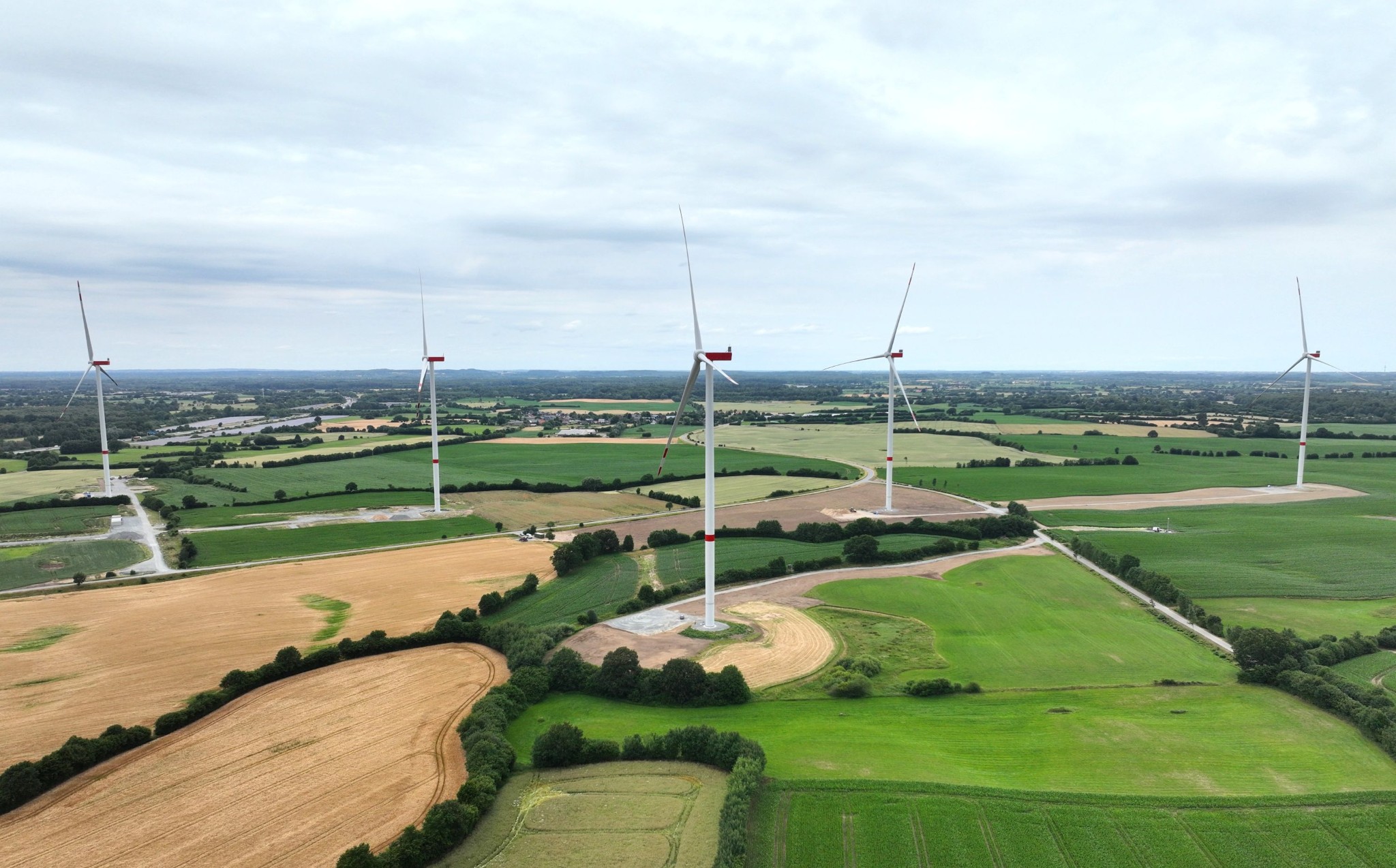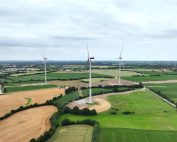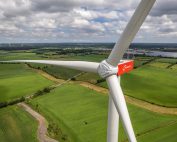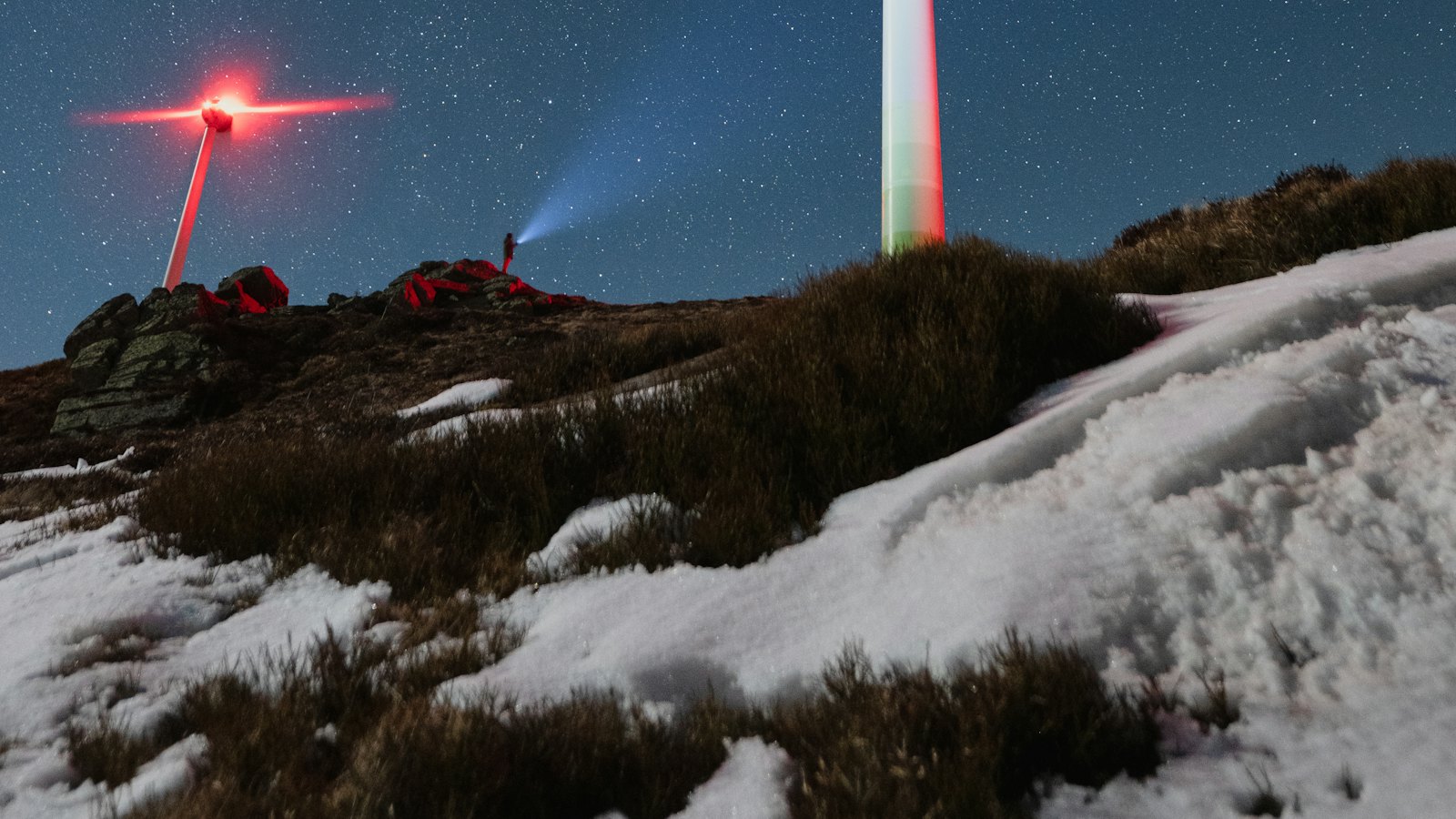
Dresden-based Light:Guard GmbH has completed a six-month pilot of aircraft detection lighting at the Sønder Bork wind farm in Denmark, reporting that the obstruction lights on the five turbines could in theory have been switched off 97.4 per cent of the time. The system ran in reporting mode only, because Danish law does not yet permit demand-controlled night lighting on wind turbines.
Demand-controlled night marking, known in Germany as Bedarfsgesteuerte Nachtkennzeichnung (BNK), keeps the red aviation warning lights on a wind farm dark until an aircraft approaches. A receiver picks up transponder signals from nearby aircraft and lifts the suppression when one comes within range, so the lights only flash when there is something to warn.
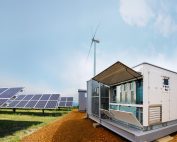
At Sønder Bork the receiver was installed on 4 March 2026 and went live five days later. Unlike German installations, where receivers typically sit 80 to 175 metres above ground, the Danish unit could only be mounted at ground level, with the antenna fixed to the outside of the substation at a height of around five metres. Light:Guard says this is, to its knowledge, the lowest BNK receiver installation in any wind farm to date. Danish requirements call for aircraft to be detected from 300 feet, or roughly 91 metres, above ground, and the company says the pilot has shown that the low-mounted receiver meets that threshold.
Because the lights could not legally be switched off, Light:Guard built a virtual light control unit for the trial that logged when the system would have suppressed the lighting. Across March to September 2026 the system was available 98.7 per cent of the time, with the theoretical lights-off share averaging 97.4 per cent.
“The case study shows that the system also works reliably under these particular conditions: in a new regulatory environment, with an unusually low receiver installation and against the detection requirements planned for Denmark,” said René Aamand, the company’s sales agent for Denmark, who has followed the Danish legislative process for three years.
Danish authorities are working on the final draft of the legislation, which the company expects to be adopted by the end of the year. Felix von Hammerstein, head of business development at Light:Guard, said the company intends to switch the Sønder Bork turbines dark as soon as the law allows, together with a second Danish wind farm. Light:Guard has worked on BNK since 2008, has switched more than 3,500 turbines to demand-controlled lighting in Germany, and works with turbine manufacturers including GE, Nordex and Vestas.
Night-time blinking is one of the most frequent complaints from residents living near onshore wind farms. Germany made demand-controlled lighting mandatory for most new and existing turbines, and Denmark would become the next Baltic Sea country to allow it if the draft law passes on schedule.