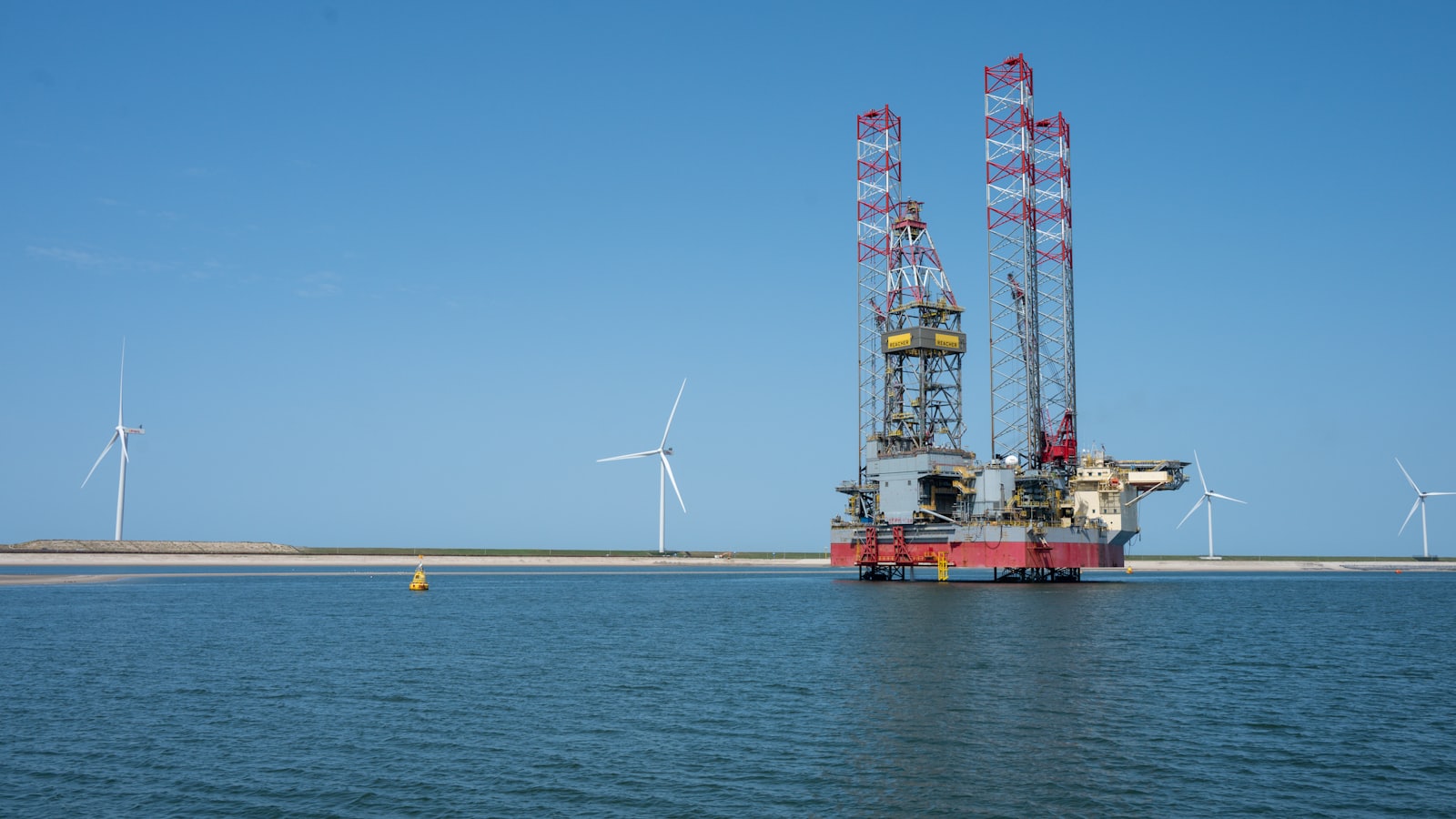
The Baltic Sea will probably never need a BC90. Most of the region’s wind sites sit in water shallow enough for conventional monopiles — roughly 20 to 45 metres across the Polish, German and Danish leases now under construction. Yet the arrival of a foundation designed for depths of 60 to 90 metres deserves attention here, for a reason that has little to do with where it will be installed and everything to do with who would build it.
The foundation in question is the BC90, developed by Neretek, a venture launched in London on 7 July 2026 by offshore engineering firm Wood Thilsted together with COP Frontier, a sister company of Copenhagen Offshore Partners. Jonathan Cole, a former chair of the Global Wind Energy Council, was appointed executive chair. The design targets the band of water that is too deep for economic fixed-bottom foundations but not yet served by commercial-scale floating wind. Its timing was not accidental: the day before the launch, the UK government set out Allocation Round 8, which introduced a category it calls Other Deepwater Offshore Wind, covering exactly that 60–90 metre range.
The BC90 aims, in Cole’s words, at “removing the potential hiatus between existing fixed offshore wind designs and yet-to-be-commercialised floating offshore wind”. What matters industrially is the set of constraints the companies say the design works within: it can be manufactured using existing supply chain capability, it uses existing port infrastructure, and it does not depend on large specialist installation vessels. Wood Thilsted founder and chief executive Alastair Muir Wood said a decade of research had gone into producing “a cost-effective, deployable solution to exploiting the stronger winds in deeper waters”. UK energy minister Michael Shanks welcomed the launch.
Existing factories, existing quays, no bespoke vessel class — that description fits the Baltic industrial base almost exactly. The region has spent the past five years building the capacity to fabricate, coat, marshal and install foundation steel at volume, and none of that capability is depth-specific.
Baltica 2 is the clearest illustration. The 1.5 GW joint venture between Ørsted and PGE, sited around 40 km off the coast near Ustka, has routed more than 400 secondary steel structures through the installation port at Rønne on Bornholm, with over three quarters of them made in Polish plants. Smulders produces 107 suspended internal platforms at Żary, shipped out through Świnoujście. Grupa Przemysłowa Baltic supplies 111 mooring platforms and 111 anode cages from Gdańsk. Etermar builds 107 external working platforms in Setúbal, Portugal. Ulrik Lange, vice-president and managing director of Baltica 2 at Ørsted, has described a phase of installing monopiles offshore while coordinating deliveries of the components that equip them. Bartosz Fedurek, president of the management board of PGE Baltica, read the Polish share as evidence of “the maturity of the domestic industry and its readiness to take part in demanding offshore wind projects”.
The transferable part is the unglamorous part. Access platforms, service-vessel mooring points, anode cages and corrosion protection involve the same disciplines whether the primary structure stands in 30 metres of water or 80. The scarce assets are qualified welders, coating lines and quayside marshalling space at Rønne, Świnoujście and Gdańsk — precisely what a new foundation class would compete for. The base runs deeper than offshore, too: OX2 completed foundation works at its 40 MW Annopol wind farm in the Lublin region ahead of turbine assembly, a ten-turbine Vestas V136 project on an independent power producer model with an Amazon offtake agreement and completion set for 2027.
Three things are worth watching from a Baltic vantage point. First, whether the deepwater volumes signalled in Allocation Round 8 convert into firm orders rather than a category on paper. Second, whether Baltic yards can get qualified for a foundation class they have never built — in secondary and primary steel alike, qualification rather than raw capacity is usually the binding constraint. Third, whether the domestic политics hold: the “Sea of Wind” campaign run by the Polish Wind Energy Association and the ORLEN Foundation exists because public acceptance is not guaranteed, and PWEA president Janusz Gajowiecki’s argument that Poland can become “a key link in the European supply chain for offshore wind energy” rests on that acceptance surviving contact with a long build-out.
The Baltic seabed is shallow. Its order book does not have to be.