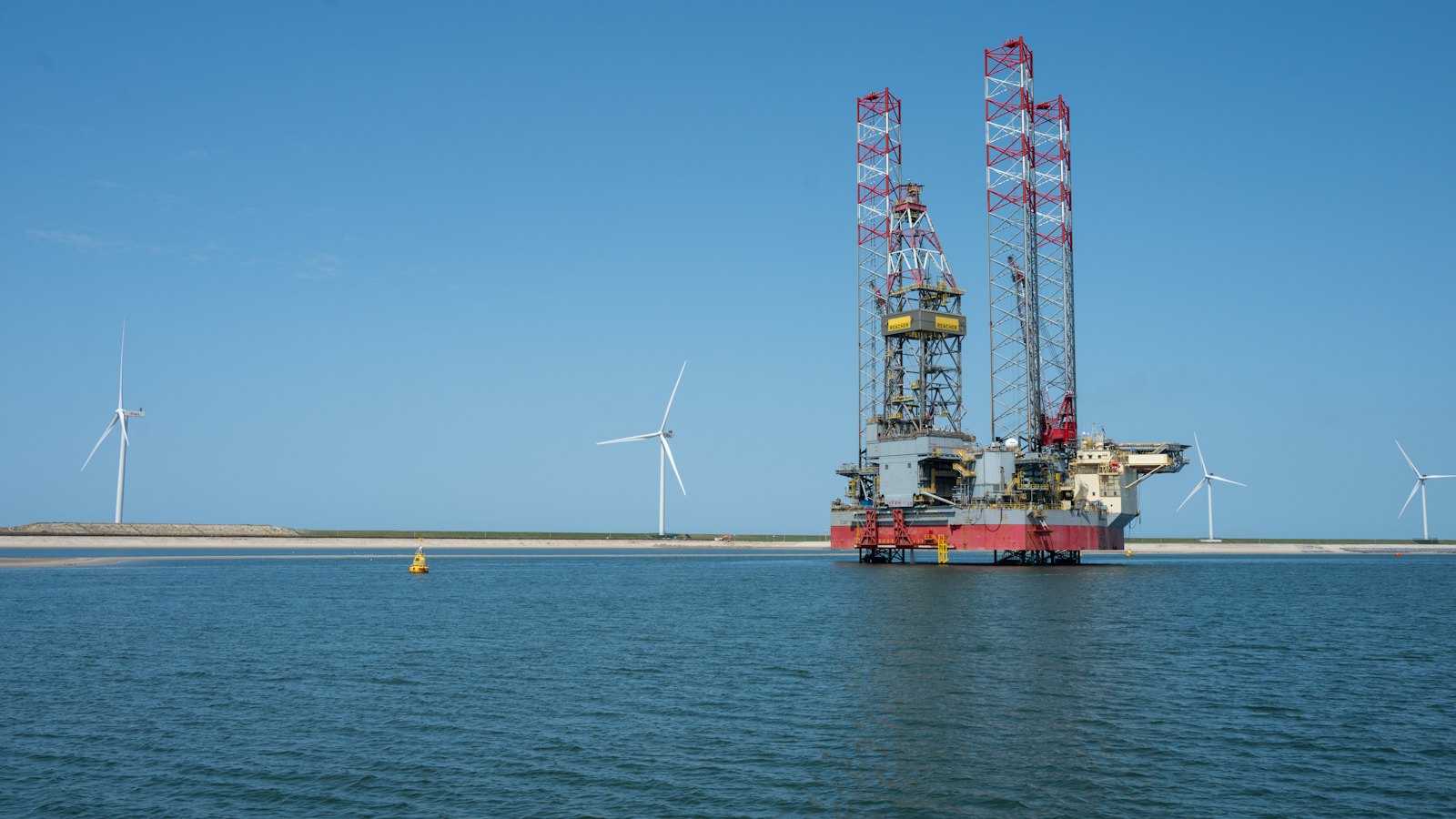
Every offshore wind farm in the Baltic is built by a small, expensive and heavily booked fleet of specialist ships. Turbines and foundations are getting bigger faster than the vessels that carry them, which is why the ships, not the turbines, have become one of the tightest constraints on the region’s build-out. This explainer sets out what the fleet consists of, who owns it, and where the Baltic’s own capacity is starting to appear.
The jack-up: the workhorse of installation
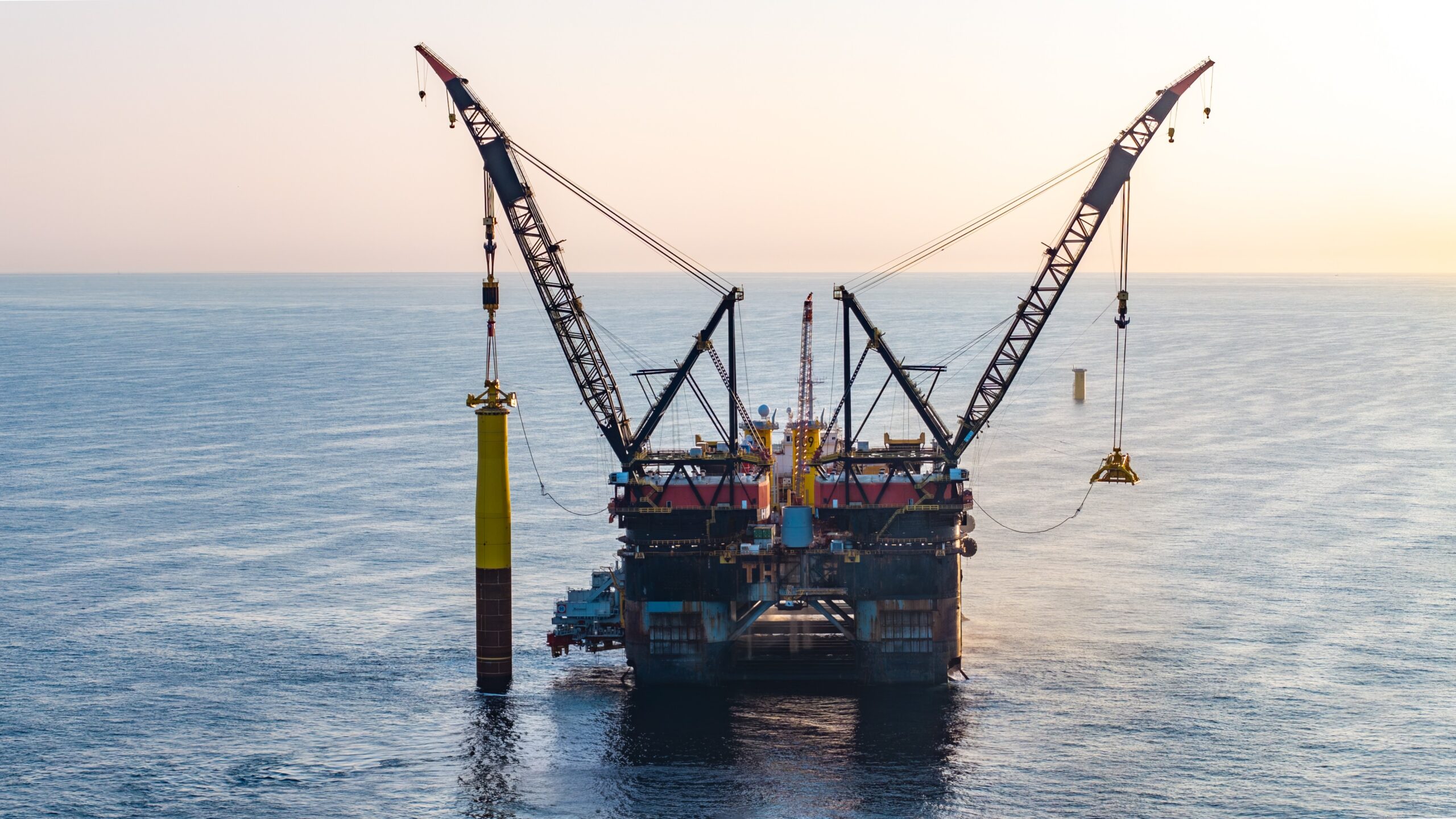
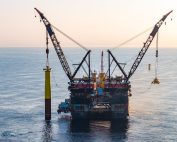
The central vessel type is the jack-up installation ship. It sails to site, lowers legs to the seabed, lifts its hull clear of the waves and becomes a stable crane platform. The latest generation is built around one number: crane capacity. DEME’s Norse Energi, named in Flushing in 2026 as the second of a pair with Norse Wind, carries a 3,200-tonne crane sized for XXL monopiles and next-generation turbines, can work in water up to 70 metres deep, and runs a hybrid power plant with a 4.2 MWh battery to cut fuel use during peak lifts. Its first job was foundation work at Iberdrola’s Windanker project in the German Baltic, before moving on to Ørsted’s Hornsea 3 in the North Sea. That itinerary is typical: a Baltic project rarely has a vessel to itself, and slots are traded between seas.
From vessel provider to full-scope installer
Cadeler, the Copenhagen-based operator of the largest dedicated fleet, illustrates how the business is changing. At Hornsea 3, the 2.9 GW project off Yorkshire, Cadeler took its first full transport-and-installation contract for monopile foundations rather than simply chartering a ship, using its A-class newbuild Wind Ally for the 197-foundation campaign alongside Wind Orca and the service operation vessel ESVAGT FROUDE. The financial side shows the scale: revenue of EUR 125 million in the first quarter of 2026, up from EUR 65 million a year earlier, an order backlog of EUR 2.7 billion of which 82 per cent related to projects past final investment decision, and full-year guidance of EUR 854 to 944 million. Cadeler also raised around EUR 175 million to part-finance two T-class newbuilds due in 2030 and 2031. Fleet utilisation of 47.6 per cent in that quarter, down from 55.3 per cent, is a reminder that transit, upgrades and dry-docking eat into available days even when demand is strong.
Heavy lift and transport
Before a foundation or nacelle can be installed it has to reach the marshalling port, and that is the job of heavy-lift transport vessels. Dutch specialist Jumbo ordered two in-house designed L-Class ships from China’s Dajin Heavy Industry, each with two Huisman 1,200-tonne cranes for a combined 2,400 tonnes of lift, 25,000 DWT, methanol-ready and classed by DNV. Delivery is scheduled for 2028 and 2029. Newbuild lead times of three to four years are the norm across the sector, which is why vessel orders placed now shape what can be built in the early 2030s.
Cables: the Baltic’s own gap
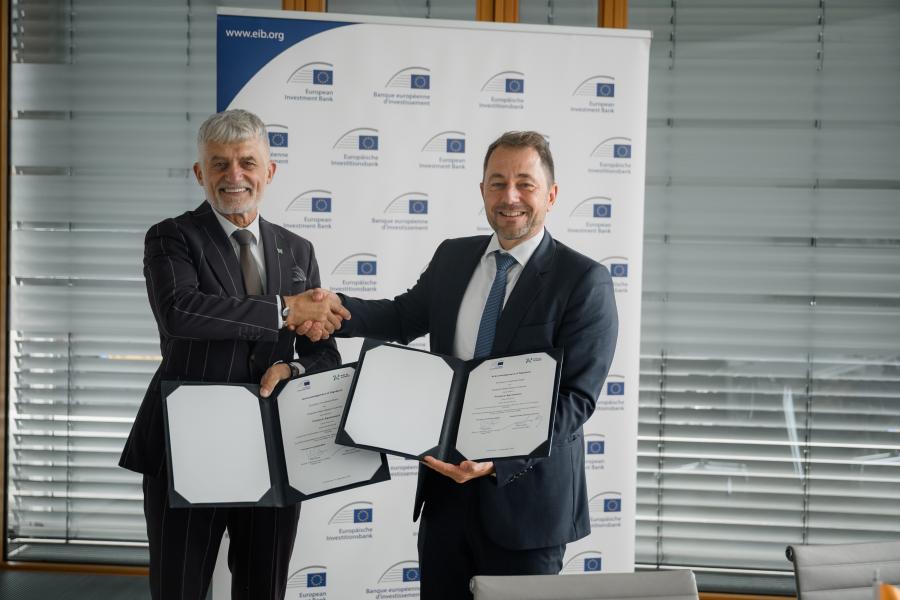
Cable-laying vessels are the scarcest class of all, and until recently Poland had none. That changed when the Industrial Development Agency (ARP) and the TFK Group signed letters of intent with PGE Baltica and ORLEN Neptun to build and deploy a dedicated Polish-flagged cable-laying vessel for the country’s Baltic projects. ORLEN Neptun’s chief executive Janusz Bil called a domestically built vessel “crucial” given already tight project schedules, and ARP framed the ship as a way to raise local content in the second phase of Polish offshore development. The initiative was conceived by Wojciech Balczun, now Minister of State Assets, during his time at ARP. If delivered, it would be the first installation-class vessel owned in the eastern Baltic.
The quiet risk: keeping an ageing fleet running
Not every vessel story is about new steel. A UK Marine Accident Investigation Branch report traced an engine-room fire aboard the wind-farm service vessel Kommandor Susan to non-genuine bearings fitted during a 2019 overhaul, whose weaker material bonding led to mechanical failure. Nobody was hurt, but the case is now cited across the sector as evidence that grey-market spares are a safety and commercial risk. As the fleet grows and existing hulls age, spare-part provenance is becoming a procurement question for developers, not only for shipowners.
What it means for the Baltic
Three conclusions follow. First, the Baltic competes with the North Sea for the same handful of ships, so a delay at Hornsea can ripple into a German or Polish schedule. Second, ownership is concentrated in Danish, Belgian and Dutch hands, and the new capacity coming from Cadeler, DEME and Jumbo is booked years ahead. Third, the region’s answer is to build its own, starting with cables, and to make ports such as Klaipėda and Gdańsk capable of marshalling components locally. Whether Poland’s cable-layer is delivered on time will be a fair test of how much of the next phase the Baltic can build with its own fleet.