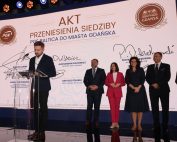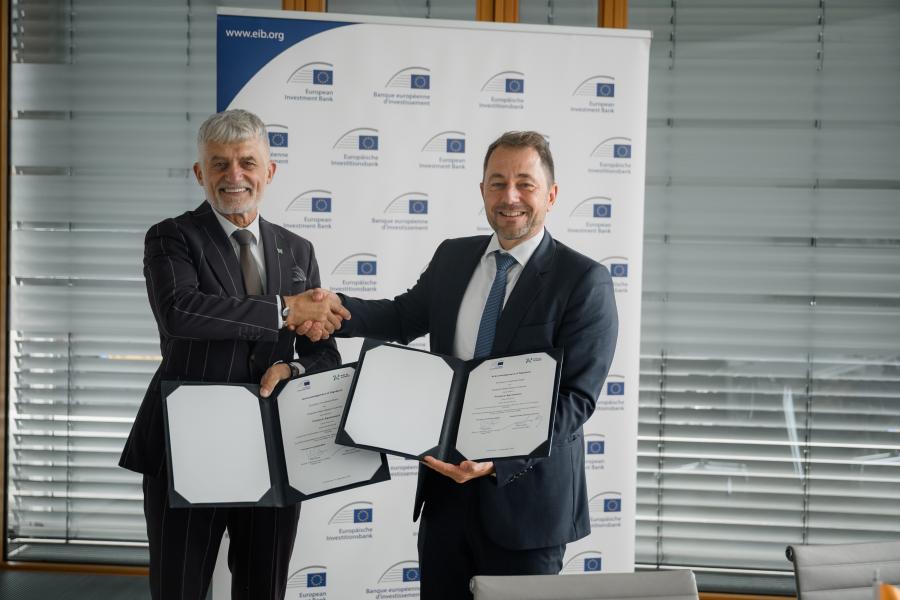
The European Investment Bank (EIB) has signed a EUR 100 million loan with the Klaipėda State Seaport Authority to upgrade Lithuania’s largest port for dual military and civilian use, add shore power and green hydrogen facilities, and rebuild quays for offshore wind. The agreement was signed on 15 September 2026 and the full programme is due for completion by the end of 2027.
The EIB credit covers up to half of a total project cost of around EUR 201 million, with the balance coming from the European Union, national sources and other institutions. The Nordic Investment Bank announced its own support for the port’s modernisation earlier this year.
The defence component is the headline. Parts of Klaipėda’s civilian cruise-ship terminal are being adapted to NATO requirements so that allied naval vessels can be supported more efficiently, a dual-use arrangement that keeps the terminal available for passenger traffic while improving military mobility on the alliance’s eastern flank. Klaipėda is Lithuania’s only seaport and part of the EU’s core Trans-European Transport Network (TEN-T).
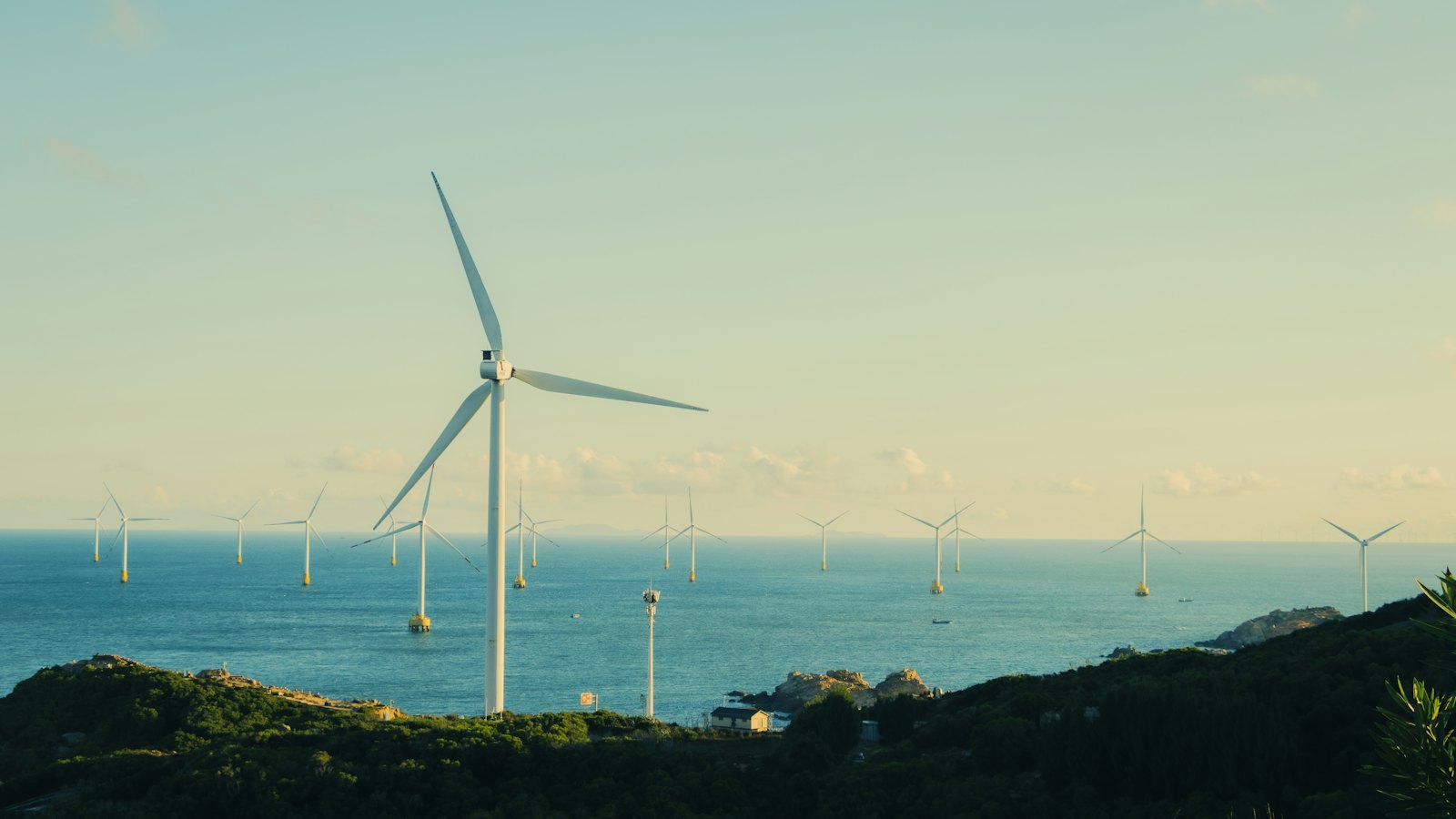
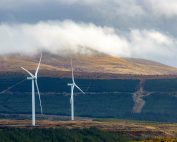
The energy component is broader. The programme includes shoreside electricity supply for ferries, a green-hydrogen production and refuelling station, low-emission port vessels, dredging and reinforced breakwaters to improve nautical access, and reconstructed quays intended to make Klaipėda a logistics base for the deployment and maintenance of offshore wind farms. Lithuania is preparing its first offshore wind projects in the Baltic Sea, and a heavy-lift quay close to the sites is a precondition for building and servicing them from home rather than from Polish or Danish ports.
“Few projects illustrate Europe’s priorities as clearly as the Port of Klaipėda,” said EIB Vice-President Karl Nehammer. “It is an investment that directly contributes to the missions of supporting European security and cohesion, while aligning with the green transition.”
Algis Latakas, Director General of the Klaipėda State Seaport Authority, said the port “supports the country’s economy, energy security and national security” and called the financing agreement “an important step forward for the port’s development”, pointing to the dual-use cruise terminal and shore power facilities among the projects it will fund.
Klaipėda handles around 6,000 ship calls and some 40 million tonnes of cargo a year, and up to half a million cruise and ferry passengers, according to the port authority. The EIB last backed the port in 2022 with EUR 65 million for green maritime transport. Security and defence became one of the bank’s eight core priorities in 2025, and the Klaipėda loan is one of the first Baltic port projects to be financed explicitly on that basis alongside energy transition goals.