The hard part of an offshore wind project in the Baltic is increasingly not the turbines. It is the cable, the platform and the substation that carry the power ashore, and the years of work needed to put them in place. Three projects in Germany and Poland, at different stages, show how that sequencing works in practice and what it means for the farms still in the pipeline.
Germany: the operator builds the platform
In the German Baltic, 50Hertz has been working through a series of connections north-east of Rügen. Ostwind 3 centres on the Jasmund offshore platform, installed about 40 kilometres from the island. It is designed to collect 300 megawatts from the Windanker wind farm, built and operated by Iberdrola, step the voltage up to 220 kilovolts and send the power through a roughly 100-kilometre cable across the Bay of Greifswald to the new Stilow substation in Vorpommern-Greifswald. The completion date under Section 17 of the Energy Industry Act was set at 30 September 2026.
Jasmund is notable for who built it. It is the first Baltic platform for which 50Hertz is fully responsible for construction and operation as transmission system operator. On the earlier projects, wind farm developers led the work, until a legal change aligned the Baltic with the rules already used in the German North Sea. The jacket came from a yard in Vlissingen, the topside from near Rotterdam, and the platform was lifted into place from a 200-metre work vessel at 4 a.m. on 17 December.
Behind it sits OST-6-1, a 927-megawatt connection for the Gennaker wind farm north of the Fischland-Darß-Zingst peninsula, with two platforms already under construction and a new substation taking shape near Gnewitz. 50Hertz chief executive Stefan Kapferer said the company intended to complete Ostwind 3 on time and within budget, and described the Baltic work as being done with Energinet of Denmark and, in future, other regional partners.
Poland: the wires started in 2019
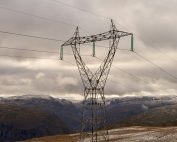
Poland took the opposite approach to timing. Polskie Sieci Elektroenergetyczne began work in Pomerania in 2019, building two stations and more than 250 kilometres of extra-high-voltage line while upgrading existing assets. The new Choczewo station, the expanded Żarnowiec station and the 400 kV line between them passed voltage tests before the first Baltic farms needed them, with PSE vice president Włodzimierz Mucha confirming the chain was ready to move power inland. That is a lead time of six to seven years ahead of first power.
The next generation of Polish projects is already working on its own export routes. PGE Baltica has signed a consortium led by PROJMORS ASE Group, with ABL Group Polska and Energoprojekt-Katowice, to design the onshore connection for Baltica 9+. Power will reach land at the Krzemienica substation in the Słupsk district. The scope runs from a technical concept and ground investigations through to construction designs and building permits. Baltica 9+ combines Baltica 9 with the acquired FEW Baltic II area, giving about 1.3 GW roughly 48 kilometres off the Słupsk Bank, with completion planned by 2032.
Why the order matters
Aurora Energy Research’s meta-analysis of European grids explains why this ordering is becoming the norm rather than the exception. Congestion management cost 8.9 billion euros across Europe in 2024, and about 72 TWh of mostly renewable output was curtailed because of bottlenecks. Grid investment has risen by 47 per cent over five years to around 70 billion euros a year, but Aurora puts that at 15 to 44 per cent short of what net-zero pathways require. Its assessment is that many European connection-queue processes are no longer fit for purpose.
The Baltic cases sit at the other end of that problem. Neither Ostwind 3 nor the Polish stations are queue stories, because the connection was planned as part of the offshore programme. What they do show is the price of that discipline: multi-year lead times, specialist yards, and a cable route that has to be settled long before a turbine order is signed.
What to watch
Three things will test the model. Whether Ostwind 3 and Windanker move from completion milestones to steady export. Whether OST-6-1 stays on schedule alongside Gennaker. And whether the Polish export designs for Baltica 9+ clear permitting early enough to leave the 2032 target intact. For developers still bidding into Baltic auctions, the practical question is no longer whether there is a seabed site, but whether there is a connection date to match it.