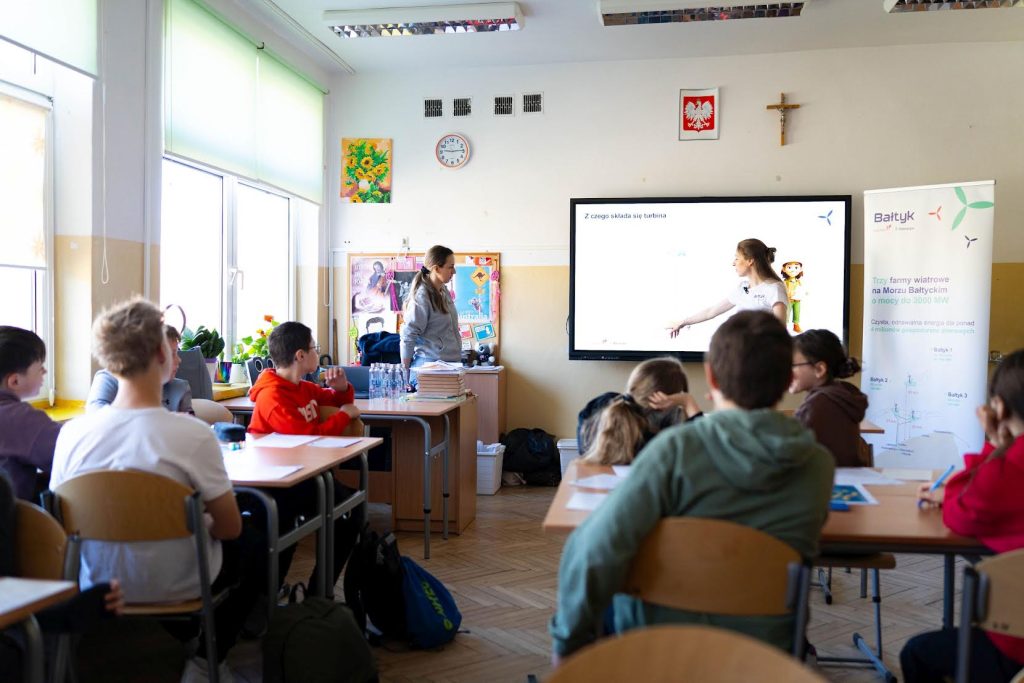
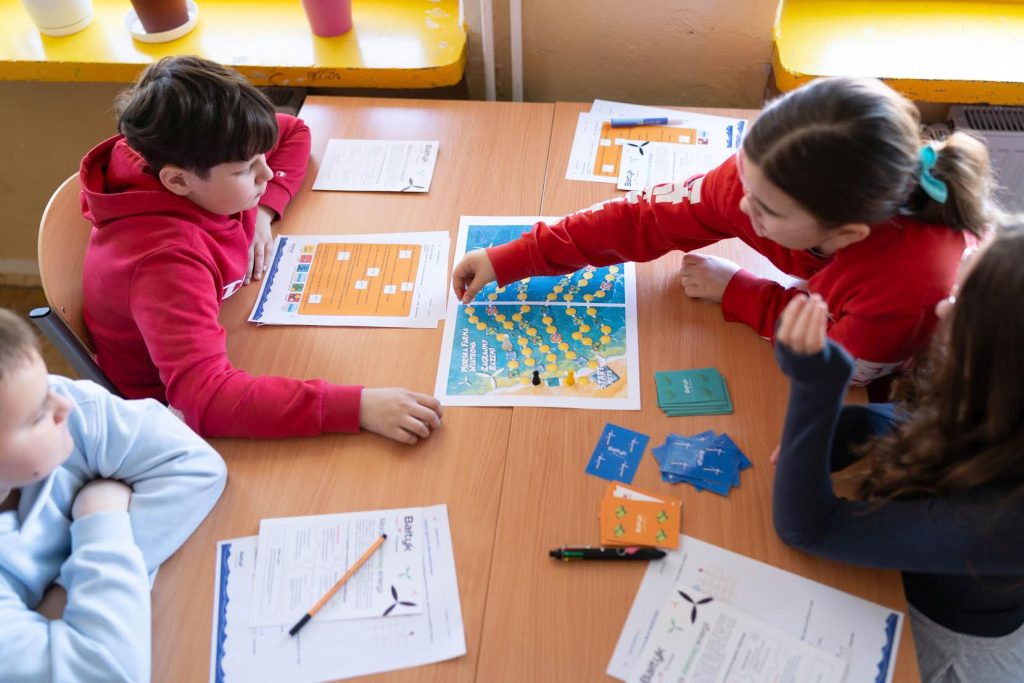
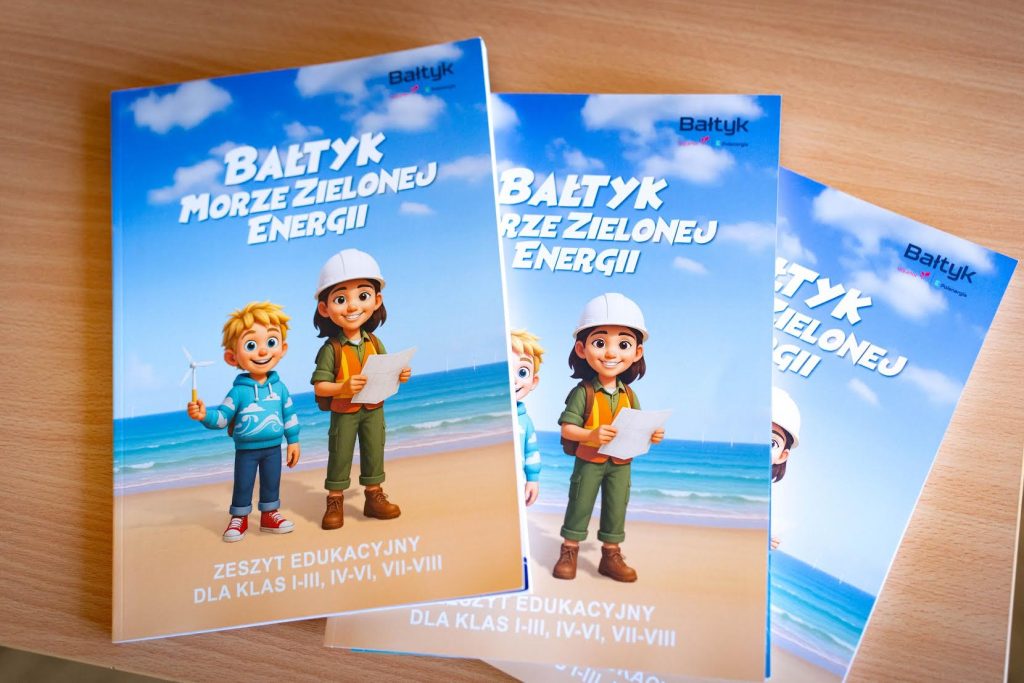
How will energy from offshore wind farms reach the sockets in our homes? How do the turbines work? What do offshore wind farms mean for Pomerania and its residents? Pupils at primary schools in Pomerania will learn about these topics during lessons on offshore wind, organised by Equinor and Polenergia. In April this year, nearly 1,300 pupils in Years 1–8 from 11 schools in the municipalities of Redzikowo and Ustka, as well as in Ustka itself and in Łeba, are discovering the secrets of offshore wind energy, using a specially designed workbook with lesson plans entitled ‘The Baltic Sea: A Sea of Green Energy’ („Bałtyk. Morze zielonej energii”), which has also been prepared with teachers in mind.
The development of offshore wind energy represents the economic future of Pomerania and new jobs. That is why it is crucial to build skills from an early age, so that the residents of the Pomeranian region can fully harness the potential of offshore wind energy and benefit from the opportunities it offers.
The April workshops in schools are a continuation of activities carried out as part of the educational programme “One Sea, Many Benefits. Offshore wind energy in my region’ („Jedno morze, wiele korzyści. Morska energetyka wiatrowa w moim regionie”). This is already the fourth edition of the project implemented under the auspices of the flagship programme – ‘Maritime Competence Academy’ („Akademia Kompetencji Morskich”), initiated by Equinor and Polenergia as part of the Bałtyk offshore wind farm projects. This year’s edition goes a step further. The teaching materials are based on original lesson plans. It is a practical tool for teachers, facilitating the delivery of lessons and helping to convey knowledge about offshore energy.
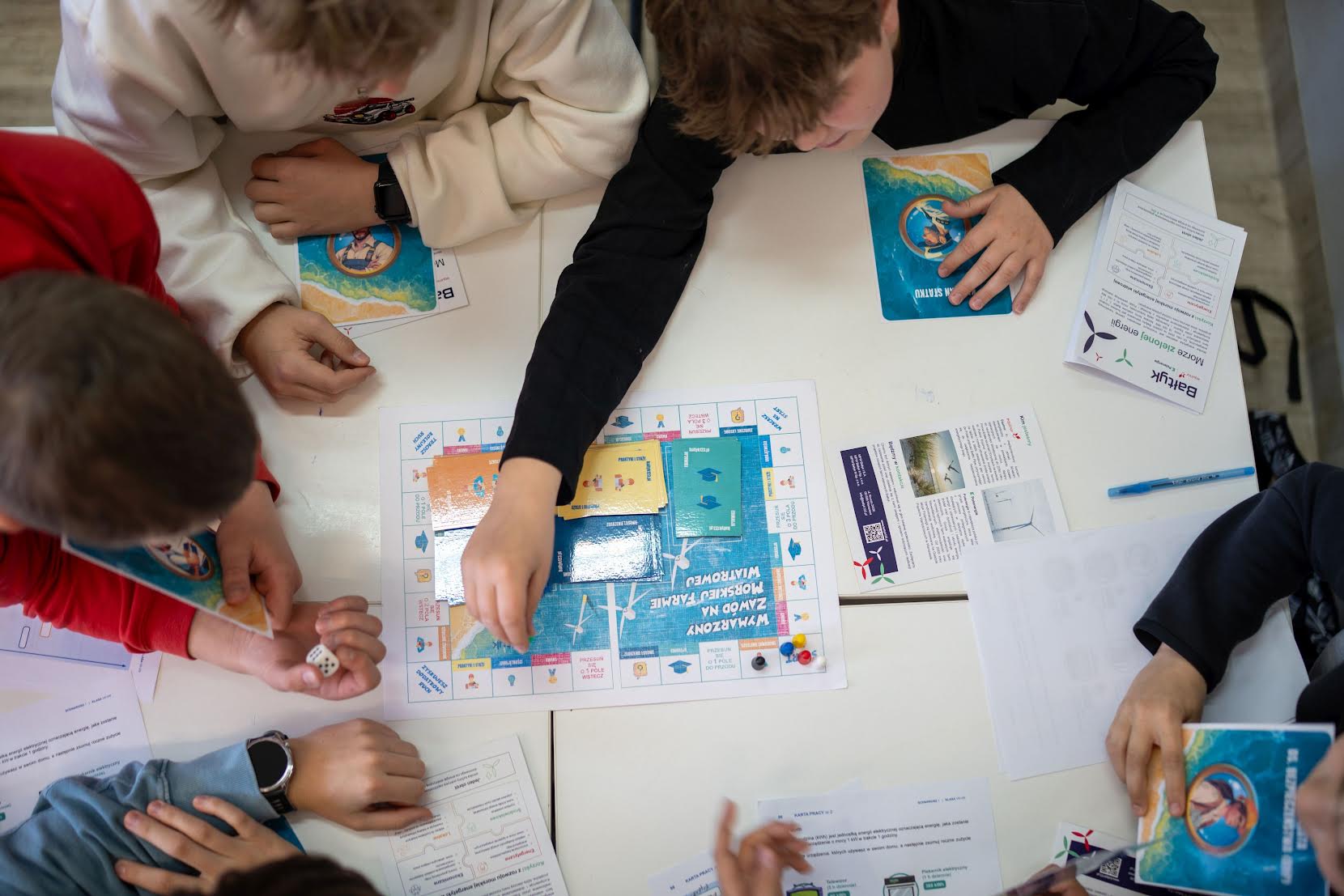
The workbook, prepared by Equinor and Polenergia, is a comprehensive resource supporting the implementation of the national curriculum in the fields of natural sciences, environmental studies, physics and social issues. It consists of six lesson plans – two for each of the three age groups in primary schools. It includes, amongst other things: worksheets, experiments, board games and multimedia materials. It helps teachers deliver engaging lessons that combine learning with fun, support pupils’ knowledge development and help explain the components and functioning of offshore wind farms, as well as their impact on regional and national development. Older pupils learn about careers related to offshore wind energy, which may help them choose their future educational path.
Modern energy education in practice
The lesson plans combine a variety of activities, tailored to the pupils’ age. The youngest children in Years 1–3 can learn, through group play, how wind works and what it can be used for, as well as take a closer look at the construction of offshore wind farms. Pupils in Years 4–6 conduct experiments, observing how corrosion occurs and examining the process of converting the kinetic energy of wind into electricity. The oldest group of pupils has the opportunity to learn about issues related to units of measurement for electricity, the path that electricity takes from offshore wind farms to the grid, and, through an educational game, to discover educational pathways and future careers offered by the offshore industry.
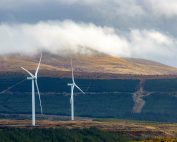
The Bałtyk 2 and Bałtyk 3 offshore wind farms, as well as Bałtyk 1, being developed by Equinor and the Polenergia Group, will have a combined installed capacity of 3,000 MW and will supply green energy to over 4 million households in Poland.
You can read more about the educational project on the Baltic offshore wind farms website, where downloadable materials are also available: https://baltyk123.pl/dla-spolecznosci/scenariusze-lekcji/.
Source: Equinor & Polenergia