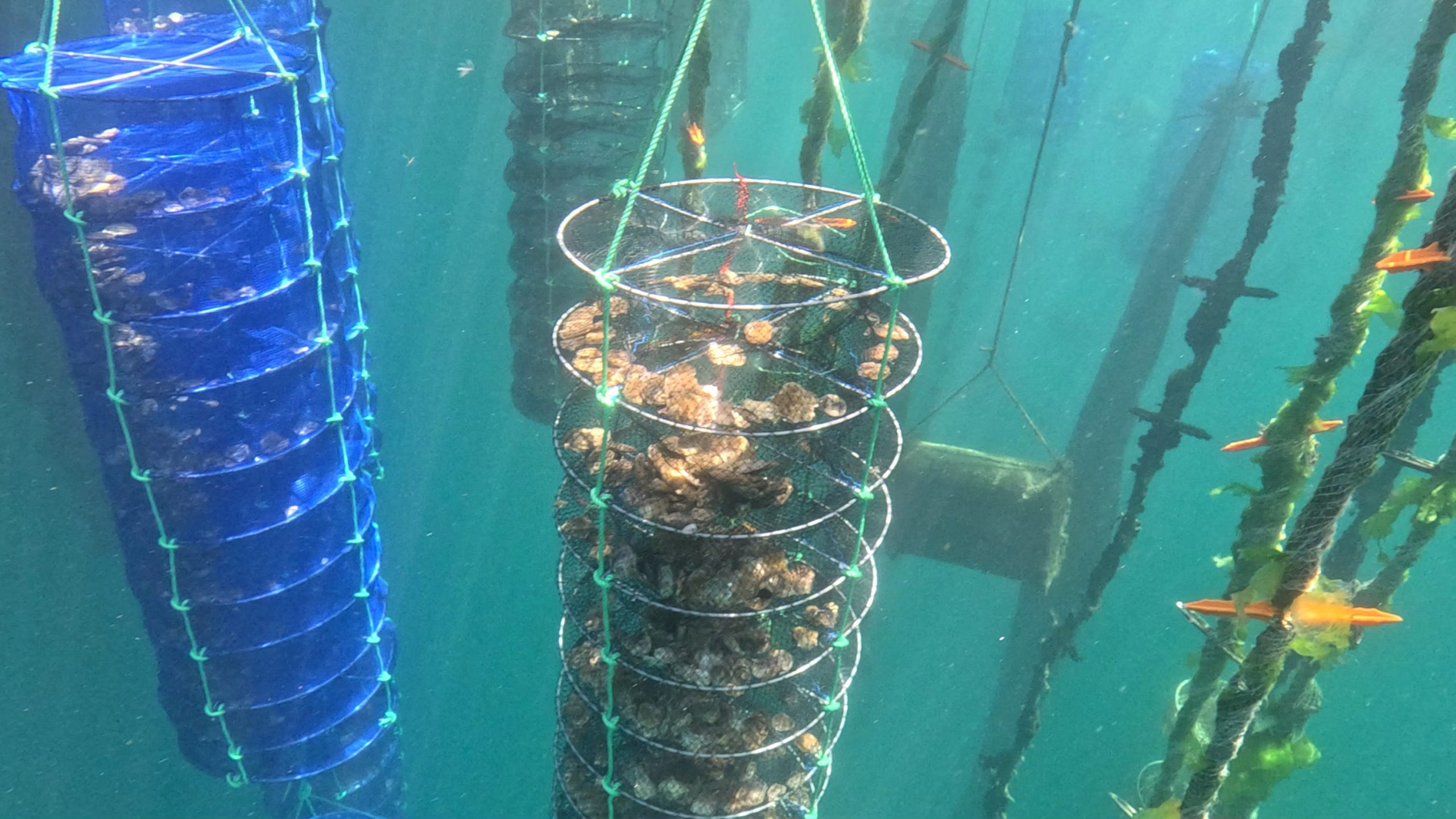
Saitec Offshore Technologies has installed a set of nature-inclusive design (NID) elements and a multi-trophic aquaculture pilot on its DemoSATH floating wind demonstrator off the Basque coast, as part of a programme studying how floating wind foundations can host and support marine life.
The work forms part of the AQUASATH project within DemoSATH Lab, the company’s initiative to use the operating demonstrator as a real-scale testing ground for environmental interactions and monitoring methods. The NID elements, adapted to DemoSATH’s underwater columns and filled with shells and mussels, create new surfaces and microhabitats that provide growing, sheltering and feeding areas for marine organisms around the floating foundation.
A multi-trophic aquaculture pilot integrated into the platform uses a mother rope suspending lantern nets, mussel ropes and collector ropes to assess the viability of cultivating European flat oysters, pullet carpet shell clams, mussels and Ulva algae alongside floating wind operations. The trial follows earlier work at the site, including the installation of biomimetic reef solutions on the submerged section of the platform.
The installation involved two stages: live material was first placed on a mussel raft, with each element numbered and colour-coded for traceability, before being transported offshore and secured on the platform by professional divers. The operation was coordinated by Saitec with partners including Mar Ceibe, Instituto Kardala, Kotazero and Amarradores de Santander.
The company says the trial provides practical knowledge on how nature-inclusive solutions can be adapted, handled and installed on floating structures, informing the design of future commercial floating wind farms. The project is supported by the Basque Government and the European Regional Development Fund. While the trial takes place in the Bay of Biscay, coexistence between offshore wind and other sea uses is an increasingly prominent theme in Baltic Sea planning as well.