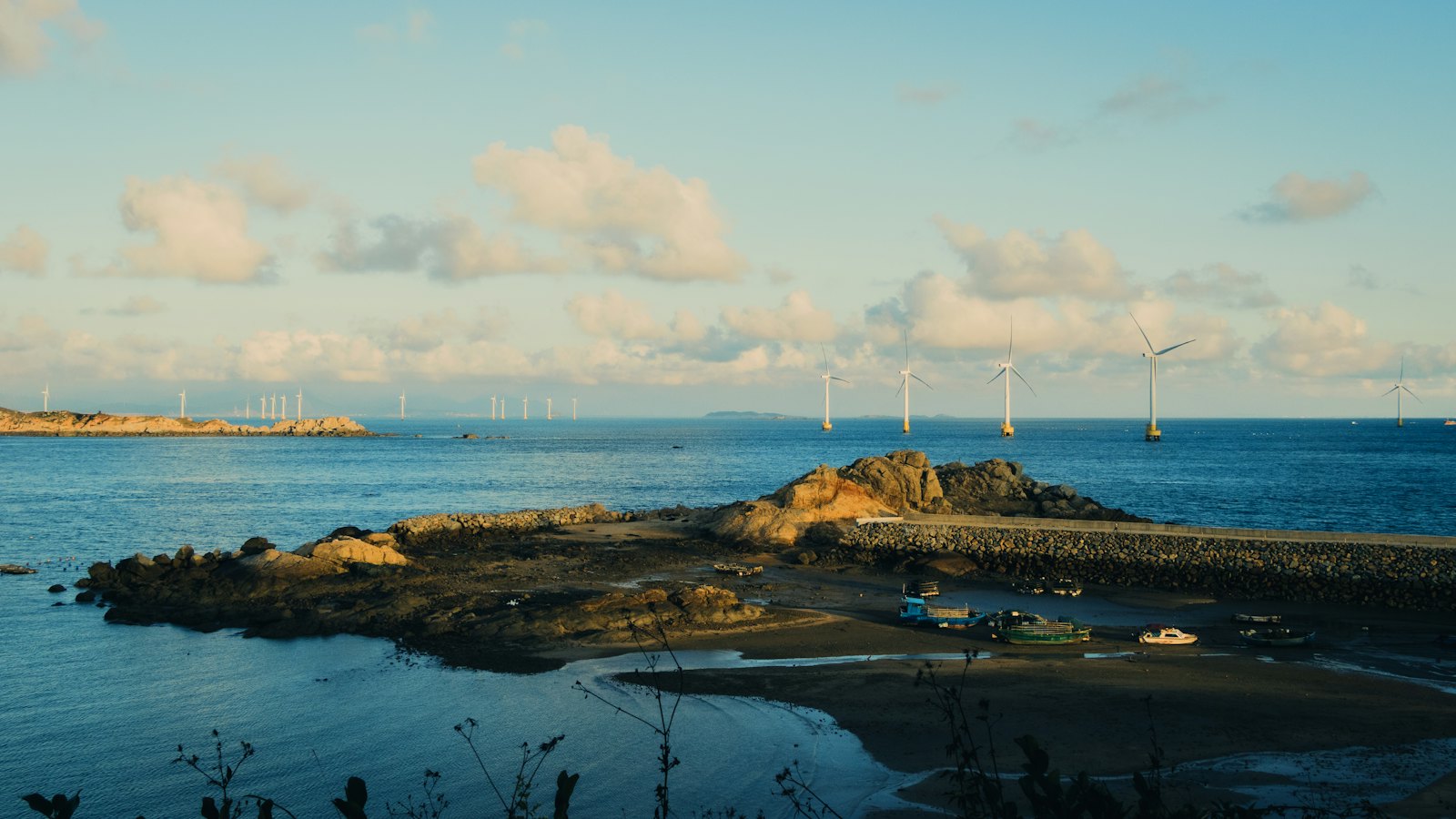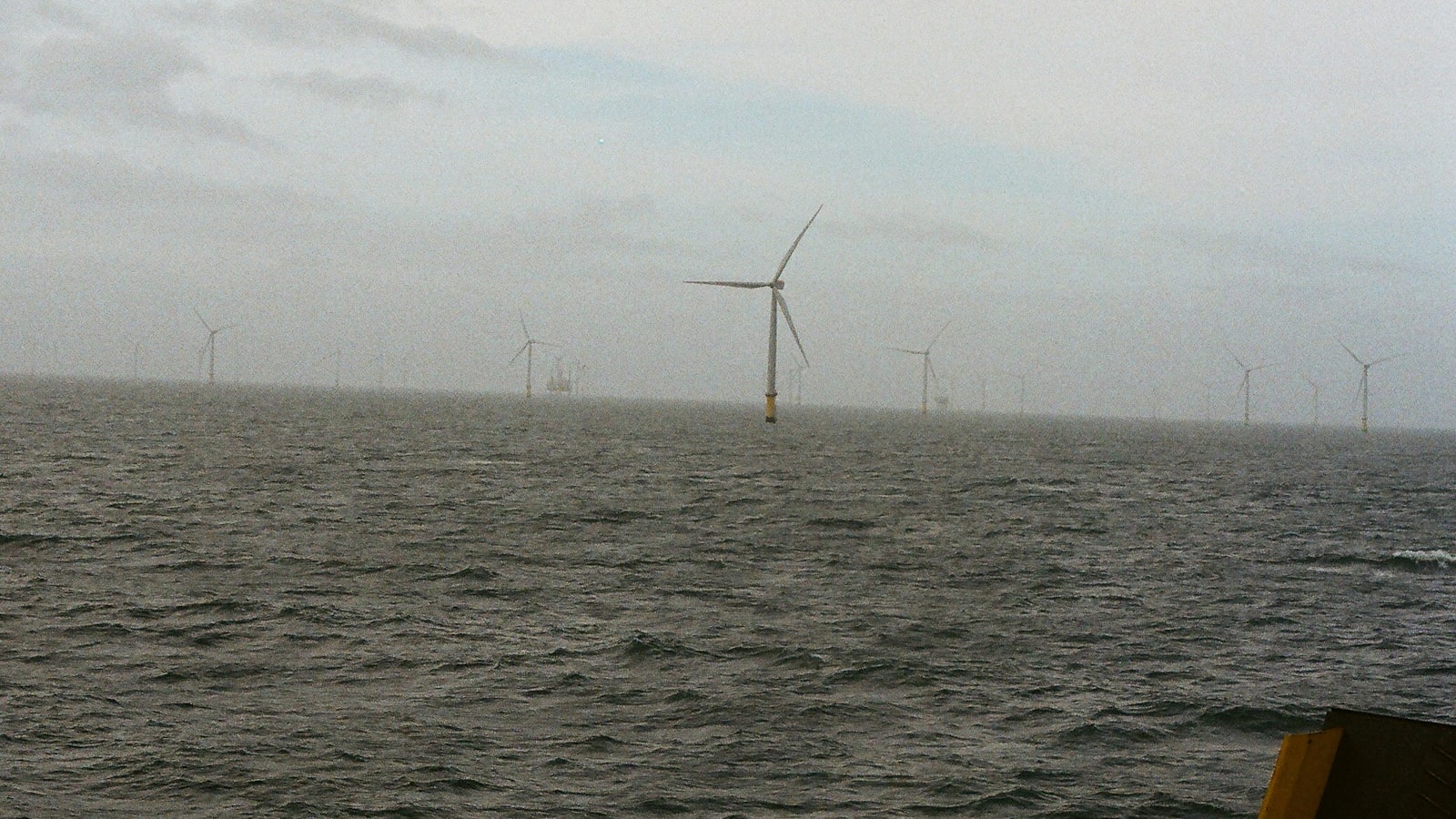
The monopile – a steel tube driven into the seabed – has carried offshore wind through its first two decades, and it still anchors most of the turbines going into the Baltic and North Seas. But it runs out of road in water much beyond 50 to 60 metres, and it treats the seabed as empty space. A cluster of newer designs is trying to push past both limits at once: reaching deeper water, and sharing the sea with everything else that uses it.
The clearest gap sits between fixed-bottom foundations, which stay economic to roughly 50-60 metres, and commercial-scale floating wind, which is not yet mature. The band of water in between serves neither well. Neretek, a venture launched by engineering firm Wood Thilsted and COP Frontier and chaired by former Global Wind Energy Council chair Jonathan Cole, is aimed squarely at that gap. Its BC90 foundation is meant to bring the simplicity of a monopile to 60-90 metre depths, built from existing supply chains, installed from existing ports, and without the large specialist vessels floating wind demands. Britain has gone as far as naming the category – Other Deepwater Offshore Wind – because much of its strongest wind lies beyond the reach of conventional fixed foundations.
Floating platforms go deeper still, and the industry is using its early demonstrators to answer a second question: what happens beneath them. Saitec’s DemoSATH, an operating floating unit off the Basque coast, is testing nature-inclusive designs – elements seeded with shells and mussels that turn the foundation’s underwater columns into habitat – alongside a small multi-trophic aquaculture pilot growing oysters, clams, mussels and algae next to the turbine. The point is not the harvest; it is practical knowledge on how to build foundations that host marine life rather than sterilise the seabed around them.
A third strand rethinks the platform itself. Sweden’s NoviOcean has shown a Medi Wave 850H that combines wave, wind and solar generation in a single 850 kW floating unit, with a prototype on sea trials near Stockholm and 3 MW and 5 MW versions planned. Because wave energy tends to lag wind, pairing the two – and adding solar – smooths the output and cuts reliance on storage, while three sources share one grid connection. More power from each unit of sea area is the pitch.
None of this is mainstream yet, and the Baltic will keep installing monopiles for years. But the region’s own constraints – shallow but crowded waters, heavy shipping, fishing grounds, defence corridors and a seabed already threaded with cables – are exactly the pressures these technologies address. Deeper foundations open sites that radar and military objections rule out closer to shore; coexistence-by-design answers the fishing and environmental questions that slow permits; hybrids wring more electricity from each licensed patch of sea. The next phase of Baltic offshore will not be only bigger turbines on bigger monopiles. It will be a wider toolbox for a sea that has less and less empty space.