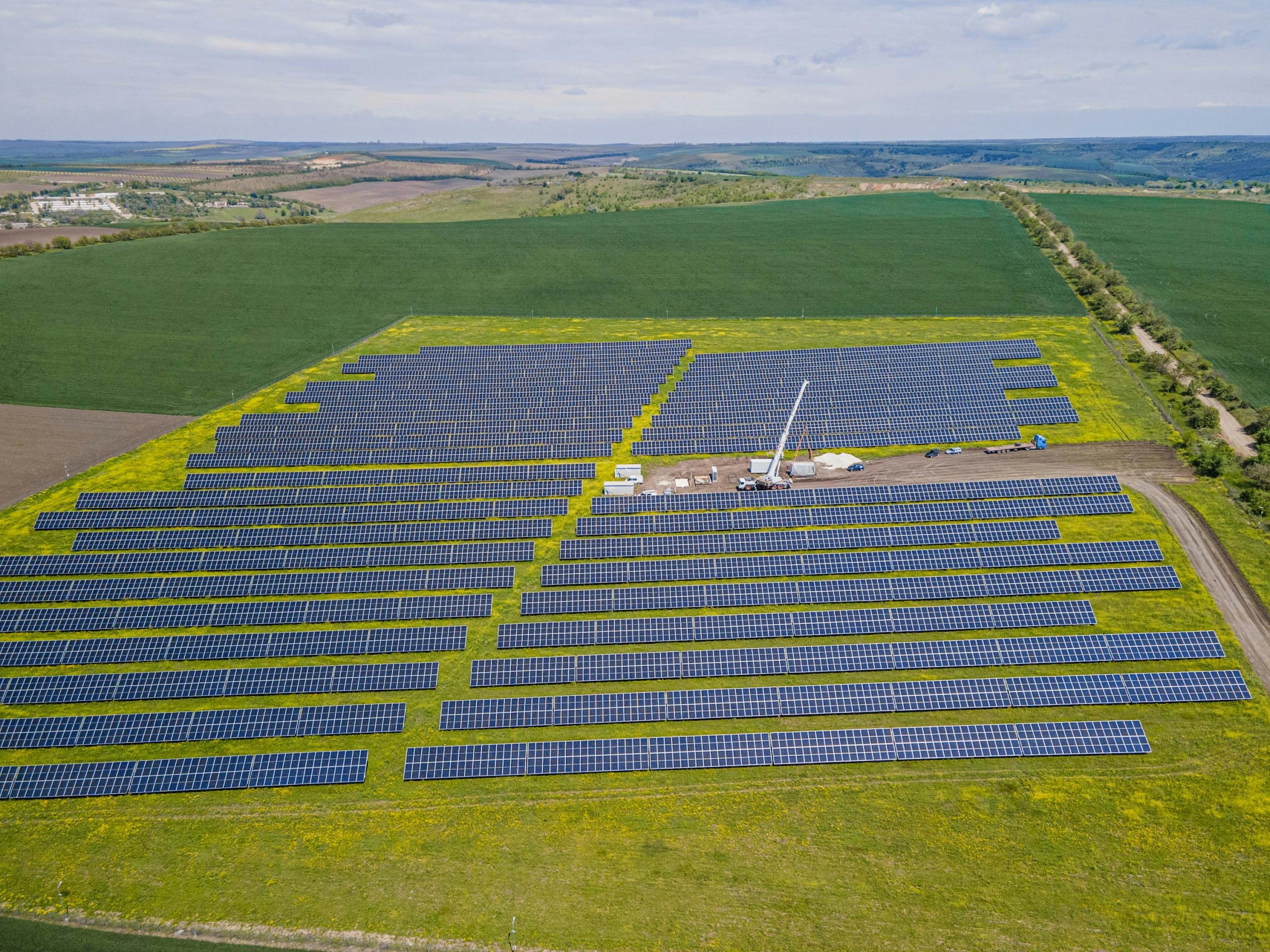
The world installed a record 664 GW of solar photovoltaic capacity in 2025, according to SolarPower Europe’s Global Solar Market Outlook 2026-2030, released in Munich on 22 June. The total global solar fleet crossed 3 TW in early 2026, having tripled in just four years. Even so, annual growth slowed to 12 percent, a sign that the market is entering a different phase.
Solar accounted for 77 percent of all renewable capacity added in 2025, and solar generation reached 2,778 TWh, around 9 percent of global electricity demand. The market remains highly concentrated: China installed 382 GW, or 57 percent of the global total, while India became the second-largest national market with 45.7 GW, overtaking the United States. Taken as a single bloc, the EU-27 added 67.2 GW.
The report forecasts the first contraction in more than 20 years, with installations expected to fall 8 percent to 612 GW in 2026, largely because of a projected 24 percent drop in China after policy changes. Growth is expected to resume from 2027, with annual additions reaching roughly 864 GW and total capacity around 6.6 TW by 2030.
SolarPower Europe chief executive Walburga Hemetsberger said the slowdown reflects a new reality in which scaling solar is less about adding capacity and more about integrating it: “In a growing number of markets, deployment is increasingly constrained by system integration challenges, from grid congestion to curtailment and negative price signals.” The report frames grids, battery storage and other flexibility as the bottleneck to watch – a point with direct relevance for the Baltic, where grid capacity and cross-border links shape how much renewable power can actually be used.