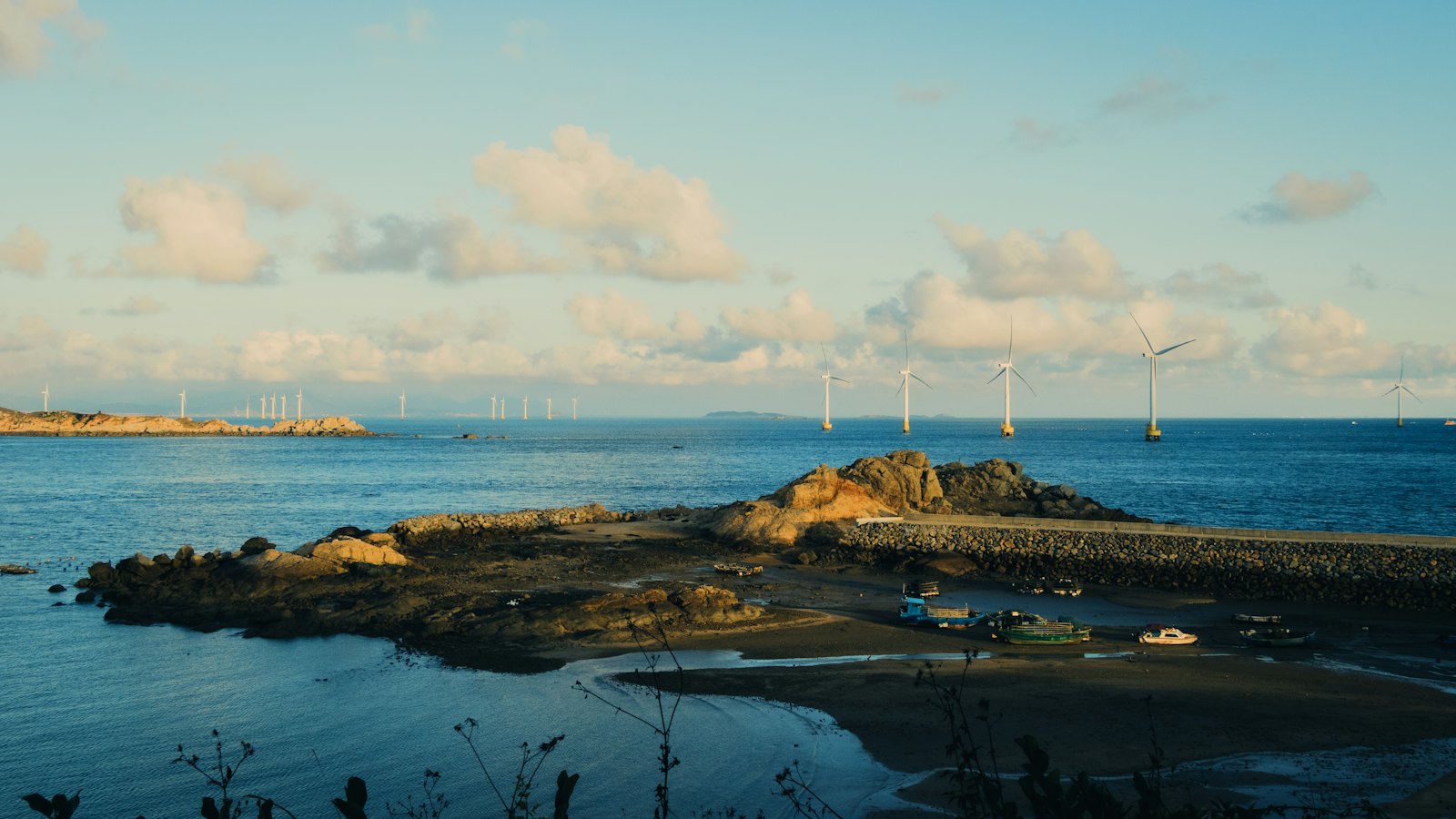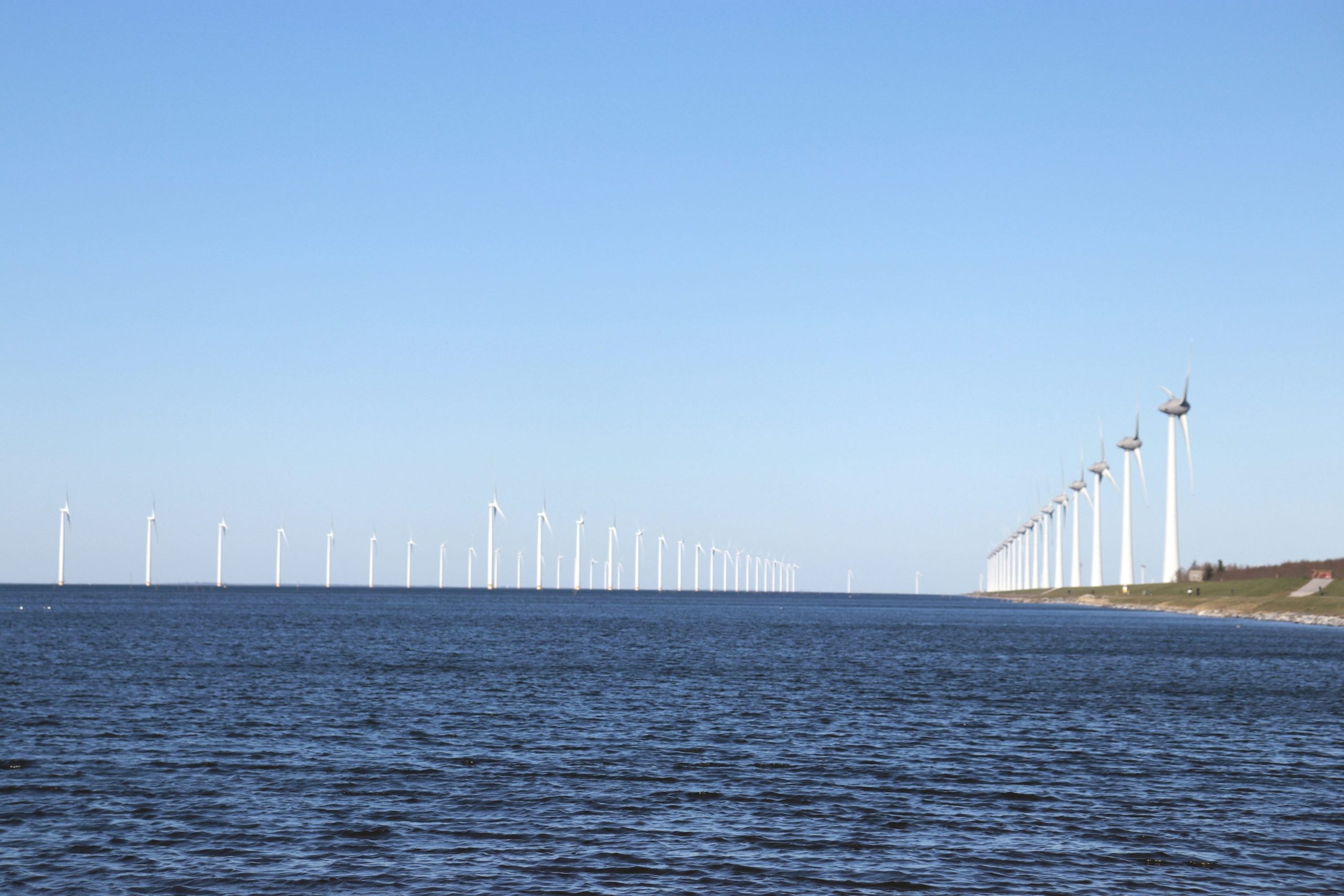
A new modelling study has found that offshore wind farm arrays in the southeastern North Sea produce measurable, basin-wide changes to tidal currents and energy balances — extending well beyond the immediate footprint of individual wind farms. The research, published using the FESOM-C coastal ocean model, explicitly simulated 692 monopile foundations across 12 wind farm polygons at metre-scale resolution while maintaining full regional coverage.
The study ran two scenarios: one with turbine foundations included (WF) and one without (REF), allowing direct quantification of the hydrodynamic impact. Results showed that wind farms induce a coherent, scale-dependent tidal signal that extends far beyond the wind farm boundaries. Farms with regularly spaced turbine arrays produced significantly stronger cumulative effects, while randomly configured arrangements substantially attenuated the response — a finding with direct implications for wind farm layout planning.
At the turbine scale, the simulations resolved the formation of low-velocity zones immediately around monopiles, providing evidence for enhanced trapping of passive particles — potentially affecting sediment transport, larval dispersal, and the movement of suspended matter. At the regional scale, the modelling showed disruption to seasonal stratification, frontal dynamics, and tidal energy budgets across the German Bight and Wadden Sea.
The authors noted this is the first application in the region to explicitly resolve hundreds of turbine foundations at metre-scale resolution while maintaining basin-wide coverage. They called for further work incorporating baroclinic dynamics and cumulative ecological and morphodynamic assessments.