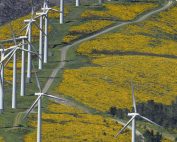
Germany runs the largest onshore wind auction programme around the Baltic Sea, and for developers in Poland, Denmark and the Baltic states it has become the clearest available read on where onshore economics are heading. The message from the most recent rounds is uncomfortable: winning capacity has never been harder, and winning it has never been worth less.
In the 1 May 2026 bidding round, the Federal Network Agency offered 2,495 MW and received 628 bids totalling 6,409 MW — the round was oversubscribed roughly 2.6 times. Awards went to 270 bids for a combined 2,499 MW, at prices between 4.44 and 5.19 cents per kilowatt-hour. The volume-weighted average award value came in at 5.06 ct/kWh, down from 5.54 ct/kWh in the February round and the lowest level since the current bidding procedure was introduced.
Who won, and what that tells you
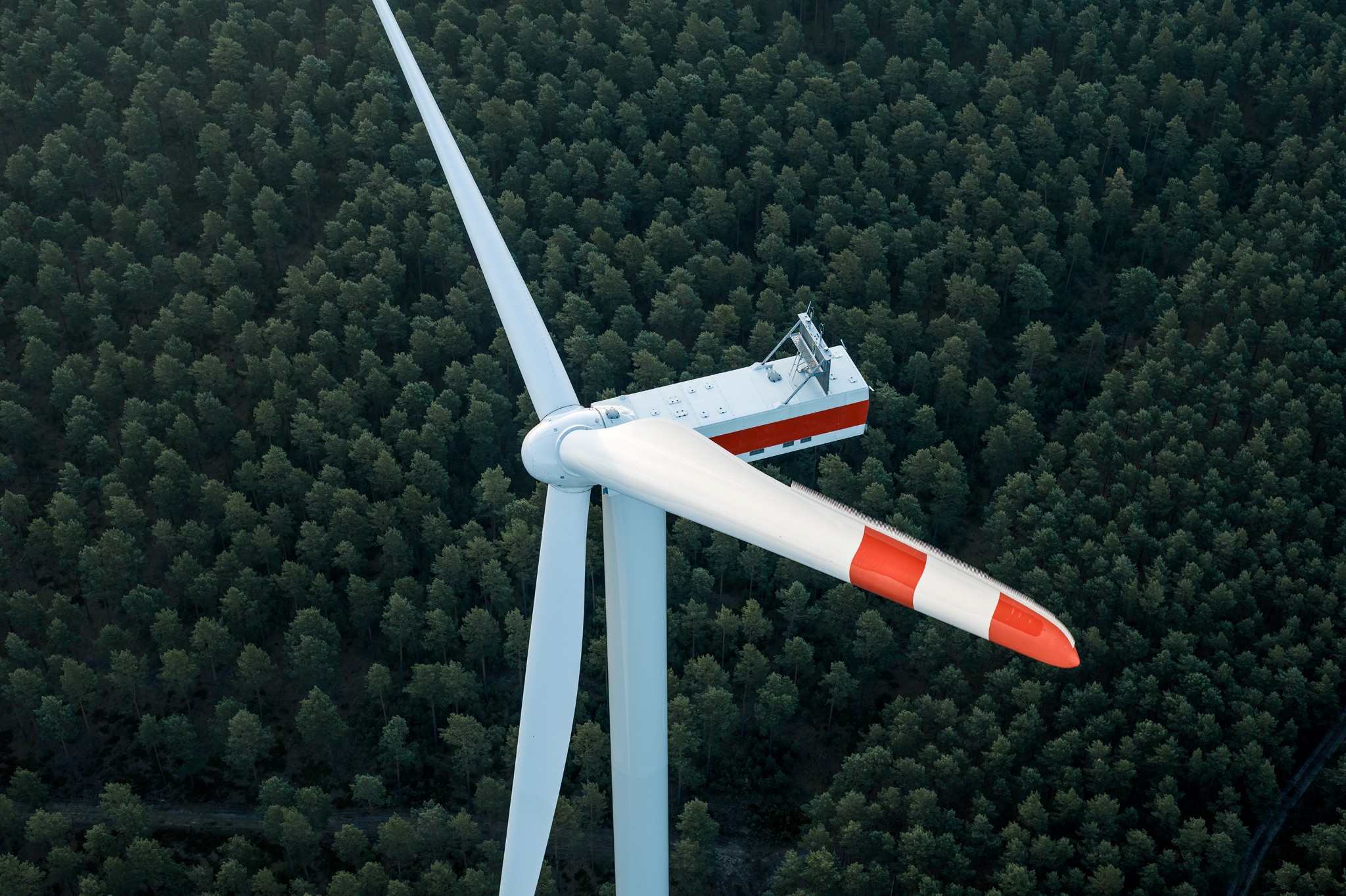
The award list reads like a map of the northern European development industry. Alterric, the joint venture of the Aloys Wobben Stiftung and EWE, took all six projects it entered for 242 MW across five federal states, including a project at Durmersheim in Baden-Württemberg, one of the harder places in Germany to permit a turbine. Two of its six were repowering schemes. Bremen-based wpd secured 156.9 MW, down from around 300 MW in the preceding round. Qualitas Energy won 113.2 MW across three projects and 16 turbines in Rhineland-Palatinate and Lower Saxony. Clients of the Husum purchasing group Routing Energy took 90.1 MW across 13 turbines, and the Danish developer Eurowind Energy secured three farms totalling 70 MW, built from ten 7 MW machines.
Read together, the results describe a market that rewards scale and procurement discipline. Alterric operates more than 2,500 MW with a pipeline above 11,000 MW. wpd is building over 1 GW in Germany alone. Eurowind runs six German offices and around 120 staff, with 284 MW under construction. Routing Energy’s entire proposition is bundling orders across developers to secure turbine framework agreements. In a round bid 2.6 times over, the winners were largely those who had locked in supply and cost before the auction opened.
The gap between an award and a wind farm
The more consequential story sits after the award. Eurowind Energy has pointed to a widening gap between permitted projects and built ones: clearing prices near 5 ct/kWh, combined with high land lease costs and rising construction expenses, have left a growing number of consented German projects unbuilt. The company secured a capital partnership with Blackstone to fund acquisitions and construction, and says it is actively looking to buy stalled projects for repowering — a business model that only exists because other developers are failing to convert their awards.
Alterric’s chief executive Frank May made the same point from the winning side, saying that stable investment conditions and secured grid connections are what the sector needs to keep winning auctions. An award is a revenue ceiling, not a construction guarantee.
The margin nobody prices in
One squeeze on that gap is largely invisible in auction statistics: night-time noise limits. Dezibel Engineering, a firm specialising in wind farm sound optimisation, has argued that curtailment imposed to meet night-time noise thresholds is an under-appreciated drag on project economics precisely because wind speeds are usually higher after dark, so nocturnal curtailment costs disproportionately more output than its hours suggest.
The firm set out a worked example under Germany’s EEG 2023 framework: a 6 MW turbine at a site rated at 55% of the reference yield earns an effective tariff of 7.95 ct/kWh after the applicable correction factor, against an award value of 5.6 ct/kWh. With roughly 2,200 full-load hours under night-time curtailment, the project produces about 13,200 MWh a year and just over one million euros of revenue — below break-even. Removing curtailment that is not technically required, through a permit amendment under the Federal Immission Control Act, could raise annual output by around 11% and move the same project into profit. Dezibel says it has unlocked more than 82 million kWh of additional annual output across 29 wind farms.
The point is not the specific figure. It is that cautious assumptions written into a permit during development often survive untouched for the life of the asset, and at 5 ct/kWh there is no longer enough headroom to carry them.
What the Baltic markets should take from it
Germany’s auctions are not directly comparable with Poland’s or Lithuania’s: the volumes, the correction factors and the grid situation all differ. But three patterns travel.
First, oversubscription is not a sign of health on its own. A round bid 2.6 times over produces a low clearing price and a cohort of winners with very little margin for cost escalation. Second, the competitive advantage has moved upstream, into turbine procurement, grid connection certainty and permit quality, rather than into bidding tactics. Third, the binding constraint on how much onshore wind actually gets built is increasingly what happens between the award and the first foundation — land costs, construction inflation, connection queues and the operating restrictions written into a permit years earlier.
For Baltic regulators designing or revising onshore auction rules, the German experience suggests the useful questions are less about how to attract more bids and more about how many awarded megawatts convert into turning turbines. For developers, the practical lesson from the winners is unglamorous: secure the supply chain and the grid connection first, and revisit the assumptions buried in old permits before assuming a project no longer works.