For most of the past decade, the story of northern European wind was told in megawatts of turbines. The build-out figures now come with a second column that gets far less attention: the storage and flexibility being installed to make that generation usable. On current evidence, the two are starting to move together.
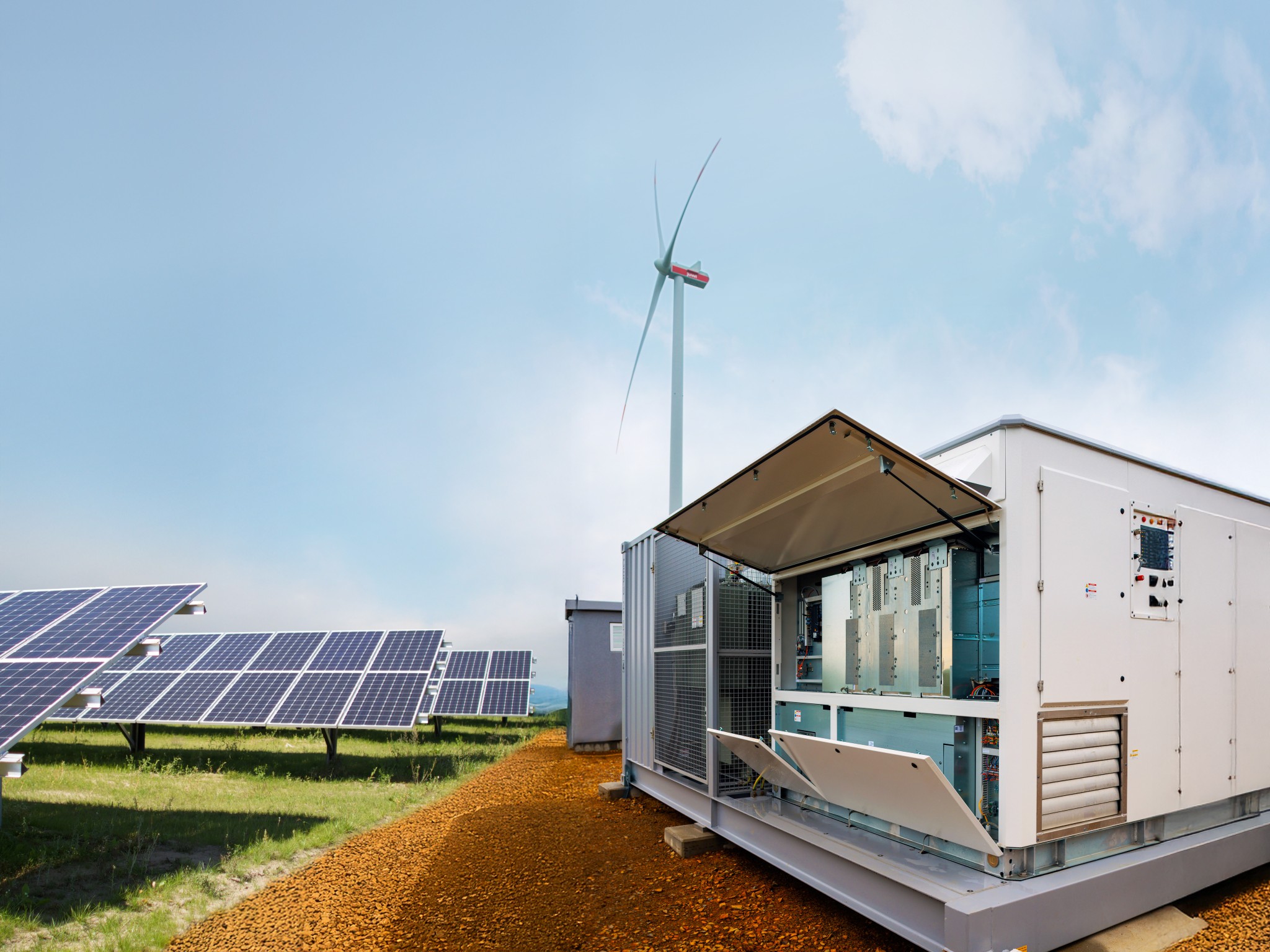
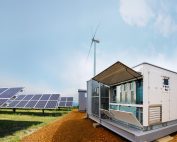
The clearest signal came from Kyon Energy, a German storage developer that broke ground on large-scale battery projects in three federal states at once — North Rhine-Westphalia, Saxony-Anhalt and Schleswig-Holstein. Individual capacities and grid connection dates were not disclosed. What matters is the pattern rather than the numbers: starting three sites simultaneously is portfolio-scale deployment, not opportunistic single-project development. Schleswig-Holstein makes the logic plain, as Germany's key onshore wind state, where local storage bears directly on managing generation peaks and reducing curtailment.
The Baltic utilities are pairing storage with generation
A similar pattern is visible on the eastern side of the Baltic, though it is easy to miss because it sits inside larger investment programmes. Latvenergo, the Latvian state-owned group and the largest electricity producer in the Baltic states, invested a record 792.2 million euros in 2025, a 49 per cent increase year on year, with 548 million euros directed at renewable energy projects.
Two battery energy storage projects were completed in the same year that the group commissioned the Akmenė wind plant in Lithuania, finished the reconstruction of Ainaži in Latvia, completed Aizpute Solar and brought eight further solar parks online. Construction began on two large wind farms, Laflora Energy and Pienava Wind, while the 124 MW Telšiai plant in Lithuania had its turbines installed and generating, with commissioning expected in the first half of 2026. The group's approved new renewable portfolio stands at 1,144 MW.
The output numbers show why storage entered that programme. Latvenergo generated 4.7 TWh in 2025, of which 3.1 TWh was renewable, and solar and wind generation reached 209 GWh — five times the 2024 figure. A fivefold jump in variable generation in a single year is exactly the point at which flexibility stops being a strategic slide and becomes an operational requirement.
Money is available, margins are not automatic
The financing side has held up better than the trading side. Latvenergo completed a first European Green Bond issuance of 400 million euros in late 2025, with investor demand reaching 2.2 billion euros, some 5.5 times the target, and Moody's confirmed a Baa2 rating with stable outlook. Yet in the same year revenue fell 8 per cent to 1,566.1 million euros, EBITDA dropped 25 per cent to 440.1 million euros and net profit was 27 per cent lower at 198.8 million euros, affected by weaker hydro output and lower retail prices.
That combination — cheap capital, compressed margins — is the environment storage is being built into. It rewards assets that earn from volatility rather than from volume, which is a reasonable description of a grid-scale battery.
Flexibility has become a security question too
There is a second reason the Baltic case differs from the German one. At the Baltic Sea Region Forum in Turku on 4 May 2026, which drew a record 580 registered participants, a panel on critical natural resources and logistics set out how ports, undersea cables, transport routes and energy networks have become core security concerns. Finnish Chief of Defence Janne Jaakkola argued that the Baltic and the Arctic should be understood as a single interconnected strategic space, and framed the requirement as "readiness", "preparedness" and above all "the capacity to adapt".
Applied to power systems, capacity to adapt is close to a technical definition of flexibility. Storage that can ride through a disturbance or hold a frequency is infrastructure that answers a security argument as well as an economic one — a framing that carries more weight in Riga, Vilnius and Tallinn than it does in Düsseldorf.
Demand is not standing still either
Flexibility is usually discussed as a response to variable supply, but the demand side is moving. At All-Energy 2026 in Glasgow in May, which drew more than 13,300 visitors, Fintan Slye, chief executive of the National Electricity System Operator, pointed to the potential for artificial intelligence data centres and noted that the infrastructure required could create an economic ecosystem extending well beyond the data centre itself. Large, controllable, growing loads change the flexibility calculation in both directions: more strain on the system, but also more assets capable of shifting when they draw power.
What to watch
Three things will show whether this is a durable shift rather than one good year. First, whether developers keep moving to portfolio-scale storage deployment, as Kyon's three simultaneous starts suggest. Second, whether Baltic utilities continue commissioning batteries in the same programmes as wind and solar, rather than treating them as a later retrofit. Third, whether flexibility revenues hold as more capacity arrives — the usual fate of a market that everyone enters at once.
The megawatt totals will keep leading the coverage. The more useful number over the next few years may be how much of that generation the system can actually put to work.