Finland is close to a decision that no other country has yet taken: whether to license a final repository for spent nuclear fuel. The Posiva facility at Onkalo in Eurajoki has been in the licensing process since 2021. In August the Radiation and Nuclear Safety Authority STUK issued a favourable statement on its safety assessment, and Finland’s climate minister, Sari Multala, has said the ministry’s proposal could reach the Government in October.
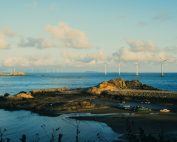
Why does a waste facility matter to a portal that mostly covers wind? Because Finland’s electricity system is increasingly built in two layers. Wind supplies a growing share of generation, and nuclear provides the steady base underneath. Nuclear debates elsewhere in the region have repeatedly stalled on the question of what happens to the waste. A licensed Onkalo would give the region’s neighbours a working answer to look at.
They are looking. Estonia’s energy minister Andres Sutt and Latvia’s climate and energy minister Jānis Vitenbergs toured the Posiva site on 7 September at Finland’s invitation. Estonia has since passed its Nuclear Energy and Safety Act, adopted by the Riigikogu with 63 votes in favour, 10 against and one abstention. It sets up phased licensing, requires operators to fund decommissioning and waste disposal, and starts a national regulator on 1 January 2027. Parliament also reserved the final say: the Riigikogu itself must approve any decision to build a plant. The law does not commit Estonia to a reactor, but it removes the legal obstacle to one. Latvia has been weighing options for firm low-carbon capacity.
The small modular reactor (SMR) track runs alongside. In Helsinki, Steady Energy is building a full-size pilot of its LDR-50 district-heating reactor at the former Salmisaari coal plant; the pilot will carry no nuclear fuel, and its water loop will be heated electrically. In Kuopio, the utility Kuopion Energia is planning an SMR district-heating plant of 150 MW thermal input or less, with up to four reactors on one of two candidate sites. Finland’s Ministry of Economic Affairs and Employment found the environmental impact assessment programme largely adequate on 15 July, but asked the developer to spell out its baseline assumptions and uncertainties, since SMRs have never been used for district heating in the country.
Three things are worth watching. The first is the Government’s licence decision on Posiva, expected from October. The second is how quickly Estonia’s regulator is staffed before its January 2027 start. The third is whether the Kuopio assessment, and Steady Energy’s pilot, show that reactor heat can be licensed and sited in a city. None of these will change the wind build-out in the Baltic Sea, but each shapes what wind has to sit alongside.