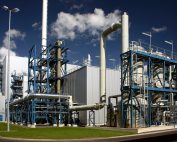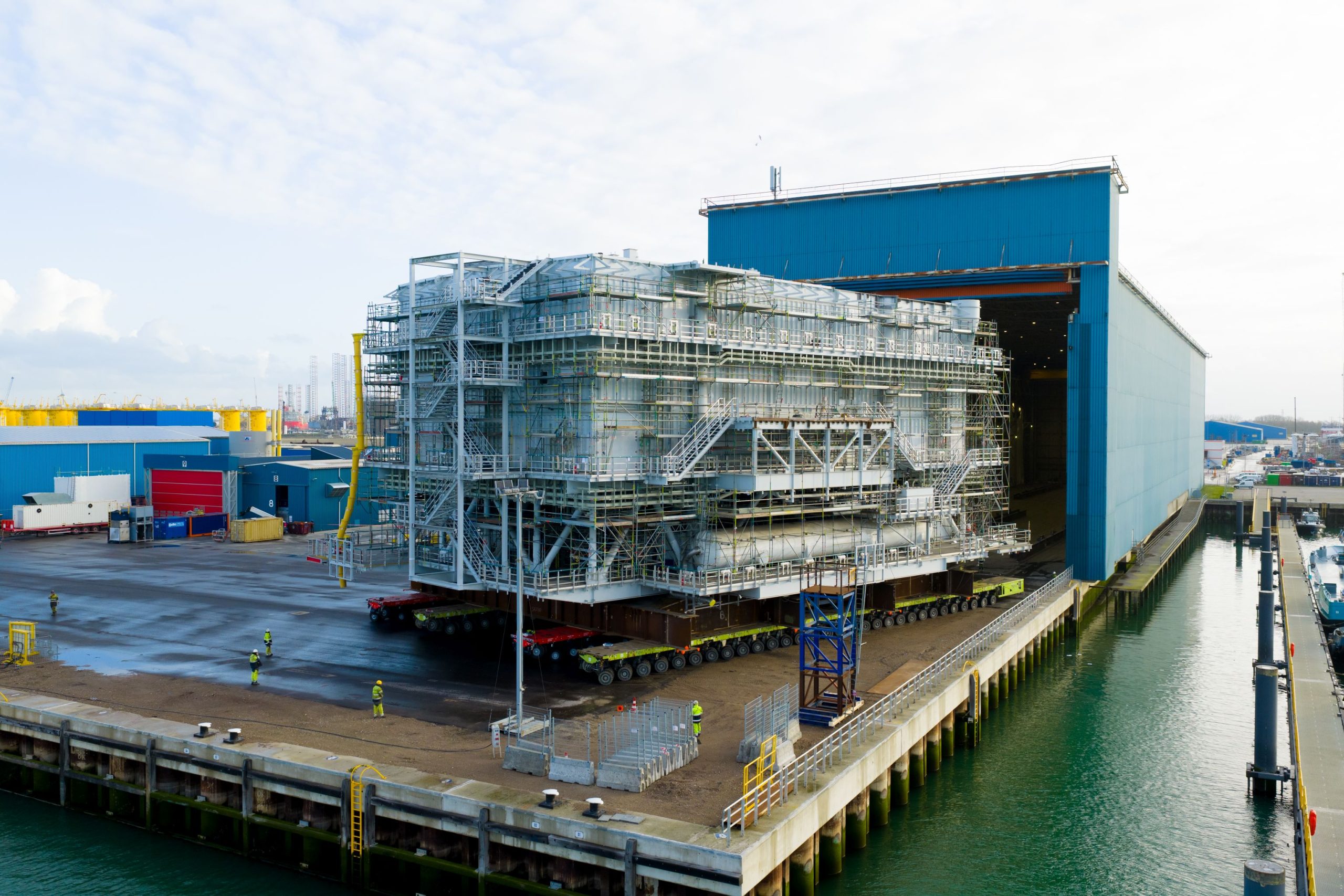
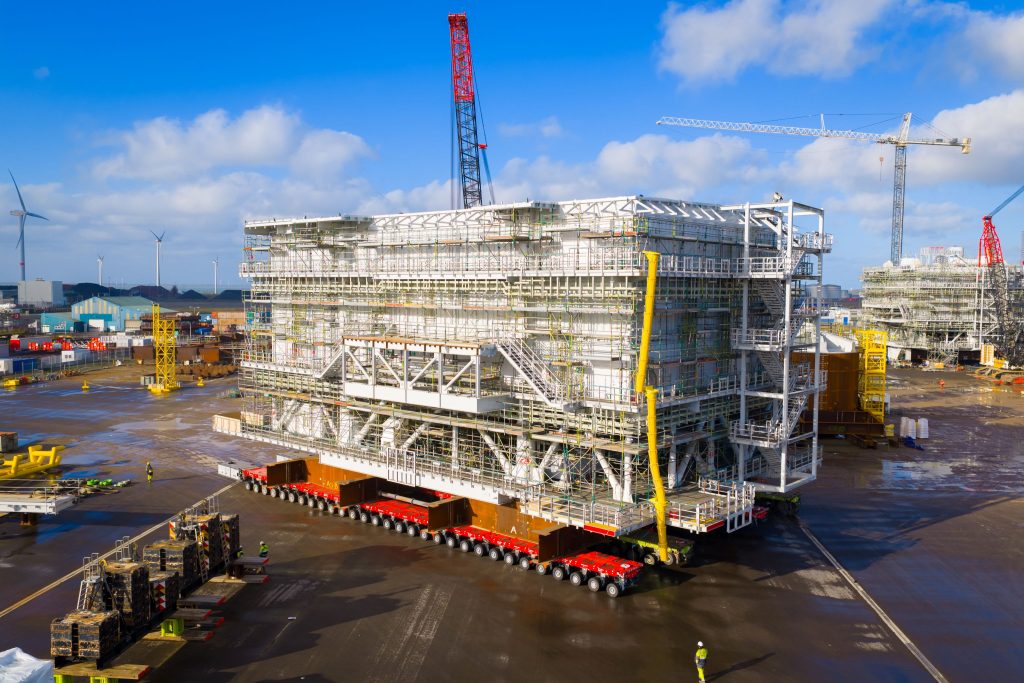
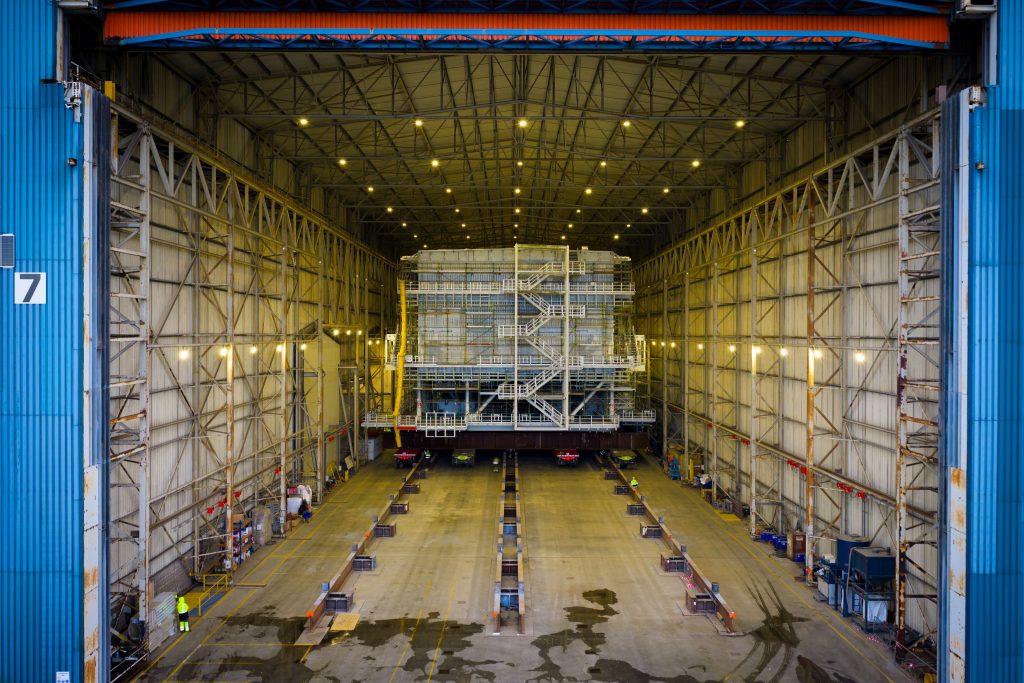
Bałtyk 2 and Bałtyk 3, offshore wind farms being developed by Equinor and Polenergia, are entering the phase of direct preparations for offshore installation work. In Vlissingen, the Netherlands, at the Smulders facility, the so-called topside – the main part of the offshore power station for the Bałtyk 3 farm – has just been moved out of the production hall and positioned in the outdoor yard. It is a structure measuring 51 × 38 × 43 metres, comparable to a 15-storey building.
Next to it is the topside for Bałtyk 2. Both topsides, each weighing around 3,700 tonnes, are currently undergoing outfitting and will be transported to sea in accordance with the offshore work schedule.
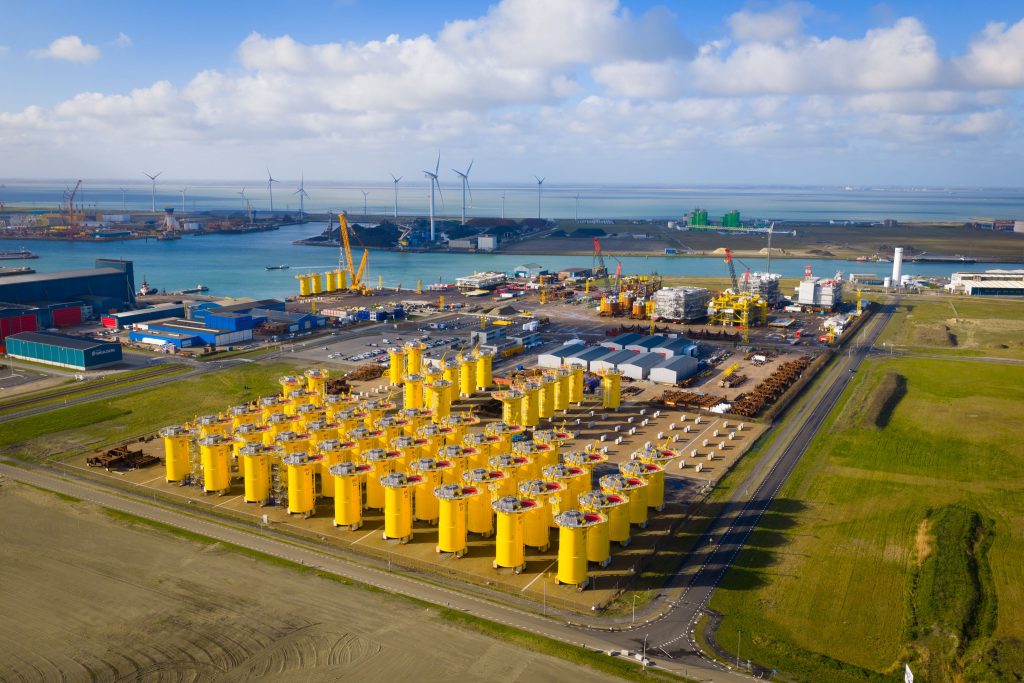
At the same time, production and assembly of the so-called transition pieces – one of the key and most demanding structural elements of offshore wind farms, connecting the foundations to the turbines – is progressing. Over 60 such units have already been assembled at the site in Vlissingen, each approximately 17 metres high and weighing nearly 400 tonnes. The first transition pieces will soon be transported to the Baltic Sea, where, together with the monopiles, they will be the first components to be installed at sea.
In the case of both topsides and transition pieces, Polish companies and industrial plants play a significant role in the production, outfitting and integration process, supplying steel components, auxiliary systems and technical solutions. The use of local content is a key element in the implementation of the Bałtyk 2 and Bałtyk 3 projects.
The Bałtyk 2 and Bałtyk 3 offshore wind farms, being developed by Equinor and Polenergia, comprise 100 wind turbines with a total capacity of 1,440 MW. The first energy output is planned for 2027, with full commercial operation scheduled for 2028.
Source: Bałtyk 2&3